
If you spot bees buzzing around your garden, try to stay calm. It’s easier said than done, but knowing what to do can really help.
First, figure out what type of bees you’re dealing with. Then, decide if you actually need to move them or if you can just let them do their thing.
Bees help pollinate your plants, so honestly, it’s usually better to work around them if you can.
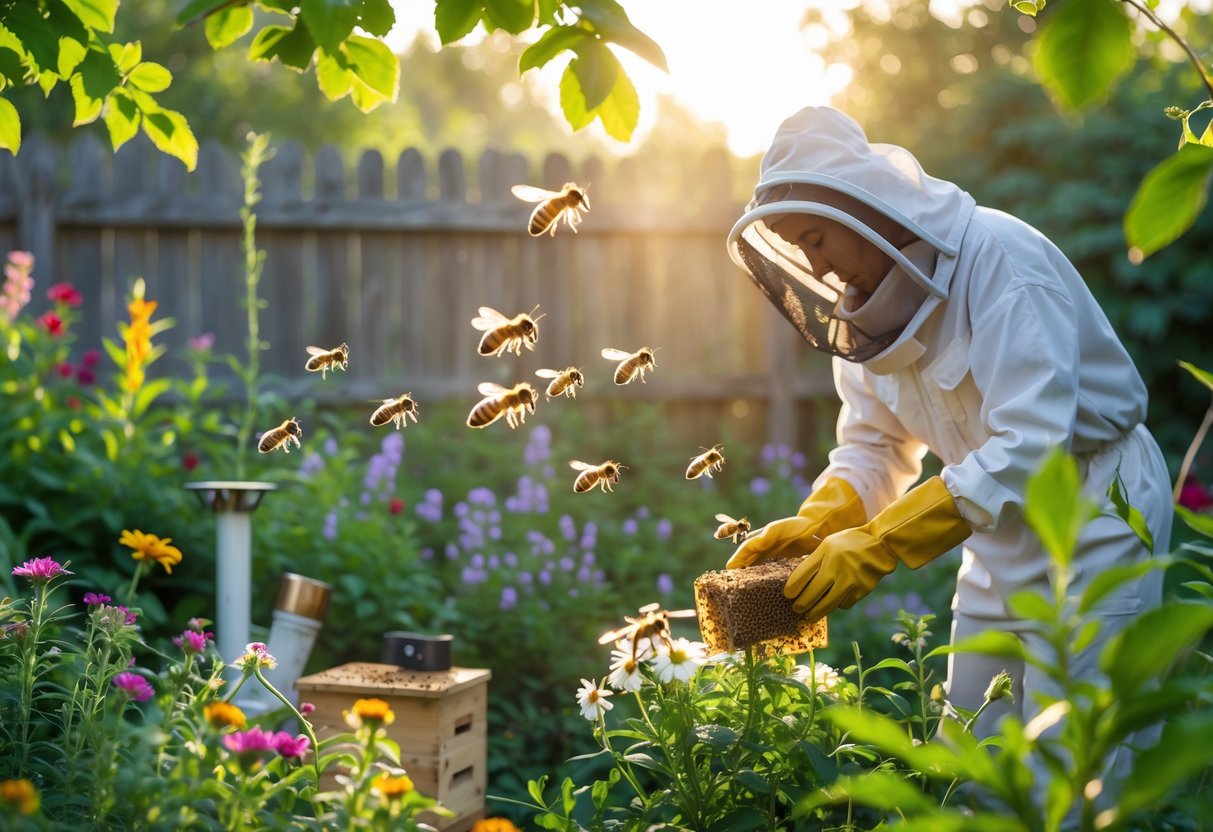
Sometimes, a big swarm or a nest too close to your door can feel like too much. If that’s the case, try natural methods or call a local beekeeper to remove them safely.
Learning a few simple steps can make the whole situation less stressful. Your garden will thank you for it.
Assessing and Managing Bees in Your Garden

When you find bees in your garden, try to figure out which type you’re seeing. Some bees act differently than others.
If you understand their habits, you can keep yourself and your family safe. Sometimes, it just makes sense to call in a professional.
Identifying Different Types of Bees
Not all bees look or act the same, and that’s kind of fascinating. Honeybees are small, golden-brown, and have those classic black stripes.
They live in big colonies and make honey, of course. Bumblebees are bigger, round, and fuzzy—usually black with yellow bands.
Native bees tend to be smaller and might nest in the ground or in little holes. These bees don’t make honey, but they’re still great pollinators.
If you know what kind of bee you have, it’s easier to decide what to do next. Honeybees get special protection in many places because they support crops and flowers.
Native bees and bumblebees are also super important for your garden’s health.
Understanding Bee Behavior and Safety Risks
Most bees aren’t aggressive unless you bother them. They just want nectar and pollen.
Honeybees will protect their hive, but they don’t attack for no reason. Bumblebees are usually even more chill but can sting if you mess with them.
Bee stings hurt, and for some people, they’re dangerous. If you have kids or pets, keep them away from active bees.
Watch out for swarming bees. That usually means the colony is moving or getting bigger, and they might get defensive for a bit.
Safe Approaches to Bee Nests and Potential Removal
If you find a hive or a nest, don’t mess with it yourself. Stay quiet and avoid making sudden moves nearby.
Keep your distance. Don’t use chemicals—those just make things worse and hurt good bugs.
Plant flowers that attract bees, and skip the pesticides. If a hive is in a bad spot, call a beekeeper or pest control pro to move it safely.
When to Consult a Professional
Call for help if the hive is close to your house, threatens people or pets, or if you’re allergic. Professionals have the gear and know-how to handle bees safely.
They can also help if you want to start keeping bees and aren’t sure how. Some experts will move the whole hive without hurting the bees, which is pretty cool.
Knowing when to call someone saves you and the bees a lot of trouble.
Want more tips? Check out friendly tips for safe bee management.
Making Your Garden Bee-Friendly and Safe
You can help bees and keep them safe with just a few simple changes. Pick the right plants, avoid nasty chemicals, and offer water and shelter.
These steps help pollinators and make your garden a nicer place to be.
Choosing Native and Bee-Safe Plants
Start with native plants like coneflowers, goldenrod, and milkweed. Bees love them, and they’re already adapted to your area.
Skip plants that have been sprayed with chemicals or coated with neonics—they’re bad news for bees. Try to find untreated plants or just grow your own from seed.
Mix it up with flowers that bloom at different times. That way, bees get food all season.
Quick tips:
- Stick with native plants
- Avoid neonics and other pesticide-treated plants
- Plant flowers that bloom all year long
Avoiding Pesticides and Harmful Chemicals
Don’t use pesticides, herbicides, or fungicides in your garden if you can help it. Neonicotinoids especially can wipe out bees or make them weak.
Instead, try natural pest control—pick off bugs by hand or use safe insecticidal soaps. If you absolutely have to spray something, do it early in the morning or late at night when bees aren’t flying.
Check the labels so you don’t accidentally use something toxic. Keeping things chemical-free helps the pollinators that keep your garden thriving.
Remember:
- Skip all pesticides, especially neonics
- Go with natural pest control
- Only treat plants when bees aren’t around
Providing Water and Habitats for Pollinators
Bees need water and a safe place to nest. You can grab a shallow dish, fill it with water, and toss in a few stones or twigs so bees have somewhere to land.
Change the water often so you don’t end up with mosquitoes. It’s a simple step, but it really makes a difference.
Try leaving some patches of bare soil or old wood in your yard. Native bees often look for these spots to nest.
If you’re up for it, set up a bee house using untreated wood or bundle together some hollow stems. These little habitats invite bees to stick around and help pollinate your garden.
Here’s what to do:
- Offer shallow water with landing spots
- Leave bare soil or wood for nesting
- Use bee houses made of natural materials
Small changes like these can give pollinators a real boost. If you want more details, check out guides on managing bees safely in your garden.


