
Ever found yourself staring down a coyote and wondered what happens if you yell at it? Yelling at a coyote usually scares it away because it realizes you’re not easy prey.
Coyotes tend to feel wary around humans, but loud noises remind them to keep their distance.
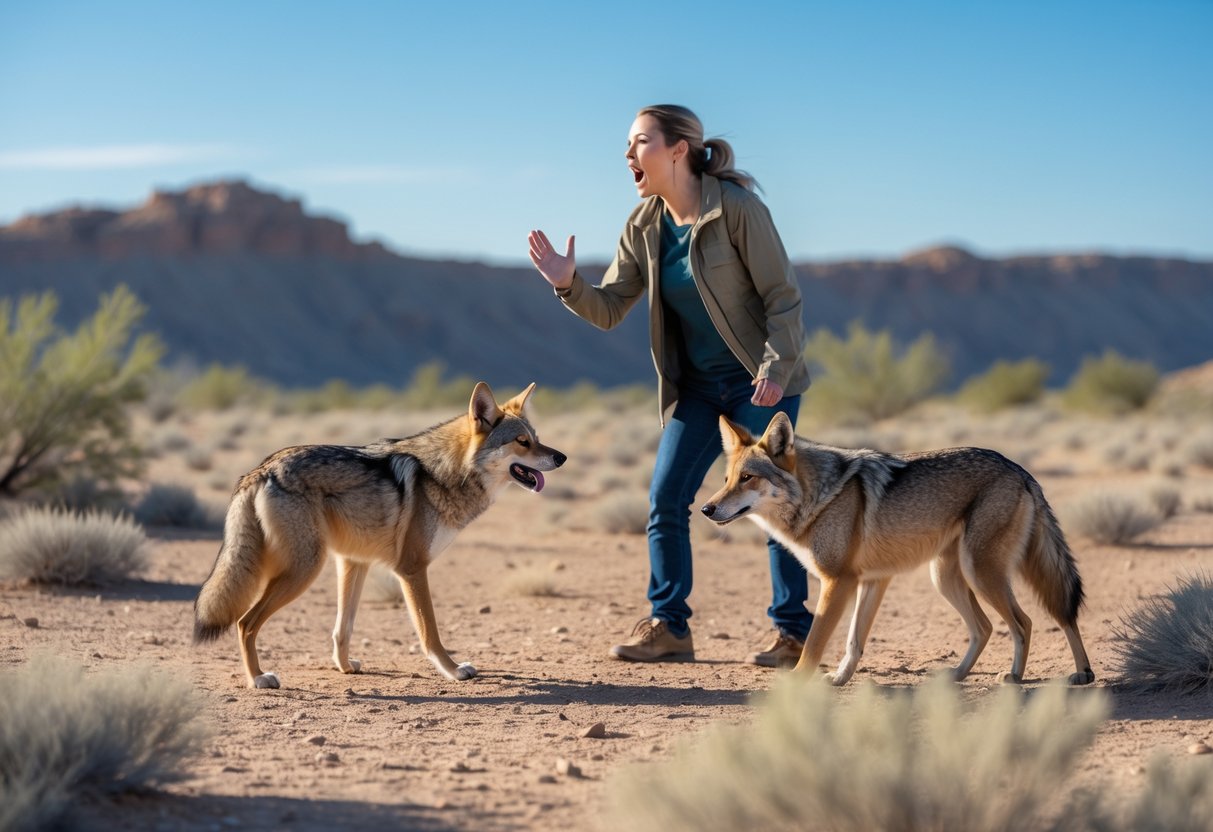
Sometimes, yelling on its own doesn’t cut it, especially if the coyote acts bold or already feels too comfortable around people.
If that happens, you might need to get louder or try waving your arms, tossing small objects, or making other noises to convince the coyote to leave.
Knowing this stuff can help you feel a bit safer in coyote territory.
How Coyotes React When You Yell at Them
When you yell at a coyote, how it reacts really depends on its past run-ins with people.
Some coyotes bolt right away, but others might hang back and keep an eye on you.
Yelling works best if you add strong body language and other ways to make yourself look like trouble.
Typical Responses to Yelling
A lot of coyotes freeze or stop and try to figure you out when you yell at them.
If they’re shy or haven’t bumped into humans much, they usually dash off.
But sometimes, they’ll just watch you from a distance instead of running.
Coyotes who feel threatened often leave fast. Still, those that are bold or used to people might stand their ground or even edge closer.
If a coyote seems aggressive or too chill around people, pay close attention to its body language.
Situations When Yelling Is Effective
Yelling works best with coyotes that are naturally shy or haven’t been “hazed” before.
It sends a clear message that you’re not someone to mess with.
If you stand tall, wave your arms, and shout, you look bigger and more intimidating.
Yelling helps in places like yards, parks, or when you’re out walking your dog.
It’s handy for startling coyotes before they get too close, so your nature walks feel a bit safer.
Limitations of Yelling Alone
Some coyotes, especially those used to people, might just ignore yelling.
Aggressive or habituated coyotes sometimes stand their ground, even if you’re loud.
If you yell and the coyote doesn’t budge, it might be sizing up your resolve or just not feeling threatened.
Just yelling without moving forward can let the coyote stick around, which isn’t great.
Coyotes that lose their fear of humans need a stronger message.
In busy areas, yelling alone won’t always make them leave for good.
Combining Yelling with Other Hazing Techniques
You’ll get better results if you mix yelling with other actions.
Try these:
- Walk toward the coyote while yelling and waving your arms.
- Blast a whistle or blow an air horn.
- Toss small objects near (but not at) the coyote.
- Spray water from a hose or a squirt gun.
These moves make it way more likely the coyote will run and think twice about coming back.
If the coyote stops after running, keep moving toward it and continue hazing until it’s totally gone.
This helps keep coyotes wary of people and lowers the chance of aggressive run-ins. If you want more ideas, check out guides on how to scare coyotes effectively.
Why Yelling Works or Fails: Understanding Coyote Behavior

Sometimes yelling scares a coyote away, but not always.
It depends on how much the coyote trusts people, whether it’s been fed by humans, and how bold it’s feeling.
If you know these things, you’ll have a better idea if yelling will work or if you need to try something else.
Loss of Fear and Habituation
Coyotes start out shy around people.
But when they get used to humans (that’s called habituation), they lose that healthy fear.
If a coyote has been spooked a lot, yelling can send it running.
But if it’s gotten comfortable around people, yelling might not faze it anymore.
You’ll see this in neighborhoods where coyotes wander around like they own the place.
They might just ignore you or watch without leaving.
To stop this, don’t go near or feed coyotes.
Keep your distance, and stay loud if one comes too close.
Role of Food and Feeding Coyotes
Coyotes that find food near people get bolder, fast.
If you or your neighbors leave food out, coyotes learn that humans mean snacks.
That makes yelling less effective, since they’re expecting a reward.
Feeding coyotes can make them act aggressively.
When they’re hungry, they might see your pets as easy meals.
If coyotes link people to food, they get confident and stop being afraid, which ups the risk for pets and, though it’s rare, people.
To keep coyotes wary, never feed them or leave pet food outside.
Lock up your trash, and skip bird feeders that attract the critters coyotes like to eat.
When to Call Animal Control
Yelling usually scares off coyotes acting normal. But if an aggressive coyote comes toward you or your pet and doesn’t seem scared, go ahead and call animal control.
That call helps keep everyone in the neighborhood safer.
Animal control officers handle coyotes that act dangerously. They’ll remove or scare off any coyote showing those warning signs.
When you report aggressive coyotes, you help officials track which animals cause problems and stop attacks before they happen.
If you notice a coyote hanging around your yard often, or it ignores your yelling, it’s probably time to reach out to local wildlife officials.
They know what they’re doing and can handle these situations safely—for both people and the animals.
For more about managing aggressive wildlife, check out the guidelines from Florida Fish and Wildlife Conservation Commission.


