
So, if a queen bee stings you, it hurts—about as much as a worker bee sting. That said, queen bee stings rarely happen since queens almost never sting humans.
Queen bees mainly use their stingers to fight other queens. They don’t really go after people, so honestly, your odds of getting stung by a queen are pretty slim.
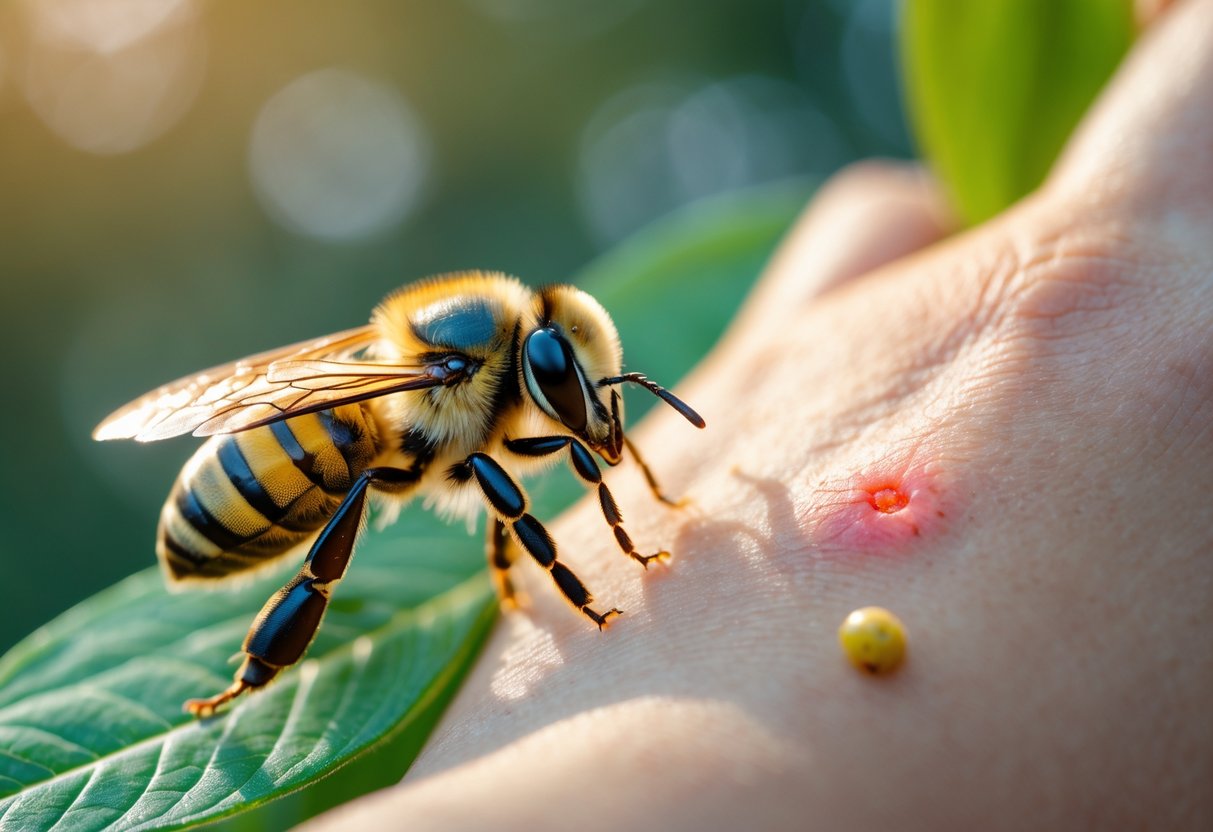
If you do get stung, you’ll probably notice pain, swelling, and some redness right where you got stung. The venom packs a punch, but unless you’re allergic, it’s not usually dangerous.
It’s smart to know how to treat a sting and spot signs of a bad reaction, just in case.
Most people don’t need to worry about queen bee stings, but understanding what happens can help you stay calm if it ever does. Curious about how queen and worker bee stings differ? Let’s get into it.
What Happens If a Queen Bee Stings You?

Getting stung by a queen bee isn’t exactly the same as a sting from a worker bee. The queen’s stinger is built for fighting other queens, not for defending against people.
That changes how the sting feels and how your body reacts. If you know a bit about the queen’s stinger, the symptoms, and the risks, you’ll be better prepared.
Queen Bee Stinger Anatomy and How It Differs From Workers
A queen bee’s stinger is smooth, not barbed like a worker bee’s. This lets the queen sting more than once without losing her stinger or dying.
When worker bees sting humans, they leave their stinger behind and die. Queens don’t have that problem.
Queen bees usually stay inside the hive and sting only rival queens. Their stingers work better for bee fights than for defending against humans.
You’re not likely to run into a queen bee out in the open, which is probably a relief.
Immediate Symptoms and Pain Response
If a queen bee stings you, you’ll feel a sharp pain right away. It might burn or itch a bit after.
Swelling usually shows up around the sting pretty fast. The pain isn’t usually worse than a worker bee sting, and some people say it feels about the same.
The queen’s venom works a little differently, but the overall effect is similar. Since her stinger is smooth, you won’t have to worry about it getting stuck in your skin.
Bee Venom Effects on the Human Body
Bee venom has stuff like melittin and histamine in it. Melittin messes with your cells, and histamine makes your body itch and turn red.
Bees use venom to protect the hive, not just to annoy people. When you get stung, you’ll probably see swelling and feel sore, but most folks get better in a few hours or days.
If you know you’re sensitive or allergic, that’s a different story.
Risks of Allergic Reaction and Anaphylaxis
Some people react badly to bee venom. You might see swelling spread past the sting, hives, or a lot of redness.
Serious signs include trouble breathing, feeling dizzy, or a racing heartbeat. That could mean anaphylaxis, which is life-threatening.
If you get those symptoms, call 911 or get to the ER right away. If you’re allergic, you should have an EpiPen and talk to your doctor about what to do next.
Queen Bee Stings Compared to Other Bee and Wasp Stings

A queen bee sting isn’t exactly like a sting from other bees or wasps. Queen bees have some quirks that make their stings and venom a bit different.
If you’ve ever been stung by a bumble bee, carpenter bee, or wasp, you’ll notice some differences.
Queen Honey Bee Versus Worker and Drone Stings
Queen honey bees mostly sting other queens inside the hive. Their smooth stingers let them sting more than once without dying.
Worker bees have barbed stingers, so when they sting, they leave it behind and die. Queen stings don’t hurt more, but you’re way less likely to get stung by a queen.
Worker bee stings usually cause more swelling and pain because of their barbed stingers and their job defending the colony.
Stings From Queen Bumble Bees and Carpenter Bees
Queen bumble bees and carpenter bees also have stingers, but they rarely sting people. Their stingers are smooth, so they can sting again and again.
Bumble bee queens are bigger and can sting multiple times without dying. Carpenter bees usually only sting if you grab or bother them.
Their stings are strong, but most people don’t have serious allergic reactions to carpenter bees. You probably won’t get stung by a queen carpenter bee unless you really provoke her.
Wasps and the Differences in Stinging Mechanisms
Wasps have smooth stingers, so they can sting over and over again without hurting themselves.
Their venom isn’t quite like bees’ venom—it’s actually more painful for most people since it attacks nerves right away.
Wasps sting to defend themselves or when they attack prey. Unlike bees, they don’t lose their stingers, so you really have to watch out.
If you’re allergic, wasp stings can cause some pretty intense reactions. It’s honestly best to steer clear if you know you’re sensitive.
| Insect Type | Stinger Type | Ability to Sting Multiple Times | Common Target | Venom Effect |
|---|---|---|---|---|
| Queen Honey Bee | Smooth | Yes | Rival queens | Less painful, less likely on humans |
| Worker Honey Bee | Barbed | No | Predators, humans | Painful, often causes swelling |
| Bumble Bee Queen | Smooth | Yes | Rarely humans | Mild to moderate pain |
| Carpenter Bee | Smooth | Yes | Threats | Mild venom |
| Wasps | Smooth | Yes | Predators, prey, humans | Strong, can be painful and cause allergic reactions |


