
As a Boxer owner, you want to keep your furry friend safe and healthy. Boxer dogs should avoid foods like chocolate, alcohol, avocados, and foods high in sodium and fat. These items can be toxic or harmful to their health, leading to serious issues.
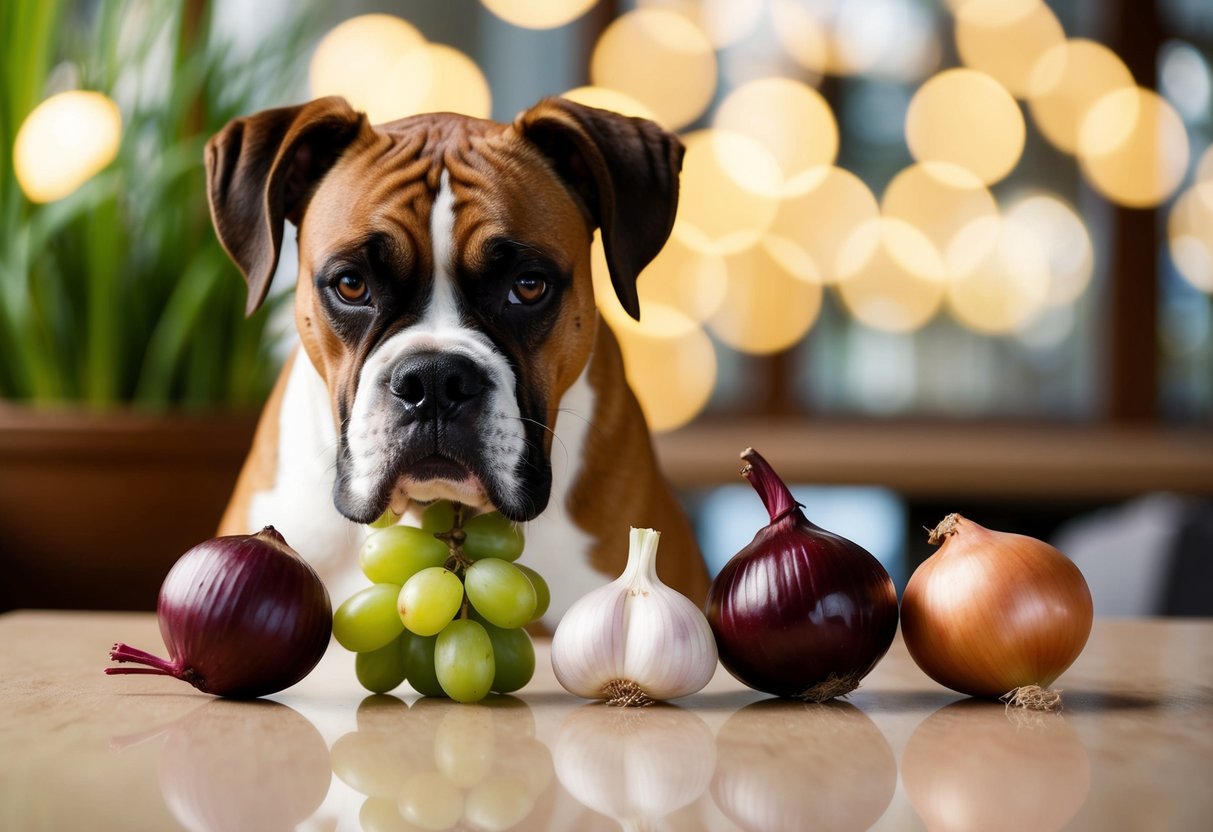
Knowing which foods are dangerous can help you make better choices for your pup’s diet. In this article, you’ll learn about the specific foods that could put your Boxer at risk.
By being informed, you can ensure your Boxer enjoys a long, happy life without the dangers of harmful foods. Let’s dive into the details and find out what to keep off your dog’s plate!
Fundamentals of a Boxer’s Diet
Proper nutrition is key to keeping your Boxer healthy and energetic. Understanding their nutritional needs and knowing what foods to avoid will help you provide the best diet for your furry friend.
Nutritional Needs of Boxers
Boxers have unique nutritional requirements due to their muscular build and high activity level. They typically need a diet high in protein and balanced in fats and carbohydrates.
- Aim for 20-30% protein from sources like chicken, fish, or tofu.
- Include 8-15% fats for energy, focusing on healthy fats from fish oil or chicken fat.
- Carbohydrates should make up the rest of their diet, with whole grains and vegetables being great choices.
It’s essential to provide nutrient-dense meals to support their energy needs, especially if they are active or in training. A well-balanced diet helps maintain your Boxer’s overall health and reduces the risk of obesity.
Common Dietary Restrictions
Certain foods can be harmful to Boxers and should be avoided. Here are some key foods to keep away from your dog:
- Highly processed treats: These often contain unhealthy additives or preservatives.
- Sugary foods: Not only can these lead to weight gain, but they may also cause dental issues.
- Certain meats: Avoid red and processed meats, as they can be too fatty.
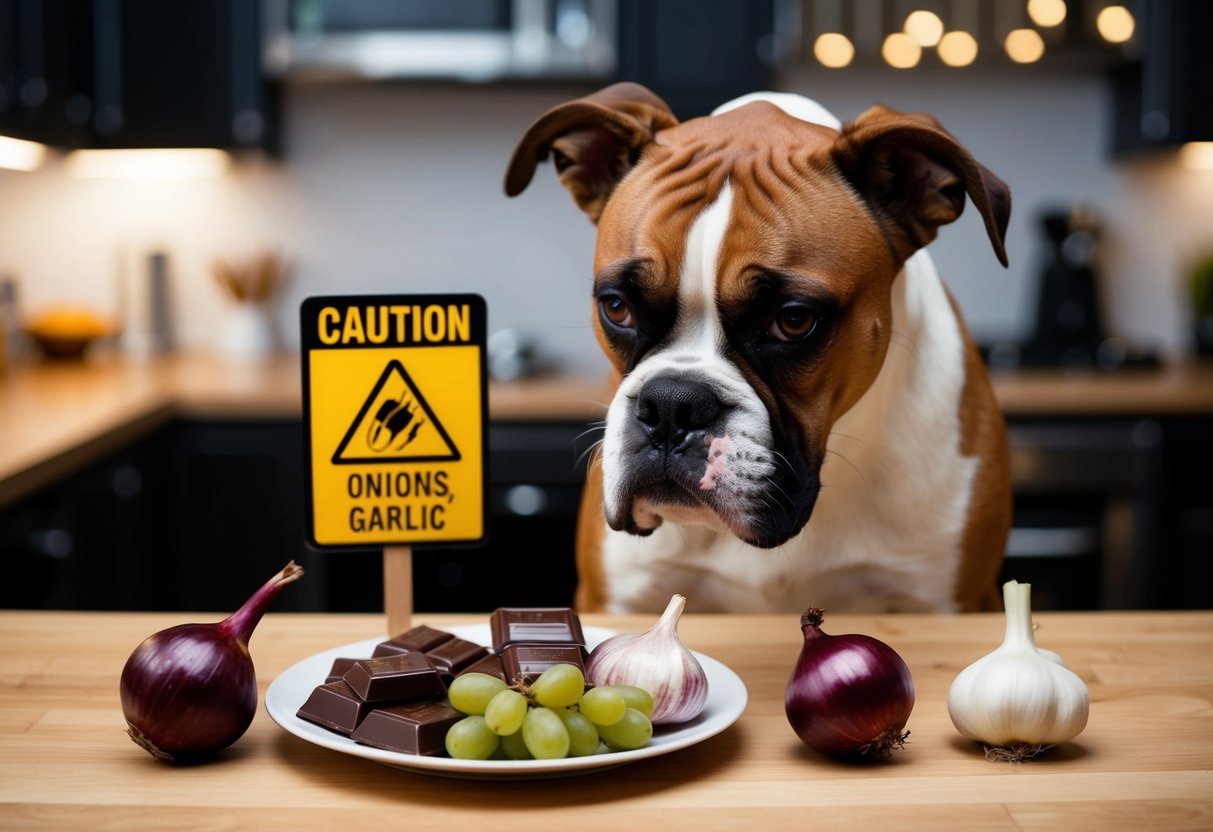
Additionally, be cautious with human foods like chocolate or onions, which are toxic to dogs. By avoiding these harmful foods, you can ensure your Boxer’s health and longevity.
Toxic Foods to Avoid for Boxer Dogs
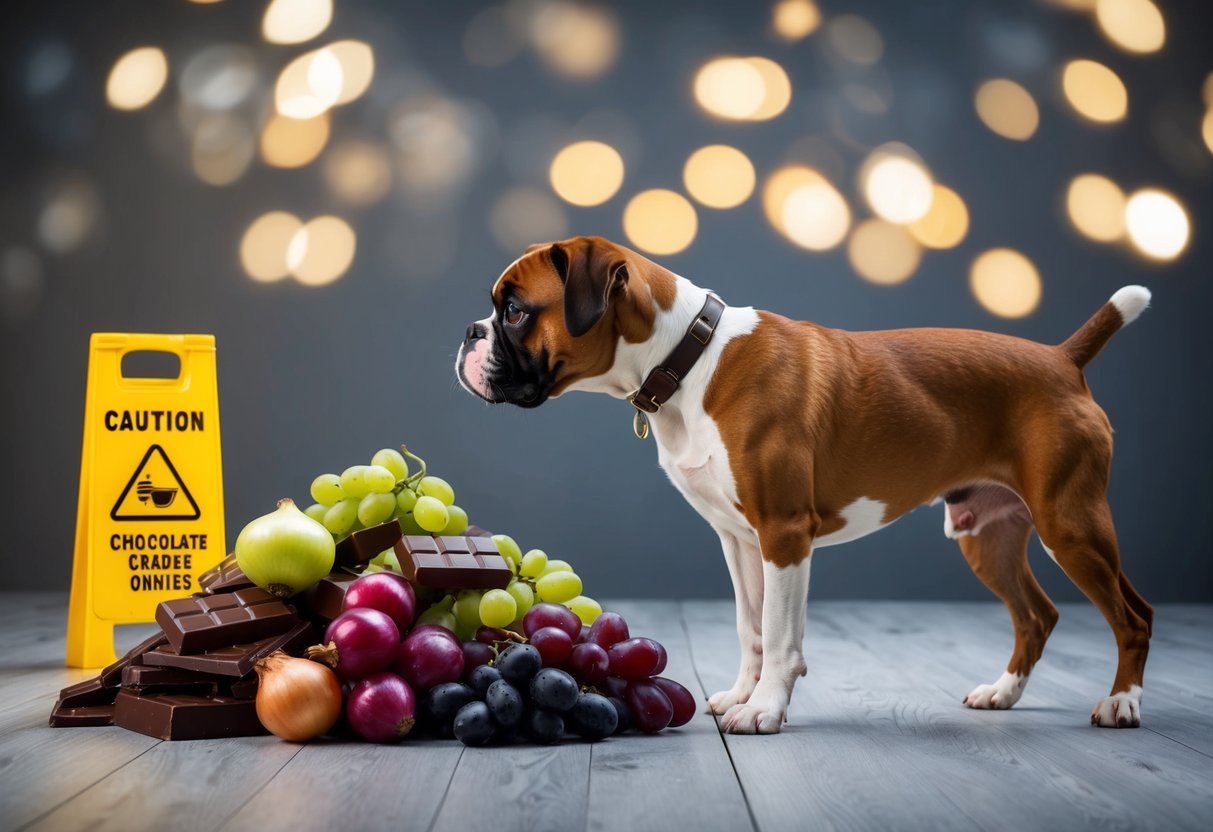
It’s essential to know what foods can be harmful to your Boxer. Certain fruits, vegetables, snacks, and drinks can pose serious health risks. Here’s what you should be aware of to keep your furry friend safe.
Fruits and Vegetables Harmful to Boxers
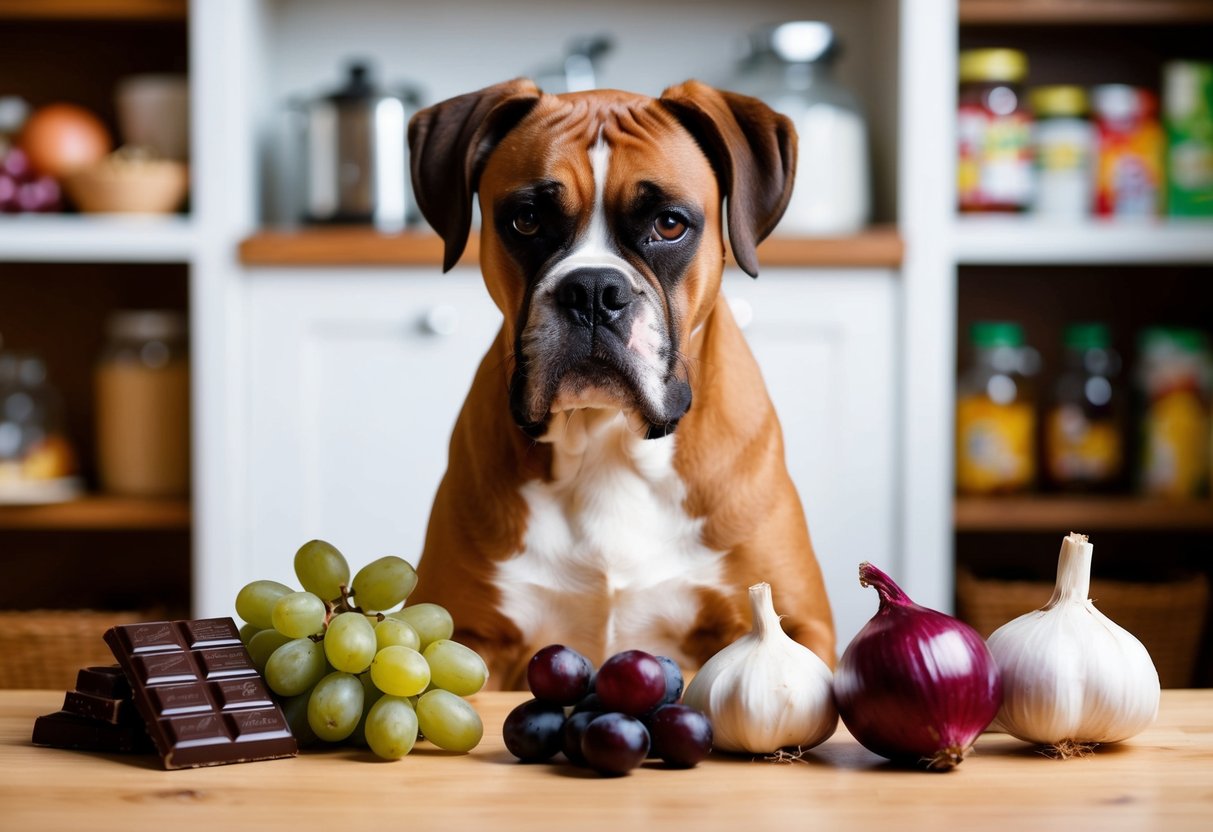
Some fruits and vegetables can be harmful to Boxers. Onions, garlic, and chives can damage their red blood cells, leading to anemia. Even small amounts can cause issues, so it’s best to avoid these entirely.
Grapes and raisins are also dangerous, as they can lead to kidney failure. You may think they’re healthy treats, but they can be toxic to your dog.
Avocado contains persin, which can upset your dog’s stomach and cause respiratory issues in large amounts. Finally, mushrooms can be deadly, as some types are highly toxic. Always err on the side of caution when it comes to these foods.
Human Snacks and Condiments to Exclude
Many human snacks are not suitable for Boxers. Chocolate contains theobromine, which is toxic to dogs and can cause severe health issues, including heart problems.
Xylitol, often found in sugar-free products, can lead to insulin release, causing hypoglycemia, seizures, or liver failure. Always check ingredient labels for this harmful sweetener.
You should also keep dairy products like milk away from your Boxer. Many dogs are lactose intolerant, leading to upset stomachs and diarrhea. Avoid alcohol entirely, as even small amounts can negatively affect your dog’s liver and brain.
Beverages That Pose a Risk to Dogs
Certain drinks are harmful to your furry friend. Caffeine, found in coffee, tea, and energy drinks, can be very dangerous. It can lead to restlessness, rapid breathing, and even heart palpitations.
Ensure your Boxer never has access to alcoholic beverages. Even a bit of alcohol can cause vomiting, coordination problems, or severe health issues.
If you enjoy smoothies or shakes, remember that some ingredients may not be safe. Stick to water for your dog and keep all these risky beverages out of reach for a happy and healthy Boxer.
Non-Toxic Foods that Boxers Can Enjoy
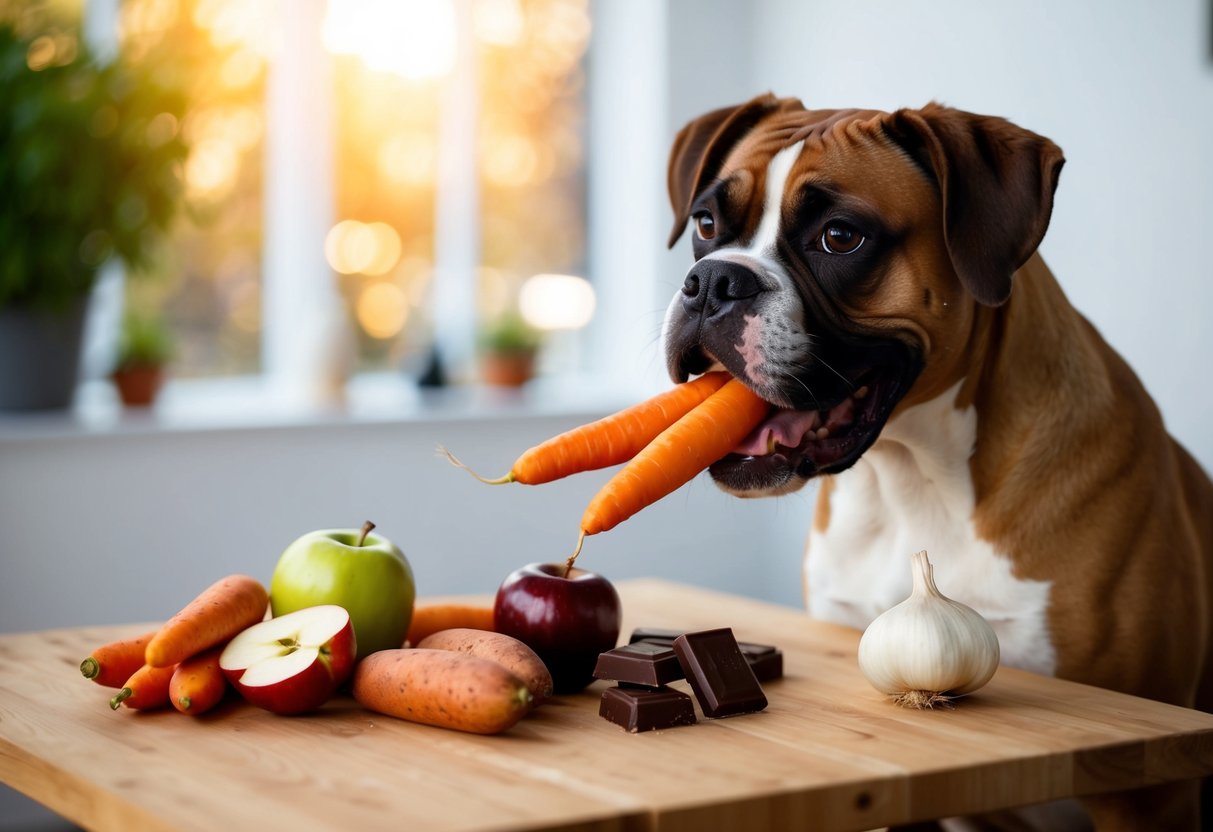
Boxers can enjoy a variety of safe fruits, vegetables, and protein sources. Knowing which foods are healthy for your dog is important for their well-being. Here are some great options for your furry friend.
Safe Fruits and Vegetables for Boxers
Many fruits and vegetables are safe for Boxers and can make tasty treats. Some good choices include:
- Bananas: Rich in vitamins and potassium, bananas can be a fun snack. Just give them in moderation due to their sugar content.
- Broccoli: This vegetable is full of vitamins and fiber. It’s best served raw or lightly steamed.
- Apples: Apples are crunchy and sweet. Just make sure to remove the seeds and core.
- Pumpkin: Dogs love pumpkin! It’s great for digestion and can be served plain or in pureed form.
- Blueberries and Blackberries: These berries are low in calories and high in antioxidants.
- Peaches: Sliced peaches are delicious, but remember to take out the pit.
These fruits and veggies not only taste great but also provide essential nutrients.
Protein and Other Safe Human Foods
In addition to fruits and veggies, there are safe protein options for your Boxer. Consider offering:
- Turkey Skin and Ham: These can be treats, but avoid excess fat. Always cook them without seasoning.
- Peaches: Can be a refreshing treat in warm weather, just remove the pit.
- Cantaloupe: This fruit is hydrating and sweet. Just remove the seeds and rind.
When introducing any new food, do it slowly to avoid stomach upset. Always consult your vet for personalized advice on your dog’s diet. By choosing these safe foods, you’re helping your Boxer stay healthy and happy!
Preventing Accidental Ingestion
Keeping your Boxer safe means being aware of the foods that can harm them. By creating a safe environment and training your dog, you can prevent accidental ingestion of toxic foods.
Creating a Dog-Friendly Space
Start by organizing your home to minimize risks. Store all human foods in cabinets or the refrigerator. Ensure these areas are tightly sealed and out of your dog’s reach.
Avoid leaving food unattended on counters or tables. Even small scraps can attract your Boxer.
Using baby gates can help keep your dog away from the kitchen or dining areas during meal times.
Also, be mindful of dining activities. If you have guests, let them know to refrain from giving your dog food. Clear communication helps prevent accidents.
Regularly check your floors and living spaces for any dropped food items. Even tiny amounts of food can be harmful.
Training Tips to Discourage Begging
Training is vital to prevent begging, which can lead to accidental ingestion. Start by teaching your Boxer basic commands like “sit” and “stay.” Reward them for following your commands, which reinforces positive behavior.
When you eat, have your dog lie down in a designated spot away from the table. This helps them understand that they won’t get food from you directly.
If your dog begs, ignore them until they settle down. Even eye contact can be seen as a reward. Show them affection only when they are calm.
Use treats to reward good behavior instead. This way, they learn that being quiet and patient is more rewarding than begging.


