
Ever spotted a frog hopping around your garden or near a pond in the UK? You might start to wonder—who’s eyeing them up for dinner? Frogs don’t exactly get to enjoy a peaceful life; they’re right in the middle of the food chain.
Lots of animals—snakes, birds, fish, and even some mammals—hunt frogs to survive.
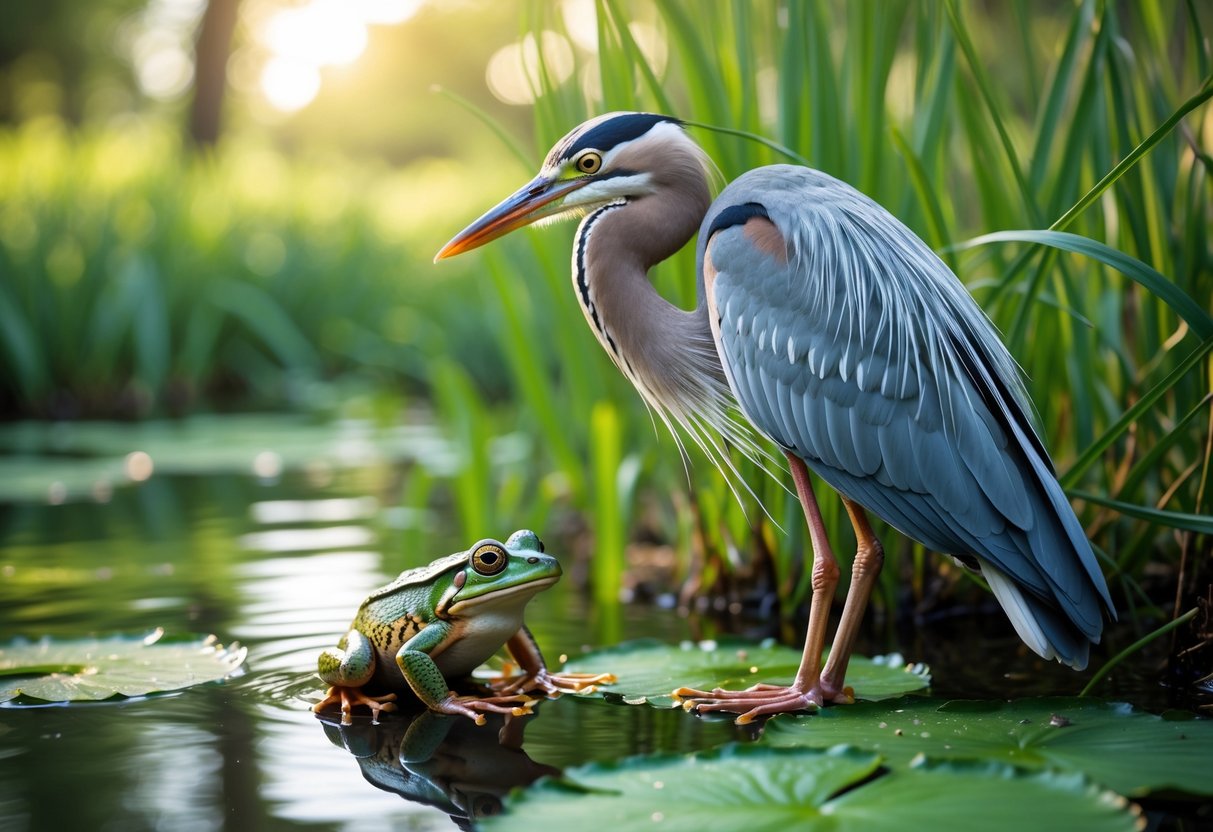
You’ll see grass snakes swimming around ponds, looking for frogs, while birds swoop down from above. Otters and certain fish also consider frogs a tasty snack.
Knowing which animals eat frogs gives you a better idea of how nature keeps things in balance—and honestly, it makes frogs way more interesting than just being something to watch in the garden.
Curious about which UK creatures go after frogs and why they matter so much in nature? Let’s dig in and find out.
Main Predators of Frogs in the UK

Frogs in the UK deal with all sorts of hungry predators—on land, in the water, and in the air. The threats change depending on where the frog lives, whether that’s a pond, river, or forest.
It’s pretty wild how many animals look at frogs as food.
Fish That Prey on Frogs
In UK ponds and lakes, several fish species hunt adult frogs and tadpoles. The largemouth bass is a common predator, especially in ponds where people have introduced them.
Bass will snap at frogs near the surface.
Pike and perch also go after frogs. Pike wait in ambush, hidden among plants, and grab passing frogs.
Perch usually eat smaller frogs and tadpoles.
If you’ve got these fish in your local pond, you’ll probably notice fewer frogs around. Tadpoles, especially, don’t stand much of a chance—they’re slow and easy for fish to catch.
Birds That Eat Frogs
Birds play a huge role in keeping frog numbers in check. Herons and egrets are some of the best frog hunters out there.
You might catch a heron standing still by the water, ready to strike at any moment.
Kingfishers dive under the surface to grab tadpoles and small frogs. Not as common, but birds like crows and magpies will eat frogs if they come across them.
You might even spot owls and hawks going after frogs, especially at dusk or nighttime when frogs get more active.
Mammalian Frog Predators
People don’t usually think of mammals as frog hunters in the UK, but a few do. Otters love a varied diet and often eat frogs near rivers and streams.
Otters swim really well and catch aquatic frogs without much trouble.
Foxes sometimes hunt frogs on land, especially when it’s wet and frogs are out and about.
Raccoons might eat frogs if they’re around, but they’re not native here—just the odd escapee.
Reptiles and Amphibians
Some reptiles and amphibians in the UK also eat frogs. The native grass snake is a top predator, often found hunting frogs near water.
These snakes swim well and can catch frogs both in water and on land.
Lizards like the common viviparous lizard don’t usually eat frogs, but they might grab a small froglet now and then.
Other amphibians, like toads, sometimes eat frog eggs or young tadpoles.
All these predators make life tough for frogs as they grow and move around different habitats.
Life Stages of Frogs and Their Vulnerability to Predators
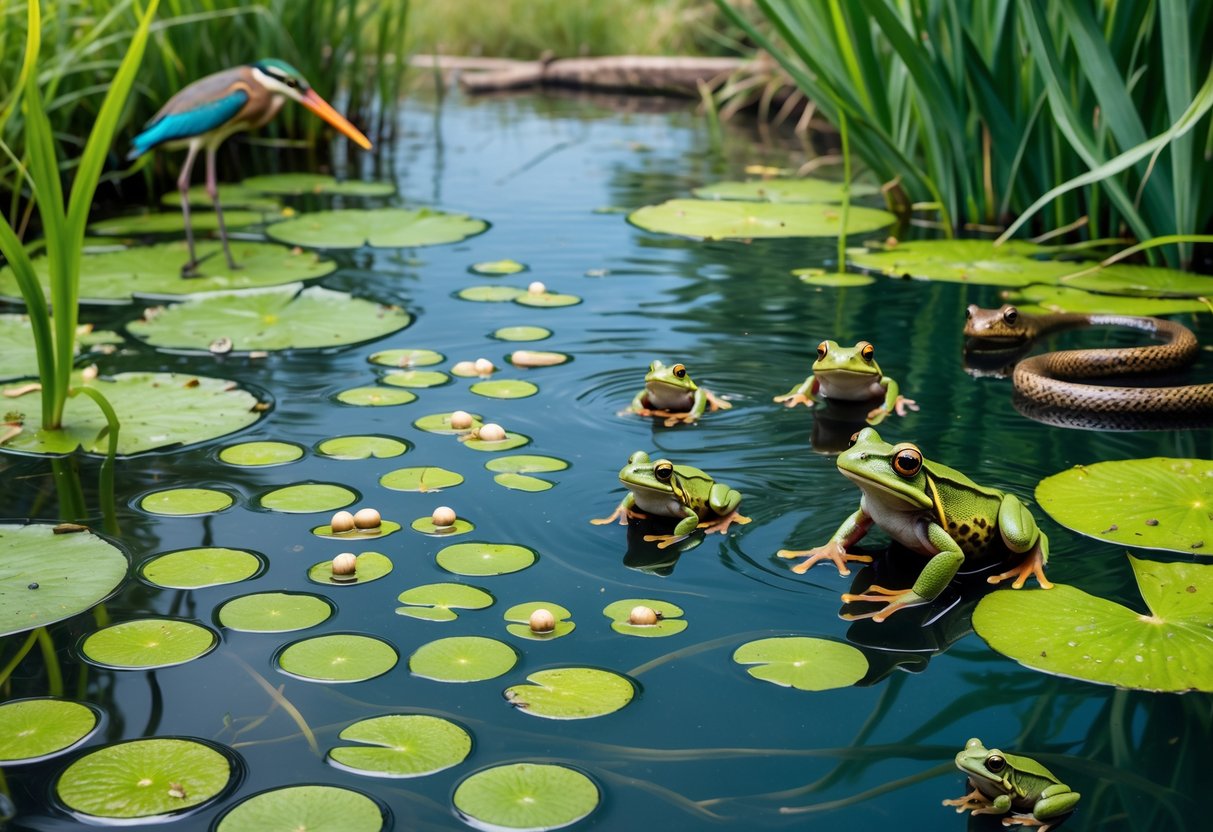
Frogs run into different dangers as they grow up. Tadpoles mostly stay in the water, which makes them easy targets for lots of animals.
Once they become adults and move onto land, they still have to watch their backs. Humans don’t help much either, changing habitats and sometimes hunting them.
Tadpole Predators
Frogs start out as tadpoles, living in ponds or lakes. This stage is risky because so many animals want to eat them.
Fish and aquatic insects love to snack on tadpoles. Birds like herons also scoop them up near the water.
Tadpoles are soft and can’t hop away, so they mostly hide in plants. Some frog species lay eggs in hidden spots, like under leaves, hoping to keep young tadpoles safe.
If you have a garden pond full of tadpoles, don’t expect them all to survive—predators pick them off pretty quickly. Being tiny and slow makes them easy meals.
Risks Faced by Adult Frogs
Adult frogs hop around on land but still need to stick close to water. Their skin is tougher, and they can jump fast, but plenty of hunters are still after them.
Birds like crows, snakes, and bigger mammals are common threats. Frogs can even get eaten by larger insects or sometimes other frogs.
A lot of UK frogs have colors and patterns that help them blend in and hide from enemies. Still, during breeding season, the loud calls from males make them an easy target for predators.
So, if you spot adult frogs in your garden, remember they’re dodging danger all the time—but they’re also a big part of keeping nature balanced.
Human Impact on Frog Survival
Humans do a lot to affect frog survival, often in ways that make life harder for them. When people build on wetlands or drain ponds, they take away the places frogs call home.
Pollution gets into the water and poisons it, so eggs and tadpoles can’t survive like they should. Some folks hunt frogs for their legs to eat, though honestly, that’s not really a thing in the UK.
Roads cause trouble too. Frogs often have to cross them during their migrations, and cars hit a lot of them.
If you want to help, try making a pond without chemicals or just protect the natural spaces nearby. It’s worth thinking about how much humans shape the lives of frogs—it’s not just predators they have to worry about, right?
For more on what eats frogs and their life cycle stages, check out the The Frog Life Cycle – Science Notes and Projects and The Lifecycle of a Frog | Leicestershire and Rutland Wildlife Trust.


