
Ever wonder which animals actually hunt deer the most—and why those predators seem to have the upper hand? Wolves and mountain lions go after more adult deer than any other predators. Coyotes, bears, and bobcats usually target fawns or animals that are already weakened. That’s the blunt truth, and it really helps to know where the biggest threats come from before diving into how they actually hunt.
As you read on, you’ll see how pack hunters, sneaky ambush predators, and opportunistic scavengers all play their part. I’ll point out some clear examples of hunting styles, when they strike, and where you’re likely to spot each predator in action.
Main Predators That Eat Deer the Most
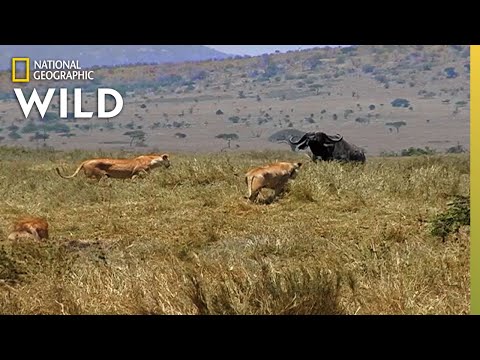
Deer face serious pressure from just a handful of predators that kill both adults and fawns. These predators change depending on the region and use different tactics—from coordinated pack attacks to lone ambushes and scavenging whenever they get the chance.
Wolves: Pack Hunters and Their Role
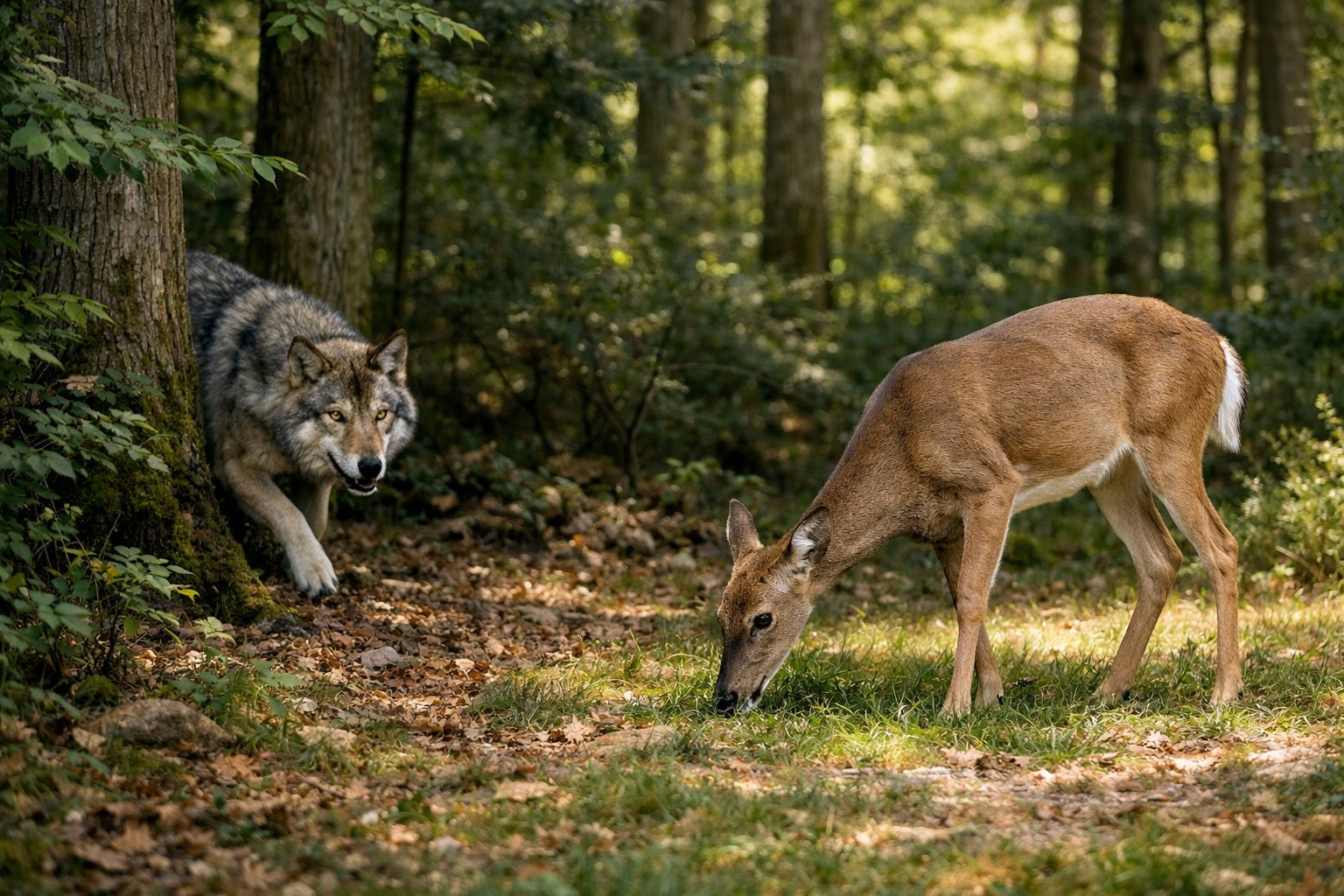
Wolves hunt in packs and take down adult white-tailed deer, mule deer, elk, moose, and other big hoofed animals. Working together, they track, isolate a weak or young animal, and wear it out.
Wolves tend to target the old, sick, or fawns, especially during tough winters when prey struggles. Packs in Alaska and Canada focus on large animals, while smaller populations in the lower 48 states rely more on deer. Wolves shape deer behavior and herd size across whole landscapes.
Bears: Opportunists in the Food Chain
Bears (both black bears and grizzlies) mostly eat plants, bugs, and fish, but they’ll take fawns or scavenge deer carcasses when they get the chance. You’ll usually spot bears eating leftovers or sneaking up on newborn fawns in spring.
Grizzlies sometimes kill larger prey if the opportunity arises, but black bears stick to easier meals like fawns or gut piles left by hunters. In places with reindeer or red deer, bears add some meat to their diet when other food runs low. Bears mostly affect deer by taking the young or scavenging, not by hunting healthy adults all the time.
Coyotes: Major Threat to Deer Fawns
Coyotes really hit deer numbers by killing fawns. In lots of North America, coyotes cause high fawn losses, especially where there’s not much cover and fawns can’t hide. You’ll see coyotes hunting solo or in pairs, sneaking around to find hidden fawns.
Coyotes rarely take adult deer unless those deer are sick or small. How much coyotes affect deer populations depends on the habitat and whether bigger predators are around. In suburban areas, coyotes put extra pressure on white-tailed deer since they get easy access to fawns and don’t have to compete with bigger hunters.
Mountain Lions and Other Big Cats
Mountain lions (puma concolor) and other wild cats use stealth to ambush deer—white-tailed, mule deer, and sometimes elk. A single mountain lion might kill a deer each week, sneaking through cover and pouncing for a quick bite to the neck.
Mountain lions mostly go after adult and juvenile deer in forests, mountains, and brushy foothills. Bobcats and lynx hunt smaller deer or fawns when they can. These cats make open, exposed areas riskier for deer to browse or travel through.
Other Deer Predators and Scavengers
Deer also have to watch out for people, water predators, raptors, and all kinds of carnivores and scavengers. Each group hunts or eats deer in their own way and at different times of year, affecting both fawns and adults.
Humans and Deer Hunting Impact
People shape deer numbers more than any wild animal ever could. Regulated hunting during set seasons removes thousands of deer each year for venison and population control.
Wildlife agencies set bag limits and seasons to avoid overhunting, and to cut down on car accidents or habitat damage from too many deer. Hunting dogs help hunters find and hold deer, but free-roaming dogs and packs might chase or kill fawns or weakened adults. Local rules often restrict dogs during hunting season to keep things fair and safe for deer and dogs alike.
When hunters take deer, scavengers benefit from the leftovers. How people use venison, field dress, and dispose of carcasses decides how much is left for vultures, coyotes, and insects.
Alligators and Aquatic Predation
In the southeastern U.S., American alligators pose a real risk where deer cross water. Deer wade across marshes or ponds to escape predators, but that’s when big alligators might ambush them.
Alligators usually go after fawns or adults that are weak, stuck in deep water, or swimming between islands. Attacks tend to happen near shorelines and beaver ponds, especially in summer when water levels are up. If you’re around swamps, watch the edges and don’t leave deer guts where alligators can find them. Carcasses left near water disappear fast.
Birds of Prey: Eagles and Vultures
Big raptors mostly take young deer or scavenge dead ones. Bald eagles and golden eagles sometimes carry off small fawns in open areas or snatch them in shallow water.
You’ll spot eagles near rivers and open fields where fawns have nowhere to hide. Vultures—turkey vultures and black vultures—almost never kill healthy adults. They clean up deer meat quickly after hunting, accidents, or other predators do the killing. Crows and other scavenging birds pick at carcasses too, and then insects finish the job. If you leave gut piles out, vultures and other birds of prey show up fast.
Wild Dogs, Lynx, and Less Common Predators
Plenty of mammals put extra pressure on deer, especially fawns. Bobcats and lynx will kill fawns, and sometimes they even go after small adults.
Lynx usually target bigger prey when winter hits. You might notice bobcat tracks or scat near the brushy edges where fawns try to hide.
Wild dogs—whether feral or just aggressive domestic dogs—go after deer too. Sometimes they hunt alone, but packs can chase deer down pretty effectively.
Wolves and coyotes, though, really take the lead as pack hunters. They grab more fawns and sick or weakened adults in a lot of areas.
In some places, jaguars and leopards also hunt deer. That mostly happens in Central and South America or parts of Asia.
Brown bears and polar bears occasionally scavenge or kill deer species if they’re around, though that’s not super common.
Carcasses can attract quite the crowd. Leaving deer meat or remains out brings in raptors, vultures, canids, bears, wolverines, wild hogs, and a swarm of insects.
If you want fewer wildlife run-ins, it’s smart to pay attention to where and how you get rid of deer remains.


