
So, you want a quick answer? Wolves and humans kill the most deer by far. Coyotes, bears, and big cats also take plenty—especially fawns. Wolves hunt deer in big numbers wherever their packs roam, but humans (through hunting and vehicles) still cause most deer deaths across much of North America.
Ever wondered why some predators succeed more than others? This post digs into how pack hunters, lone ambushers, and people all shape deer numbers and behavior.
You’ll see which animals really impact deer populations and why fawns seem to have it so rough.
Most Significant Predators That Eat Deer

Let’s get into which predators actually remove the most deer and why that matters for deer herds, hunting, and the bigger ecosystem.
We’ll focus on who kills deer most often, how they do it, and what that means for the animals and for people who rely on venison.
Humans and Deer Hunting
People are the main predator of deer wherever the two cross paths. Hunting seasons, regulations, and methods all set the number of white-tailed and mule deer taken each year.
Managed hunting removes lots of deer—often more than carnivores—because wildlife agencies set bag limits and seasons to control herd size, vehicle collisions, and habitat damage.
Hunters target healthy adults, yearlings, and sometimes fawns. The meat usually ends up as venison for the table or, in some places, for sale.
State wildlife agencies use harvest numbers to estimate trends and decide next year’s rules. Poaching and illegal hunting still happen, though, and that can mess with management efforts.
Wolves as Apex Deer Predators
Wolves kill adult deer more than almost any other wild predator. They hunt in packs, chasing and tiring out even healthy adult white-tailed or mule deer before bringing them down together.
This teamwork makes wolves surprisingly effective at lowering local deer numbers, especially in winter or where deer bunch up.
Their impact isn’t just about kills. Deer change where and when they feed to avoid wolf packs, which shifts how plants get browsed and affects the whole food web.
When wolves return to an area, deer numbers often drop. Wildlife managers pay close attention to these changes when setting hunting seasons and conservation plans.
Coyotes’ Role in Deer Mortality
Coyotes mostly target fawns but will take down adult deer if the opportunity comes up. Their biggest impact shows up during fawning season; coyotes sneak up and use speed to catch young deer that can’t yet escape.
In a lot of places, coyotes cause heavy fawn losses, which drops the number of young deer that make it to adulthood.
Coyotes adapt well and live close to people. Their numbers are rising in both suburbs and rural areas, so encounters with deer are more common.
Unlike wolves, coyotes usually hunt alone or with just one or two others. Wildlife managers pay attention to coyote predation when deer numbers drop and sometimes allow targeted control if fawn survival is a big concern.
Links: wolves as apex predators (https://biologyinsights.com/what-eats-deer-a-breakdown-of-their-natural-predators)
Other Notable Animals That Eat Deer

Here are a few more predators that take deer at different life stages and in different places. Some attack live deer, others scavenge fawns or carcasses.
The details below explain how each animal hunts and where you’re most likely to find them.
Bears as Opportunistic Deer Hunters
Bears hunt deer mostly when fawns are just born or when adults are weak. In spring, black bears and brown bears (including grizzlies) use their sharp noses to sniff out bedded fawns near brush or forest edges.
Bear predation peaks in May and June, right when bears need protein after a long winter.
Bears don’t chase adult deer like wolves do. Instead, they ambush or scavenge.
If a deer is injured, trapped by deep snow, or sick, a grizzly can kill and haul off an adult. Black bears usually stick to fawns or scavenge leftover carcasses.
If you live near woods or wetlands, you might notice bears and deer sharing the same space in many U.S. states and parts of Canada.
Bears mostly eat plants and berries, but when the chance pops up, they won’t turn down an easy deer meal.
Mountain Lions and Wild Cats
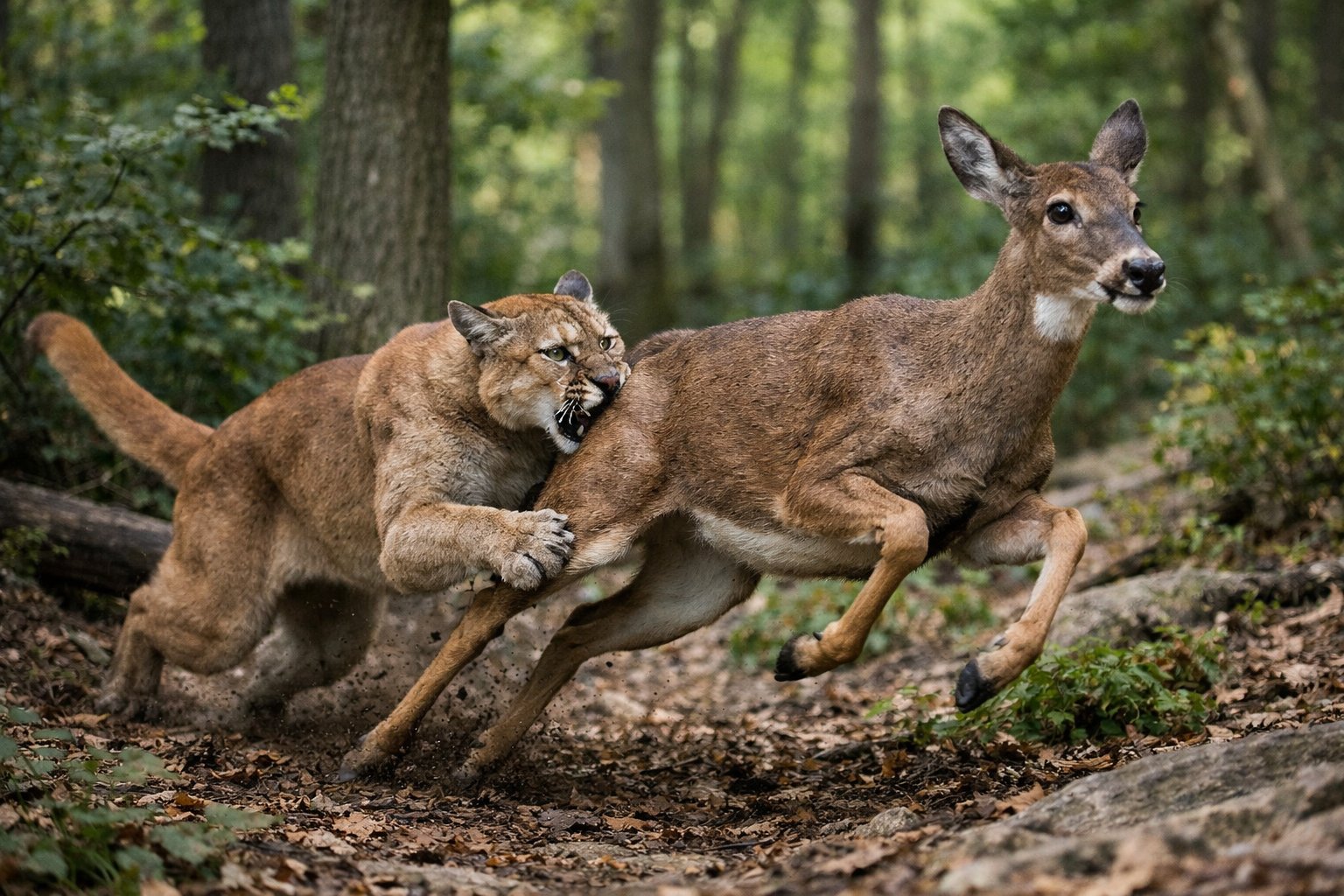
Mountain lions, or cougars, hunt alone and are expert ambush predators. They often kill adult deer in western North America, stalking from cover and then leaping out in a quick, powerful attack aimed at the neck or back.
A single mountain lion might kill several deer a year within its big territory.
Smaller wild cats—bobcats and lynx—focus more on fawns and weakened adults. Bobcats hunt near brush and forest edges, especially during fawning season.
Lynx, built for deep snow, target deer slowed down by winter. These cats wait, pounce, and go for a quick, fatal bite.
In places with thick cover or heavy snow, wild cats can be a major reason fawns don’t survive. If you see tracks or scat near deer bedding spots, a wild cat might be nearby.
Alligators and Less Common Predators
Alligators ambush deer near water in the southeastern U.S., especially Florida. If you live there, you should keep pets and livestock away from marshy ponds where big male gators might be lurking.
Alligators hide underwater and strike fast, dragging prey under to drown it.
Other less common deer predators include jaguars and leopards where their ranges overlap with deer. Jaguars in Central and South America kill deer by biting the skull.
Wolverines sometimes scavenge or kill small deer in Arctic or high mountain areas if the opportunity comes up.
Feral dogs can also be a problem in rural and suburban places. Packs of dogs may chase and kill deer of any age, and they often don’t even eat what they kill, which just adds to local deer losses.
Birds of Prey and Scavengers
Large raptors and scavengers often go after fawns and carcasses. Golden eagles and bald eagles have actually swooped down and carried off very young fawns in open areas.
Eagles hunt from above and strike with their talons, especially when they spot fawns left alone. That’s a tough break for the fawn, but it happens.
Vultures—like turkey vultures and black vultures—almost never attack healthy deer. Still, they show up fast and pick carcasses clean.
Crows and other corvids jump in too, feeding on exposed remains. Sometimes they’ll strip a small fawn.
Raptors, eagles, and scavengers all play a part in how quickly a carcass vanishes. They even affect which predators might come back to the kill later.
If you stumble across a fresh deer carcass, don’t be surprised if vultures and raptors show up within just a few hours—at least in places where they’re common.


