
When a raccoon stares at you, it can feel both intriguing and unsettling. A raccoon staring at you is often assessing its surroundings, checking for potential threats or food sources. These curious creatures are naturally wary of humans, so their gaze can indicate they are trying to understand what’s happening in their environment.
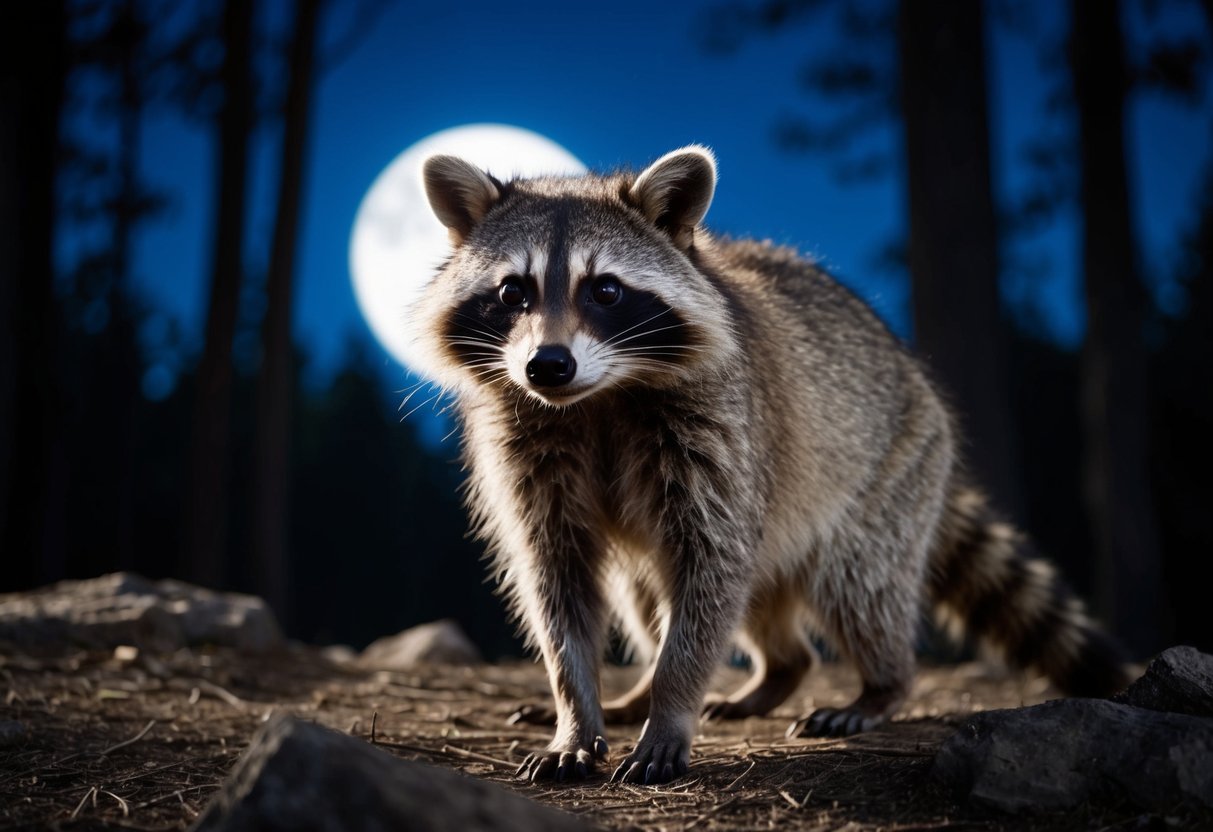
If a raccoon isn’t afraid and seems bold, it may be used to human interaction, especially if it has learned that people can be a source of food. This behavior can arise from living near campgrounds or urban areas, where they often scavenge for meals.
Understanding why a raccoon stares can help you react appropriately. Whether you find it fascinating or slightly alarming, knowing what their behavior means adds depth to your outdoor experiences.
Understanding Raccoon Behavior

Raccoons are curious and intelligent animals, and their behavior can be quite fascinating. When a raccoon stares at you, it can indicate a variety of things based on the situation and their past experiences with humans.
The Significance of a Raccoon’s Gaze
When a raccoon gazes at you, it may be assessing the situation. Raccoons are known for their sharp senses and can use their sight to determine if you are a threat or a friend.
If a raccoon approaches and then backs away, it likely means that they are not feeling aggressive. Instead, they are trying to understand what you are and whether it’s safe to be near.
Their gaze can be a sign of curiosity or caution. In some cases, they might be searching for food or looking for human interaction.
Types of Raccoon Encounters
Raccoon encounters can vary greatly. In urban areas, you might spot them rummaging through trash cans or exploring your yard. These encounters often occur at night when they are most active.
In other cases, a raccoon may appear near your home due to previous experiences with humans, especially if they have been fed before. This can lead to them approaching more closely, hoping for food.
Remember, not all raccoon interactions are the same. Some may be friendly, while others might show signs of fear or aggression. If you encounter an aggressive raccoon, it’s best to give them space and avoid any interaction.
Interpreting a Staring Raccoon
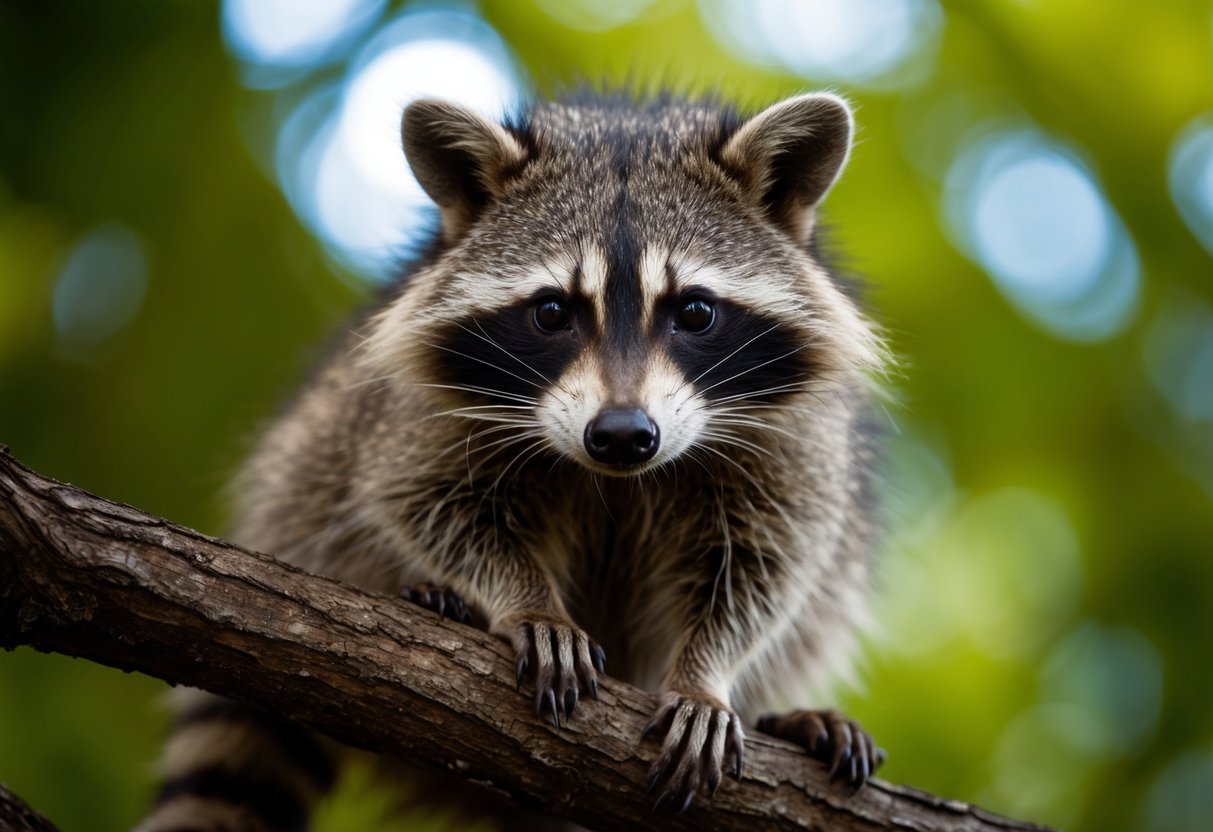
When you encounter a raccoon that is staring at you, it can feel puzzling. Understanding the difference between a normal stare and an aggressive one, as well as recognizing raccoon body language, is key to interpreting their behavior and keeping safe.
Normal Vs. Aggressive Stares
A raccoon’s stare can mean different things, depending on the context. A normal stare is often a sign of curiosity. Raccoons are naturally inquisitive animals. They might be observing you to assess if you are a threat or just part of their environment.
In contrast, an aggressive stare usually indicates fear or the potential for a confrontation. If a raccoon stares with a rigid body posture, ears pinned back, and tail raised, it might feel threatened. This behavior can happen if you unintentionally get too close to its territory.
If you see these signs, it’s best to back away gently. Do not approach a raccoon displaying signs of aggression, as this could lead to a wildlife conflict.
Raccoon Body Language
Understanding raccoon body language can help you interpret their stares better. For instance, if a raccoon keeps its body low to the ground and avoids direct eye contact, it’s likely feeling uncertain and is not a threat.
On the other hand, if the raccoon approaches you with a steady gaze, ears forward, and a slightly raised body, it might be displaying confidence or assertiveness.
Always be cautious around raccoons. If they show signs of aggression or appear rabid, remain a safe distance away. Rabid raccoons may display unusual behavior, like staggering or excessive aggression, making it essential to stay alert.
Safety Measures and Raccoon Deterrence
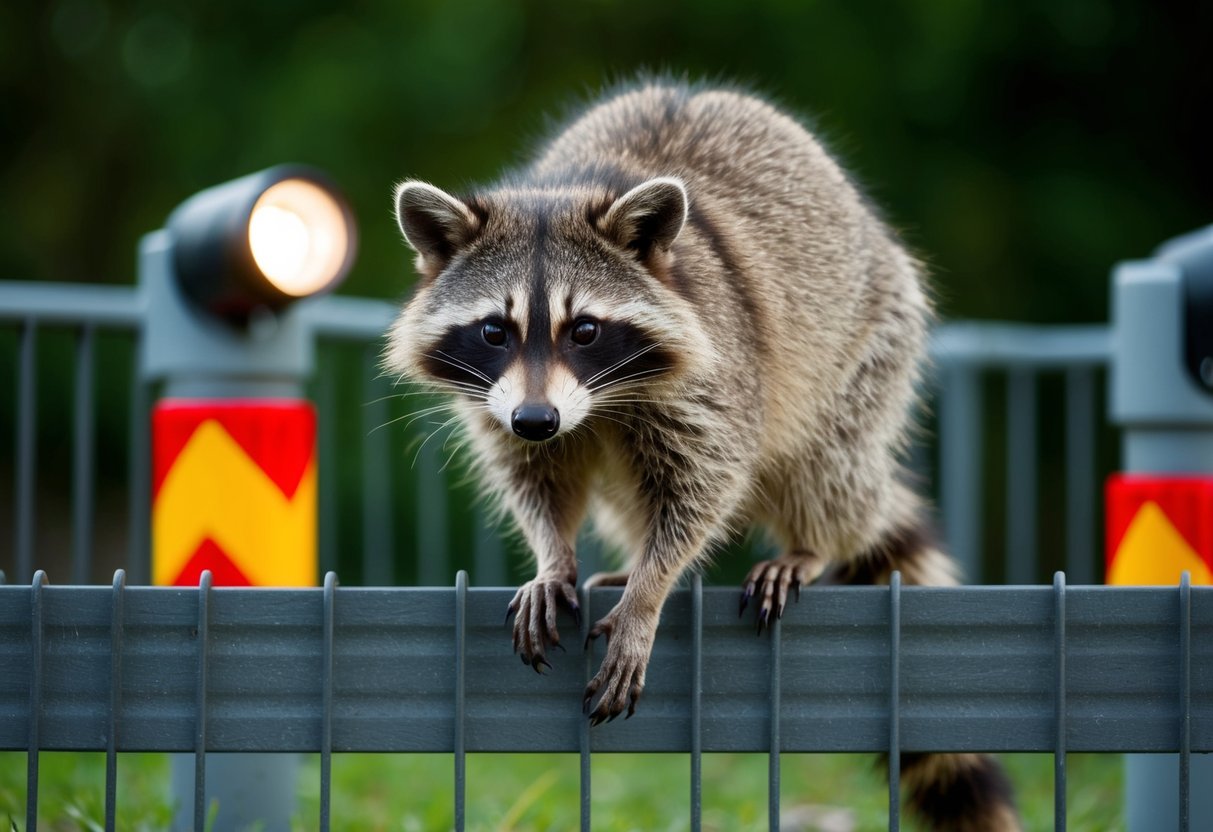
Understanding how to prevent conflicts with raccoons and knowing what to do if one approaches you can keep you safe. Raccoons can be curious, but taking the right steps helps you manage encounters responsibly.
Preventing Conflicts with Raccoons
To keep raccoons away from your property, start by securing food sources. Store trash in closed containers and avoid leaving pet food outside. Raccoons are drawn to easy meals, so keeping your yard clean is essential.
You can also use certain deterrents. Loud noises, like banging pots or playing music, can scare raccoons away. Some people recommend installing motion-activated lights or sprinklers. These can startle raccoons and make your yard less welcoming.
If you have persistent issues, consider contacting a professional for raccoon removal. They can help humanely manage the situation without causing harm to the animals or your property.
What to Do If a Raccoon Approaches
If a raccoon approaches you, remain calm and don’t panic. Avoid sudden movements and never try to touch it. Raccoons may bite if they feel scared or threatened, so keeping a safe distance is key.
If the raccoon gets too close, make loud noises or throw small objects away from you to redirect its attention. Back away slowly while keeping an eye on the animal.
In the rare case of a raccoon attack, seek medical help immediately. Raccoon bites can lead to infections or rabies. Always take any potential risks seriously to protect your health and well-being.
Raccoon Family Dynamics
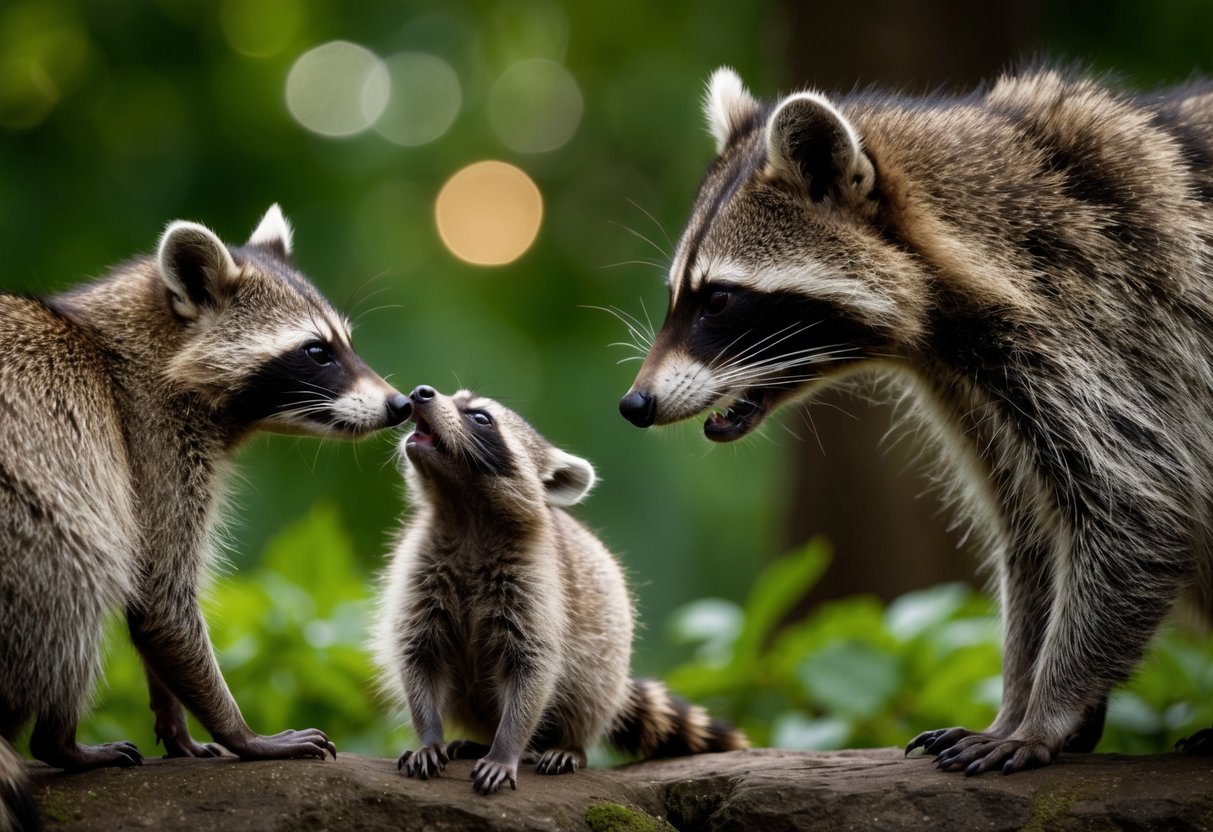
Raccoons have interesting social structures and family behaviors. Understanding how they interact can help you appreciate their unique way of life.
Understanding Nursery Behavior
A female raccoon, called a doe, typically creates a nursery for her young. She finds a safe place, often in trees or burrows, to keep her kits protected.
These nurseries can house several baby raccoons that stay close to their mother. A doe is very attentive, often returning to check on her babies when foraging for food.
The kits are usually born in late winter or early spring and depend heavily on their mother for warmth and nourishment at first. During this time, they learn social behaviors from watching her and interacting with each other.
Even though the male raccoon mates with the female, he does not stay to help raise the kits. He leaves shortly after mating, allowing the female to handle all nurturing.
Identifying Baby Raccoons and Their Behavior
Baby raccoons, also known as kits, are typically born blind and hairless. You might notice them around late spring when they begin to venture out of the nursery.
Kits are playful and curious, which helps them develop their social skills. They love to explore their environment and often engage in playful wrestling with their siblings.
As they grow, these young raccoons start to accompany their mother on nighttime foraging trips. You may observe a group of raccoons, including both adults and kits, working together to find food.
Kits rely on their mother for about six months before they start becoming more independent. A strong bond is formed in this time, as they learn crucial survival skills from her.


