
If you’re a dog owner, you might worry about your pet’s encounters with wildlife. Raccoons, known carriers of rabies, can pose a risk to your furry friend. Yes, a raccoon can give your dog rabies if it scratches or bites your dog. Understanding this risk can help you take steps to keep your pet safe.
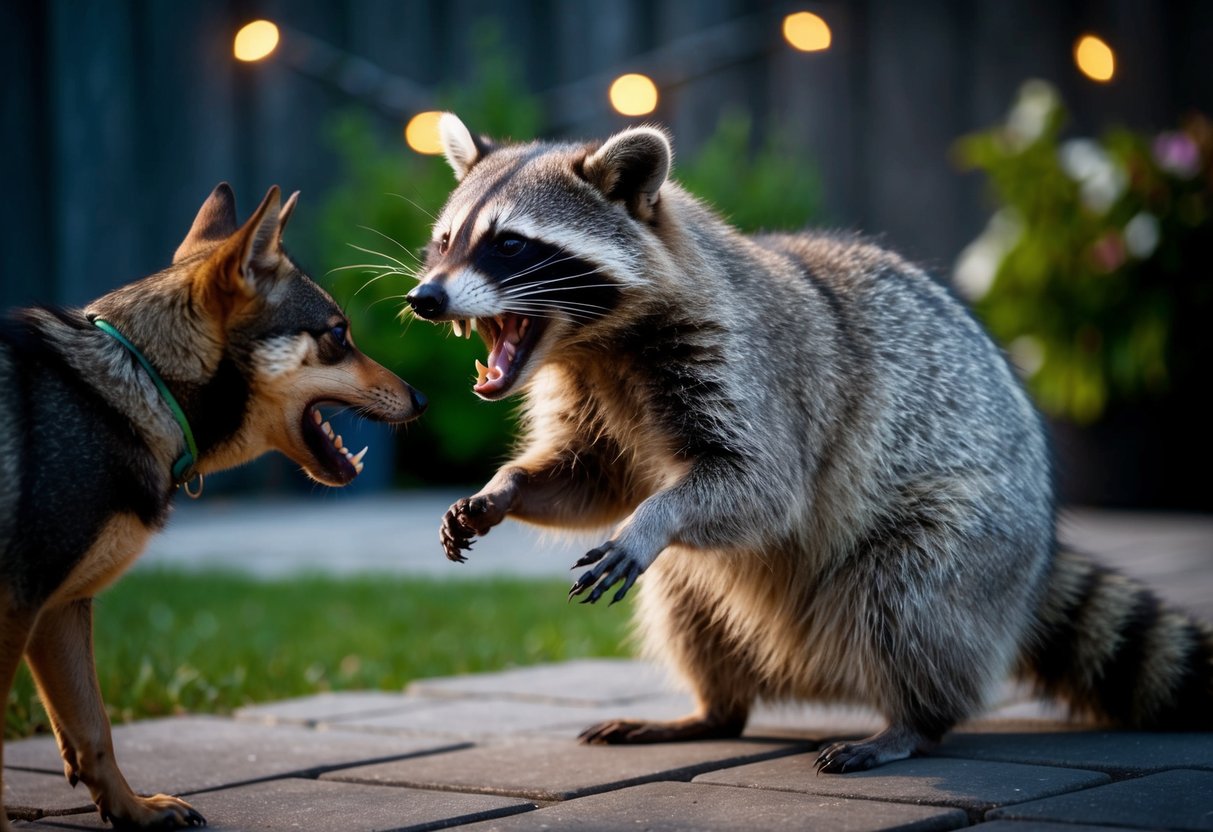
Many homeowners may not realize how often dogs come into contact with raccoons, especially if you live near wooded areas. Raccoons are most active at night, increasing the chances of unexpected encounters.
Being aware of their behavior and potential threats is important for your dog’s well-being.
To prevent rabies, it’s crucial to ensure your dog is vaccinated. Regular check-ups and vaccinations can protect your pet from this deadly virus.
Keeping your trash secure and monitoring your dog’s outdoor activities during raccoon peak hours can further reduce risks. Your vigilance can help keep your dog safe and healthy.
Understanding Rabies in Animals
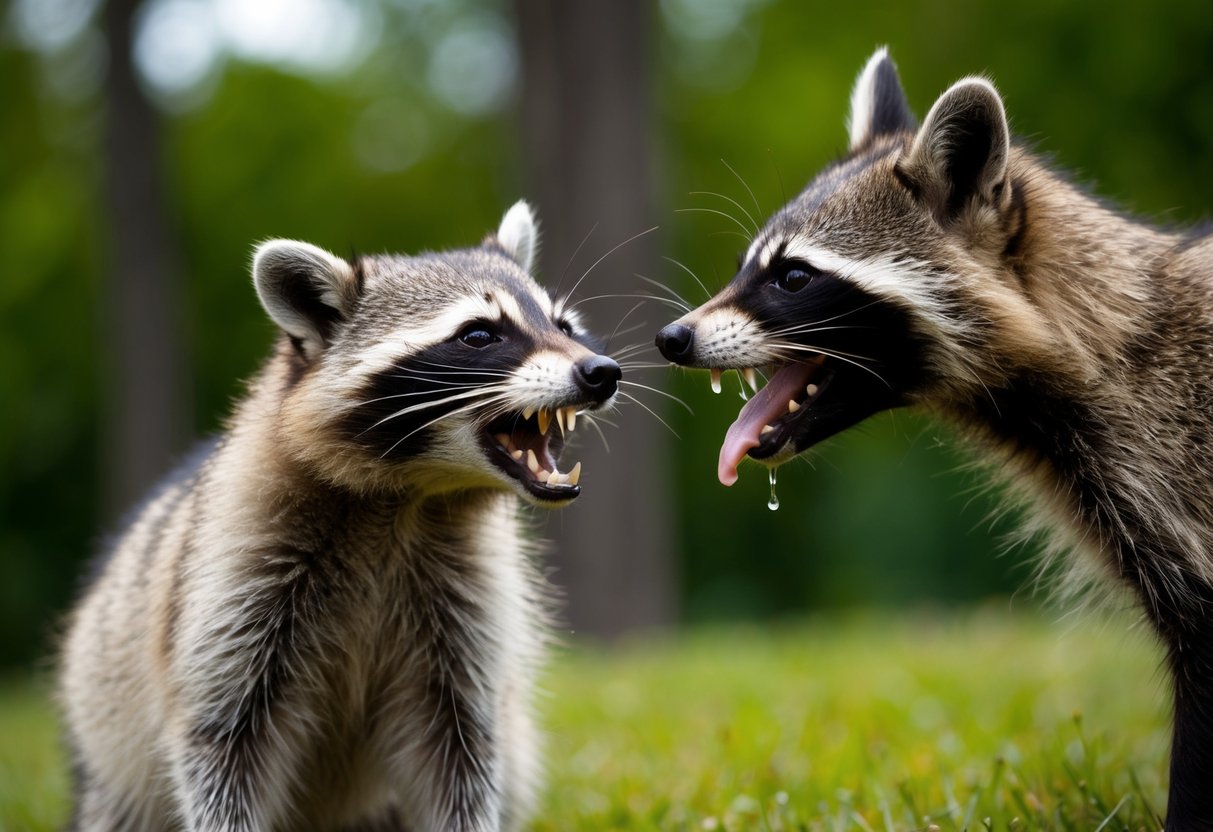
Rabies is a serious virus that affects many warm-blooded animals, including raccoons. Knowing how the virus works, recognizing the signs in raccoons, and understanding how it can spread to your pets is essential for their safety.
Rabies Virus and Its Effects
The rabies virus attacks the central nervous system of infected animals. Once symptoms appear, the disease is almost always fatal.
The virus is mostly spread through bites or scratches, as saliva from an infected animal can carry the virus.
In wild animals, raccoons are often primary carriers of rabies. They can become aggressive and exhibit strange behaviors, which is unlike their usual demeanor. Unfortunately, once symptoms start, the infected animal usually has a few weeks left to live.
Signs of Rabies in Raccoons
Identifying rabies in raccoons can be tricky. Common signs include:
- Unusual aggression
- Excessive salivation
- Difficulty swallowing
- Disorientation or staggering
- A tendency to wander during the day
Raccoons typically are nocturnal, so seeing one out during the day can be a red flag. If you notice these behaviors, it’s vital to keep your pets away and contact animal control. Early intervention can save lives.
Zoonotic Disease Transmission
Rabies is classified as a zoonotic disease, meaning it can spread from animals to humans. If a raccoon scratches or bites your dog, there is a risk of transmission.
Vaccination is crucial in preventing rabies in pets. Ensure your dog is vaccinated and their shots are up to date.
If you suspect your pet has been exposed, reaching out to a veterinarian right away is essential. Immediate medical attention can prevent the virus from spreading, keeping your dog safe and healthy.
Protecting Your Dog from Rabies
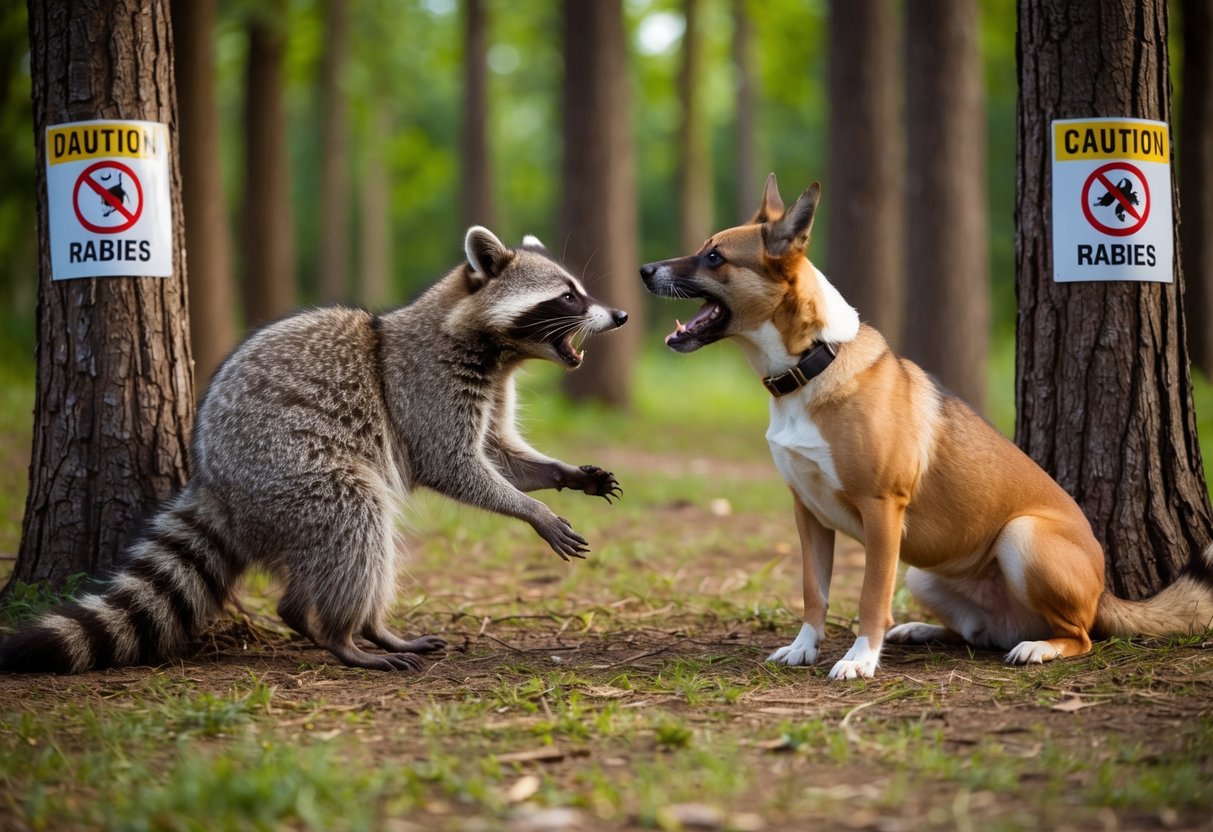
Keeping your dog safe from rabies requires proactive measures. Focus on vaccinations, knowing what to do in case of bites, and providing proper training and precautions. These steps are key to ensuring your furry friend remains healthy and protected.
Importance of Rabies Vaccination
Rabies vaccination is crucial for your dog’s health. The vaccine helps create strong immunity against the virus.
Ensure your dog receives the initial vaccination and regular boosters as recommended by your veterinarian.
Always check the vaccination records. If your dog has been exposed to a raccoon or other wild animals, confirm that their vaccinations are up to date. This simple step can save your dog’s life.
A vaccinated dog is significantly less likely to contract rabies, even if they come into contact with an infected animal.
Immediate Veterinary Care for Bites
If your dog gets bitten, seek immediate veterinary care. Even small bites can pose a risk for rabies if they break the skin.
The saliva of an infected animal can transmit the virus through any open wound.
When visiting the vet, provide as much information as possible about the incident. This includes details about the other animal and the nature of the bite.
Your vet may recommend additional rabies vaccinations, monitoring, or other treatments to ensure your dog’s safety.
Remember, acting quickly can make a significant difference in your dog’s outcome.
Training and Precautions
Training your dog is essential for their safety. Teach them to avoid wild animals and any risky situations. This can help prevent encounters with raccoons and other potential rabies carriers.
When walking your dog, always use a leash to maintain control.
Additionally, consider using protective gear like muzzles if your dog tends to approach unfamiliar animals.
You should also be aware of your surroundings. Keep an eye out for raccoons or other wild animals, especially at dawn or dusk when they are most active. This awareness can help you avoid dangerous encounters and keep your dog safe.
Dealing with Potential Exposure
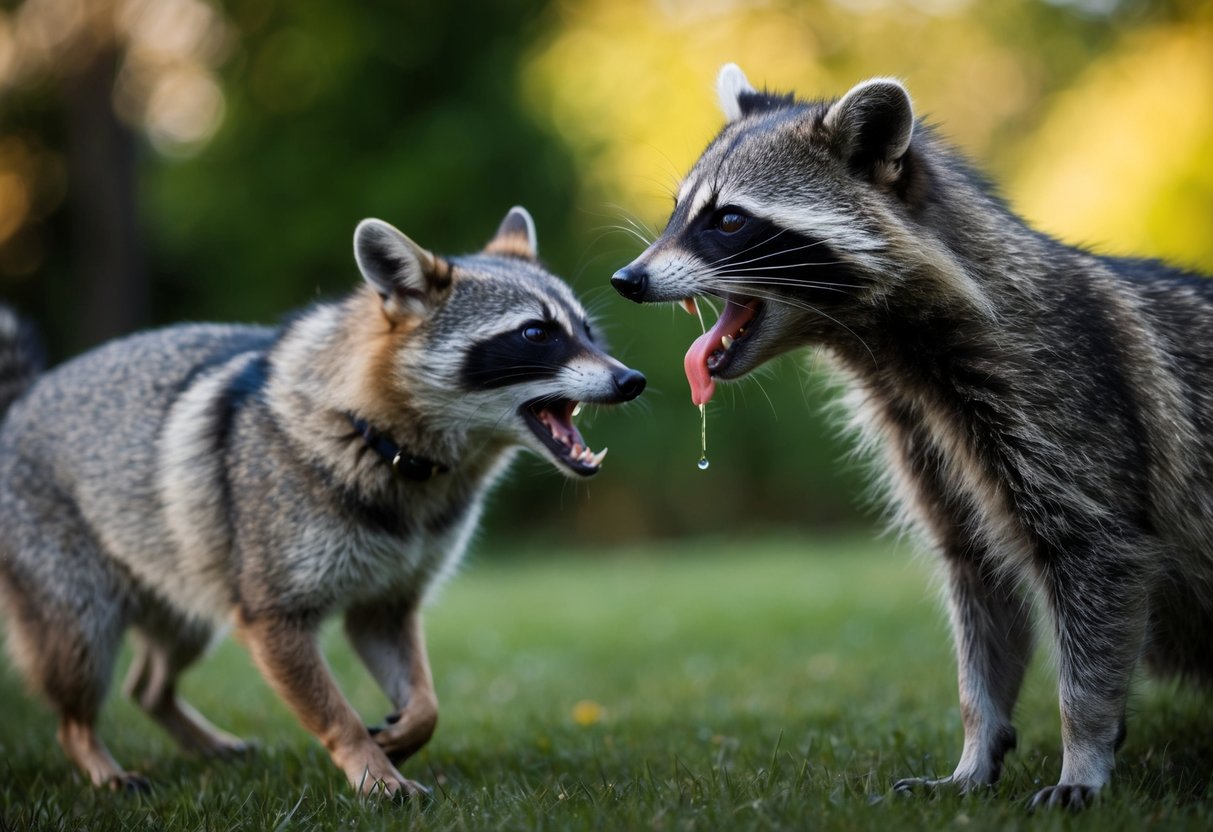
When it comes to your dog’s safety, knowing how to handle potential exposure to rabid animals is crucial. Understanding the signs of rabies in animals, when to contact the proper authorities, and what steps to take if exposure occurs can make a big difference.
Identifying and Responding to Rabid Animals
Rabid animals often show clear signs that you should watch for. Look for aggressive behavior, excessive drooling, or difficulty walking. These are common symptoms of rabies in raccoons and other wildlife.
If you see a raccoon acting strangely, keep your distance. Do not attempt to approach or capture the animal.
Instead, observe from afar and keep your pets indoors to avoid any potential contact.
It’s essential to recognize that rabies transmission can occur through bites or contact with saliva. If your dog has been scratched or bitten, take it seriously and act quickly.
When to Contact Animal Control
If you suspect a raccoon is rabid, contact animal control immediately. Prompt action is crucial for safety. Explain the situation clearly, mentioning any concerning behavior you’ve observed.
Additionally, if a raccoon approaches you or your animal, do not hesitate to call for help.
Trained professionals can safely assess the situation and take the necessary actions. Reporting rabid raccoons can help protect your neighborhood and prevent further incidents.
Post-Exposure Measures and Treatment
If your dog has been exposed to a potentially rabid animal, immediate steps are vital.
First, keep your dog isolated from other pets to prevent any possible spreading of the virus. Then, consult your veterinarian without delay.
They may recommend a rabies booster shot if your dog is not up-to-date on vaccinations. In some cases, post-exposure treatment may be necessary.
Follow your vet’s advice closely to ensure your dog’s health and safety, as rabies is a serious infection.
Preventing Raccoon Encounters
Preventative measures can significantly reduce the chance of encountering raccoons. Secure your trash cans with tight lids and avoid leaving pet food outside. This helps minimize attracting raccoons to your area.
Using motion-activated lights can also deter wildlife from coming near your home. These lights startle animals and can make your yard less appealing to them.
Maintaining a clean environment is essential for discouraging raccoon visits.
Additional Risks and Considerations
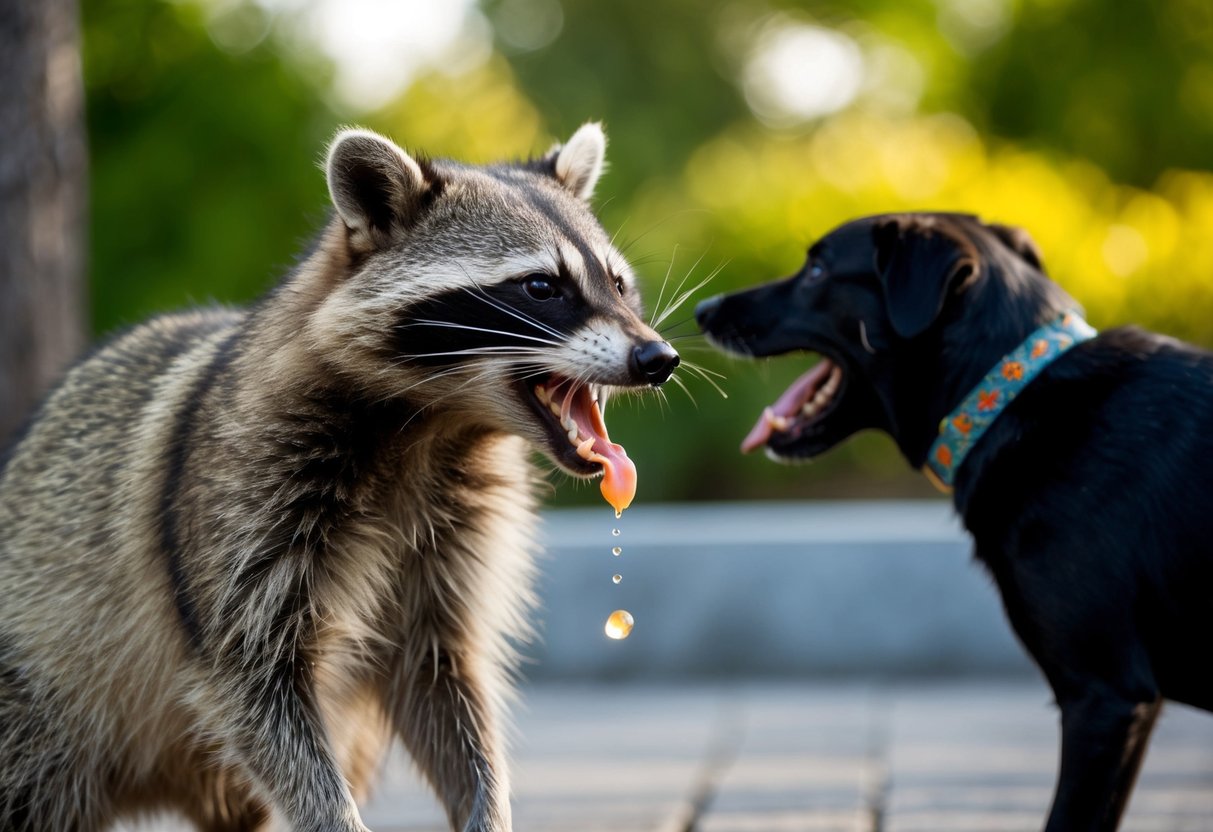
When your dog interacts with raccoons, there are more risks to consider beyond rabies. It’s essential to be aware of diseases like leptospirosis and to keep an eye on your dog’s health after any encounter.
Leptospirosis and Other Dangers
Raccoons can carry the bacteria that causes leptospirosis, a serious illness that affects dogs. Your dog can get it through contaminated water, soil, or even a raccoon’s urine.
Symptoms include fever, vomiting, and lethargy. If not treated promptly, leptospirosis can lead to kidney damage or liver failure.
It’s important to keep your dog away from areas where raccoons hang out. Also, ensure your dog is vaccinated against leptospirosis, especially if you live in an area with wild raccoons.
Monitoring Your Dog’s Health
After a raccoon encounter, watch for signs of illness. Check for any changes in behavior, appetite, or energy levels.
Look out for symptoms like:
- Fever: Elevated temperature can indicate an infection.
- Vomiting: Frequent vomiting can be a sign of leptospirosis.
- Lethargy: Reduced energy may suggest health issues.
If you notice any of these symptoms, contact your veterinarian. Keep records of your dog’s rabies booster if it was recent, to discuss with the vet.
Being vigilant about your dog’s health will help catch any potential problems early.


