
When a bee stings you, it injects venom right into your skin. Your immune system jumps into action and starts fighting off the toxin.
Bee venom brings pain, redness, and swelling as your body reacts. Most people only deal with mild symptoms, and those fade pretty quickly.
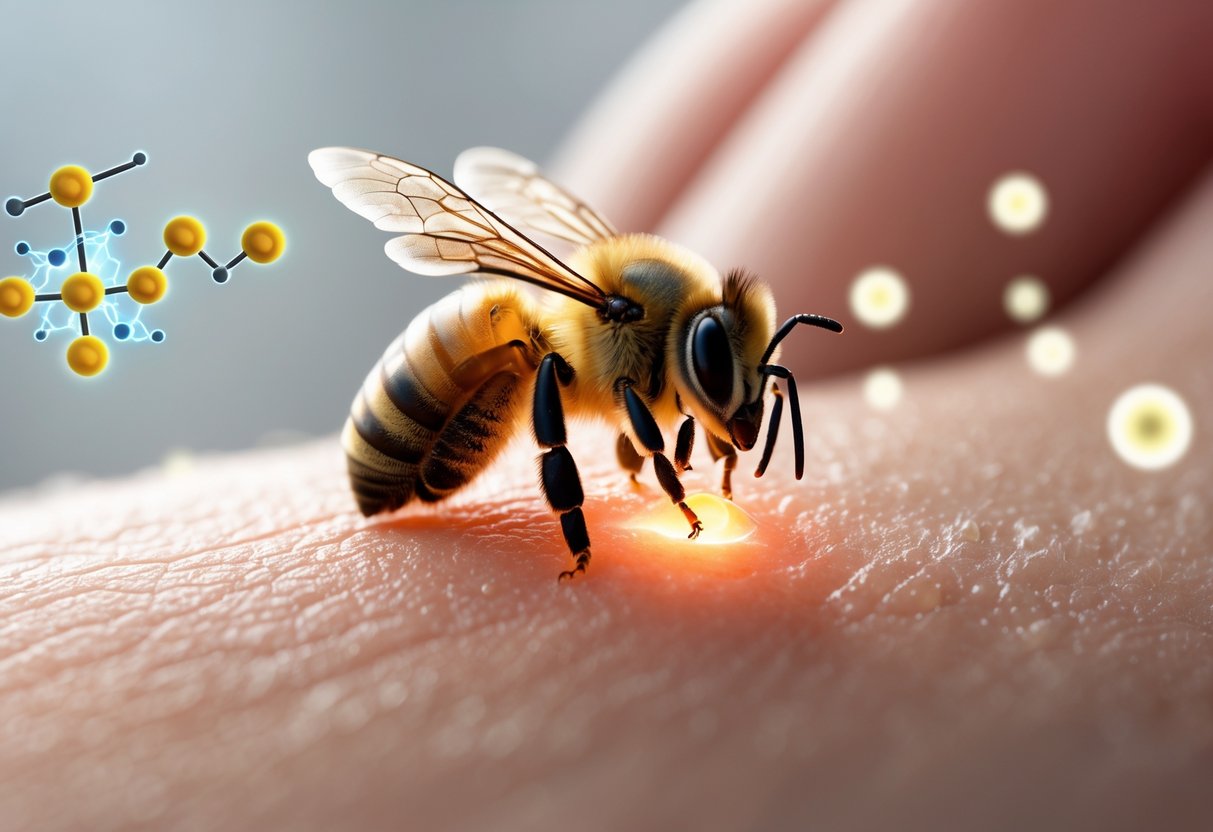
But bee venom isn’t just about discomfort. Some folks actually use it—on purpose—in controlled settings like bee venom therapy to help with pain or allergies.
If you know what bee venom does inside your body, you can decide if you’re curious about trying it or would rather steer clear.
How Bee Venom Interacts With Your Body

As soon as bee venom enters your skin, your body reacts in a bunch of ways. Your immune system kicks in, pain signals fire, and you might notice swelling.
The venom contains several compounds, each with its own effect. Some irritate the skin, while others mess with your nerves or immune cells.
Components of Bee Venom
Bee venom—also called apitoxin—is a mix of proteins and enzymes. The main player is melittin, making up about half of the venom’s dry weight.
Melittin breaks down cell membranes and causes pain and swelling.
You’ll also find phospholipase A2, an enzyme that breaks down cell fats and ramps up inflammation.
Apamin is a small neurotoxin that messes with nerve signals and changes how you feel pain.
Another part, adolapin, might help reduce pain and swelling, but honestly, scientists are still figuring out exactly how it works.
Hyaluronidase breaks down the tissues between your cells, which lets the venom spread further into your skin.
Each part of bee venom does something different, so it’s a pretty complex mix.
Immune Response and Inflammation
When bee venom gets in, your immune system reacts fast. White blood cells rush to the sting, trying to fight off the venom.
That’s what gives you redness, swelling, heat, and pain. These symptoms come from chemicals your body releases to battle the invader.
Enzymes like phospholipase A2 trigger inflammation, which helps clean up damaged tissue but also makes things uncomfortable.
If you’ve been stung before, your body might recognize the venom and react even more strongly.
Researchers look at bee venom for managing allergies or immune disorders, but you have to use it carefully.
Pain and Neurological Effects
Bee venom stings right away because of melittin and apamin. Melittin damages your cell membranes, sending pain signals straight to your brain.
Apamin affects your nervous system by blocking certain channels in nerve cells, which can change how you feel pain.
Some people try bee-sting therapy for chronic pain. Maybe adolapin helps reduce pain, but scientists still don’t know exactly how bee venom affects nerve pain.
Because bee venom has neurotoxins, it affects your nerves in ways that other poisons don’t. That’s why the pain is so sharp—and why the effects are a bit complicated.
Risks and Allergic Reactions
Bee venom can trigger serious reactions in some people. Most folks just get local pain and swelling, but allergic reactions can be dangerous.
Anaphylaxis is a severe allergic response that needs emergency help right away.
If you’re allergic to bee stings, your immune system might overreact. You could get trouble breathing, swelling in your face or throat, a fast heartbeat, or feel dizzy.
Bee venom might also interact with medications, especially blood thinners or immune drugs. Always let your doctor know if you’re thinking about bee venom therapy.
Because the venom is toxic, too many stings or improper use can cause symptoms like muscle weakness, fever, or even kidney damage—though that’s rare.
If you’re sensitive or have other health problems, you really need to be careful.
Therapeutic Applications and Research

Bee venom has some unique properties that can affect your body in surprising ways. It interacts with your immune system, reduces inflammation, and even supports skin health.
Some people say it helps with certain conditions, too.
Anti-Inflammatory and Pain Relief
If you get bee venom injections, the venom acts as a natural anti-inflammatory. It can cut down swelling and redness, especially in areas affected by arthritis.
The venom’s compounds block the chemicals that cause inflammation, which can make your joints feel less stiff and painful.
Bee venom therapy might also help with pain from things like fibromyalgia or asthma by calming your immune response.
These anti-inflammatory effects target both pain and swelling, and you don’t need to rely on regular medicines.
Using bee venom like this is part of apitherapy, and some studies suggest it can make you more comfortable during flare-ups.
Autoimmune and Neurological Conditions
If you have an autoimmune disease—think multiple sclerosis or rheumatoid arthritis—bee venom therapy might help regulate your immune system.
The venom contains active compounds that could reduce your immune system’s attacks on your own tissues.
Research points to bee venom’s potential in neurological conditions, too, like Parkinson’s disease.
Injectable bee venom might improve motor function and reduce nerve inflammation.
More studies are needed, but its antiviral and antioxidant properties could help protect your brain and nerves.
Cosmetic and Skin Health Benefits
Bee venom can actually give your skin a boost by speeding up wound healing and smoothing out wrinkles. It fights off bacteria and free radicals, so your skin gets some real protection from damage.
You’ll notice that a lot of skincare brands have started adding venom or bee products like propolis to their formulas. They say it helps with skin tone and leaves your skin feeling softer.
When you put bee venom on your skin, it calms down inflammation and helps your body fight off infections. If you’re curious about natural skincare, bee venom therapy might be worth a shot for improving your skin’s look and giving it a bit of extra defense.


