
Noticed honey bees buzzing around your place lately? You’re definitely not the only one. Honey bees play a big role in the environment, but when they’re swarming your home or garden, it can get a bit overwhelming.
The best way to get rid of honey bees is to try safe, natural methods or reach out to a professional who can remove and relocate them without harm.
You might think about grabbing some harsh chemicals or just trying to get rid of them fast, but honestly, that’s risky and not great for the planet. Instead, try gentle solutions—planting bee-repelling herbs, using natural sprays, or even some smoke can nudge bees to move on their own.
If you handle this the right way, you’ll stay safe and help protect these essential pollinators.
Effective Ways to Get Rid of Honey Bees Safely
Getting rid of honey bees takes some care and patience. First, figure out what kind of bees you’re dealing with and where they’re nesting.
Skip the harsh chemicals—they’re bad for bees and everything else around. Go for natural methods, or call in the pros if you want it handled safely for everyone.
Identify the Type of Bee and Hive
Start by figuring out which bees you’ve got. Honey bees are usually small and build big hives filled with honeycomb.
Bumble bees? They’re chunkier and prefer smaller nests. Carpenter bees drill into wood, but you won’t find a regular hive with them.
Knowing the bee type helps you decide what to do next. If you spot a big honey bee hive, treat it gently—especially if anyone nearby has allergies.
Carpenter bees don’t bother people much, but they can mess up your woodwork.
Use Natural Repellents and Deterrents
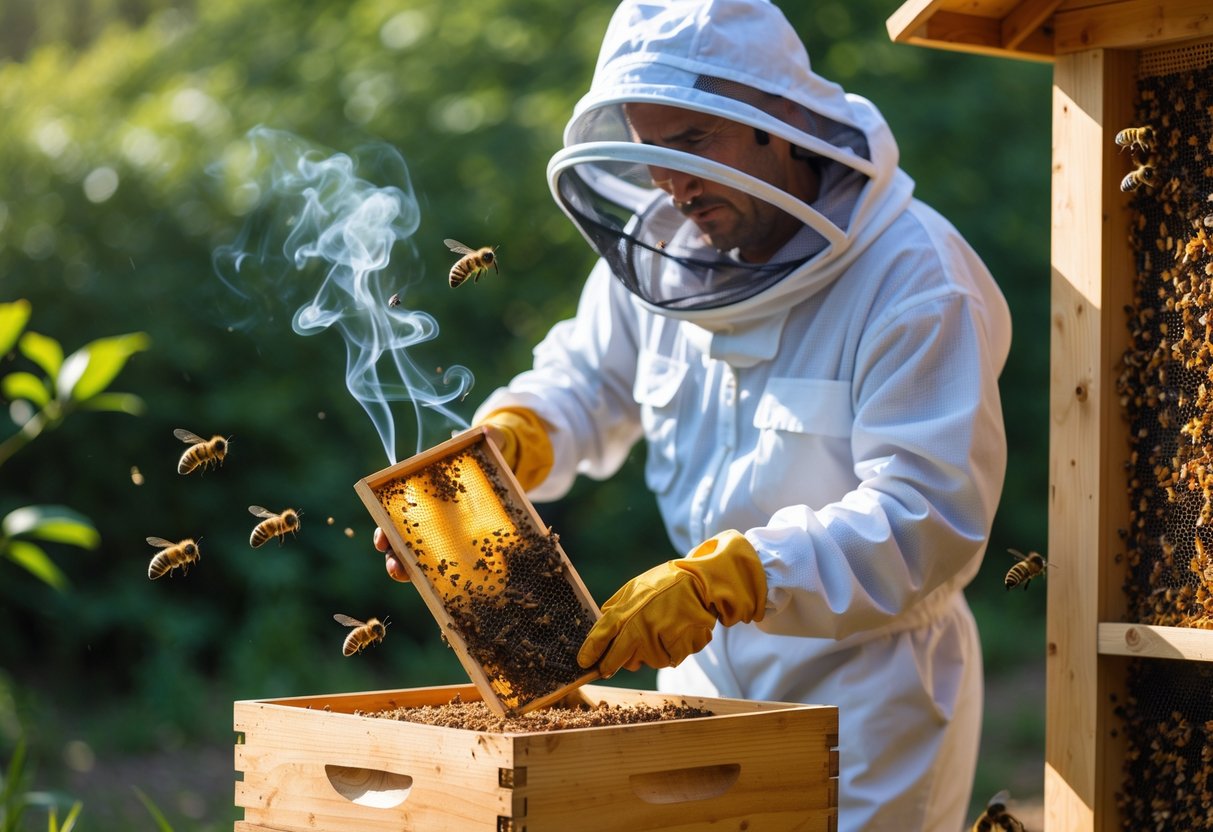
You can make your place less appealing to bees by using natural repellents. Smoke works well because it tricks bees into thinking their home’s in danger, so they calm down and leave for a bit.
Try planting citronella, cinnamon, or mint around your yard. These plants keep bees away with their strong scents.
Vinegar sprays or even a few mothballs near the hive entrance can also help. These tricks won’t hurt the bees, and you’ll keep your garden safe.
Remove or Relocate the Bee Hive
If bees set up a hive on your property, try to remove or relocate it carefully. Don’t reach for sprays or chemicals—they just make things worse and could get you stung.
Beekeepers usually use smoke and gentle tools to move hives safely. Relocating helps save honey bees, which we really need for pollination.
If you’re not sure what you’re doing, don’t try to remove the hive yourself—it’s risky.
When to Call Professional Bee Removal Services
If you find a big hive or one that’s tough to reach, contact a bee removal expert. They’ve got the right gear and know-how to move hives without hurting the bees (or you).
Pros can also help if someone’s allergic to bee stings. They’ll give you safe options and advice to keep bees from coming back.
Don’t wait if the hive seems aggressive or dangerous. Sometimes, calling a licensed removal service is just the safest bet for your home and family.
For more tips, check out this guide on how to get rid of honey bees safely and easily.
Natural and Chemical Methods to Keep Bees Away

You can keep bees at bay with certain plants, homemade sprays, and just changing up a few habits around your home and garden. These ideas focus on safe, simple ways to make your space less attractive to bees.
Plants and Herbs Bees Dislike
Some plants naturally send bees packing. Mint, marigolds, eucalyptus, and geranium work well around the yard.
Bees really don’t like strong smells, so citronella and peppermint are especially good choices. Try tossing some cucumber peels or crushed cinnamon where bees like to hang out.
These plants don’t just keep bees away—they look pretty nice too.
Homemade Bee Repellent Sprays
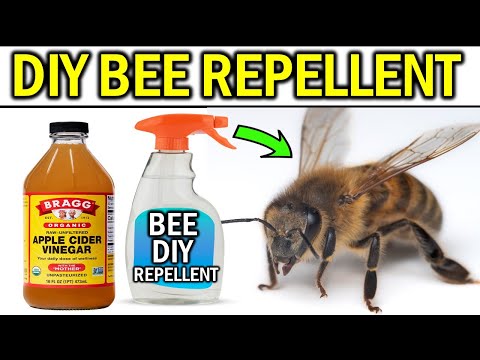
Want to make your own spray? Mix equal parts vinegar and water for a quick solution. Spray it around patios or wherever bees are bugging you.
Add a few drops of essential oils like peppermint, eucalyptus, or citronella to water in a spray bottle for something even stronger. Garlic juice mixed with water works too, though it’s a bit pungent.
These sprays are safe for your plants and pets, but you’ll want to reapply them after rain or watering.
Precautions Around the Home and Garden
A few habits can help cut down on bee visits. Keep food and sugary drinks covered when you’re outside.
Try not to wear bright colors or floral patterns, since bees seem to love those. Check your garden often for blooming plants that might attract bees.
Trim back bushes where bees could nest. If you spot a hive, don’t spray insecticide or try to remove it by yourself—just call a beekeeper.
You might want to use natural repellents like cinnamon or peppermint near doors and windows. These can help keep bees from wandering into your home.


