
Ever watched a chipmunk dart around your yard and wondered what’s really going on in their world? Most days, chipmunks spend their time foraging for food, stashing it away in their burrows, and staying on high alert for predators. They never seem to stop moving—always exploring, grabbing snacks, and prepping for the colder months ahead.
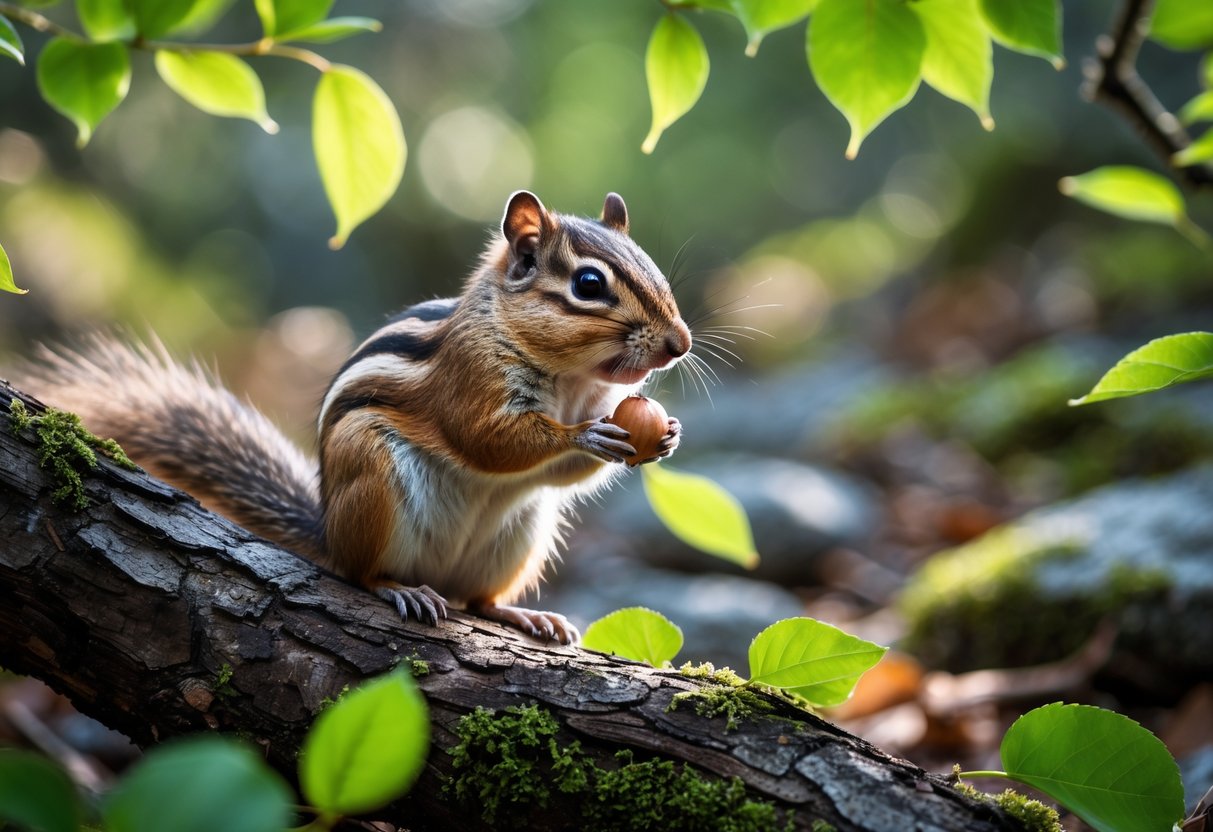
You might spot them during the day, gathering nuts, seeds, or even hunting for insects. Chipmunks stuff their cheek pouches with food and hustle back to their burrows, which are honestly pretty impressive underground mazes.
At night, they just hunker down and sleep, tucked away safely in their tunnels.
How Chipmunks Spend Their Day

Chipmunks keep themselves busy with food hunts, staying safe, and looking after their homes. You’ll usually spot them hustling around during daylight, especially in the early morning or late afternoon.
They juggle searching for food with building and defending their burrows.
Foraging for Food and Food Storage
Chipmunks collect all sorts of things—nuts, seeds, berries, fruit, insects, and even slugs or earthworms. All that variety keeps them fueled up. It’s wild, but a single chipmunk can grab over 160 acorns in a day.
They don’t just eat on the spot. Instead, they haul food back and stash it in their burrows. By stocking up, they’re ready for winter when finding fresh food gets tricky.
In backyards, chipmunks sometimes raid bird feeders or even pet food bowls if they get the chance.
Typical Active Hours and Sleep Patterns
Chipmunks stay mostly active during the day. You’ll catch them scurrying around in the early morning and again in the late afternoon.
They usually rest when it gets too hot or after dark.
They don’t go into full hibernation like some animals. Instead, they enter a deep sleep called torpor inside their burrows when it’s cold.
On warmer winter days, they wake up briefly to snack on their stored food. This routine helps them save energy and avoid the harshest weather.
Building and Maintaining Burrows
You can spot a chipmunk’s home by those tiny, 1-2 inch holes in the ground. Their burrows can get pretty complex—sometimes stretching 30 feet long and reaching down 3 feet.
Inside, they carve out special rooms for nesting and food storage. Chipmunks spend a lot of the warmer months digging new tunnels, patching up walls, and keeping things tidy.
Multiple entrances give them quick escape routes if something threatens them.
Avoiding Predators and Staying Safe
A lot of bigger animals—raccoons, woodchucks, birds of prey—would love to catch a chipmunk. So, chipmunks stay super alert, pausing often to check their surroundings.
If they sense danger, they bolt back to their burrows in a flash. They even hide their burrow entrances under leaves to keep predators guessing.
Hanging out near thick shrubs or woods helps them stay out of sight.
Daily Social and Seasonal Behaviors

Chipmunks lead pretty lively lives with routines they stick to. They make a lot of noise to protect their turf and mix up their daily habits depending on the season.
You’ll notice them focusing on gathering food when it’s warm and then chilling out in deep sleep once it gets cold.
Communication and Territorial Habits
Chipmunks definitely aren’t shy about making noise. You’ll hear sharp “chip-chip-chip” calls echoing through the yard.
They use these sounds to warn others away from their turf or to let neighbors know about danger.
Each chipmunk gets pretty territorial. They mark and defend their food patches, kind of like having a “keep out” sign on your lawn.
Even though they mostly live alone, all those calls help chipmunks keep each other in the loop. When young chipmunks leave the burrow, adults call out to signal that the area’s already claimed.
That way, everyone knows where they stand and there’s less fighting.
Spring and Summer Activities
In spring and summer, chipmunks spend most of their days foraging. You’ll see them scooping up nuts, seeds, berries, and insects, all to build up their stash for later.
Honestly, it’s impressive—one chipmunk can gather up to 165 acorns in a single day. They carry their haul in their cheek pouches back to their burrows.
These underground homes have special rooms for sleeping, storing food, and raising babies.
Mating season happens in spring and early summer. Female chipmunks usually have two litters a year.
The mother keeps a close eye on her babies until they’re ready to head out and find their own space.
Preparation for Winter and Hibernation
As the weather gets colder, chipmunks start to shift gears. They stop running around so much and focus on getting their burrows ready.
They work hard to stash away tons of food for the winter. Chipmunks don’t really hibernate in the classic sense, though.
Instead, they slip into this lighter state called torpor. You probably won’t spot them much from late fall through early spring.
Every few days, though, they wake up to snack on their food stores and tidy up their burrows. It’s kind of impressive how they manage it.
If chipmunks seem to vanish during the colder months, they’re just spending most of their time tucked away underground. This keeps them safe from predators and nasty weather.
Want to dig deeper? Check out the Mass Audubon page on chipmunk behavior.


