
If you want to catch a chipmunk, your best bet is a small live trap baited with peanut butter or sunflower seeds. Put the trap near spots where chipmunks usually travel—along walls, near burrows, or under brush. Make sure the bait is placed so the chipmunk has to step on the trigger.
Take a quiet, gentle approach. That really boosts your odds.
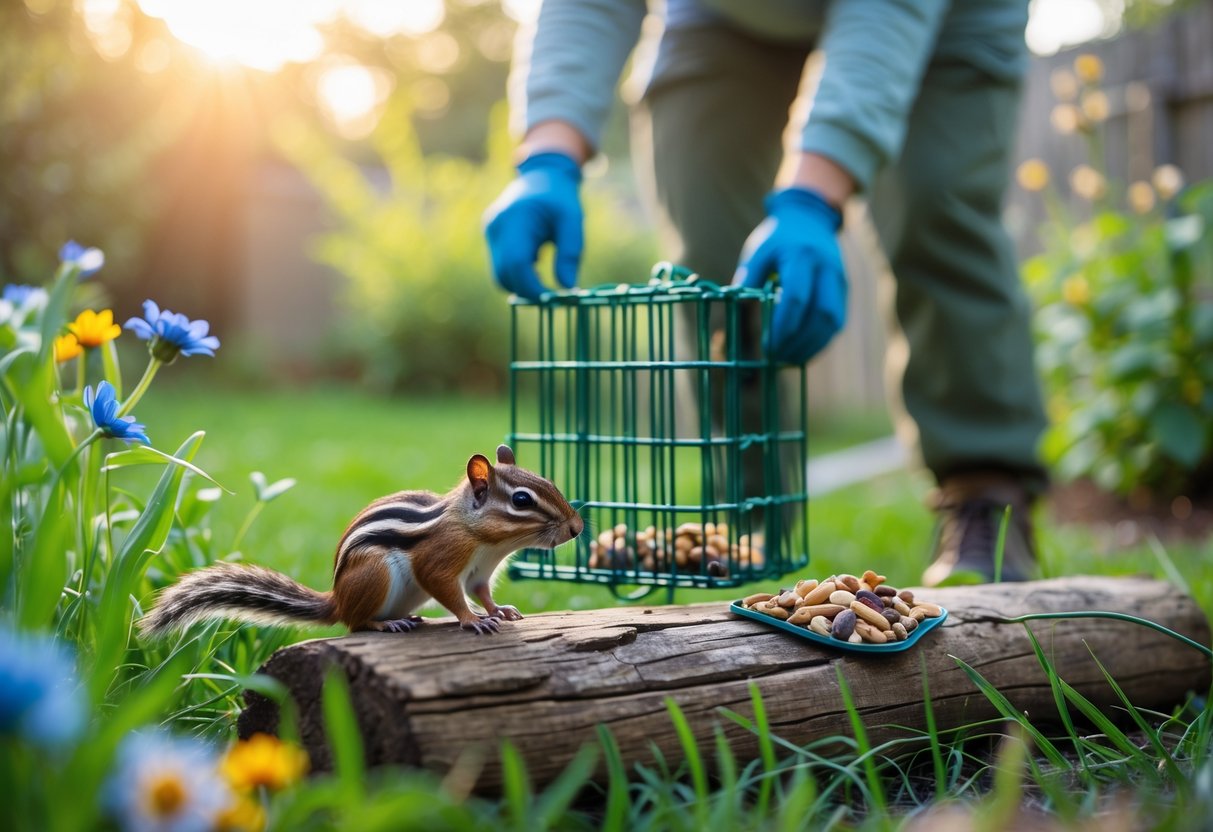
Check your trap often so the chipmunk doesn’t get stuck for too long. Slip on gloves before you handle the trap—this keeps the chipmunk calmer and protects your hands.
If you catch one and local rules allow, release it at least five miles away. That way, it won’t find its way back to your place.
Effective Ways to Catch a Chipmunk

You need the right trap, good bait, and a safe setup to catch a chipmunk. When you use these tools well, you can trap chipmunks quickly without hurting them or attracting unwanted animals.
Choosing the Right Trap
Go with a live trap if you want to catch chipmunks without causing harm. These traps let you release the chipmunk somewhere far away from your yard.
A Havahart live trap works well for chipmunks and closes gently. Avoid snap traps if you want a humane approach—they might kill chipmunks or catch pets and other animals by mistake.
Pick a trap size that matches chipmunks. If it’s too big, you might catch something else. Too small, and chipmunks can escape.
Choose a trap that’s easy to set up and check every day. Quick-release features help you move chipmunks away fast.
Put your trap near chipmunk paths or burrows. That way, you’ll have better luck.
Best Chipmunk Bait Options
Chipmunks love peanut butter. It’s sticky and smells strong, so it holds other bait on the trigger.
Try mixing peanut butter with strawberries or apple slices for extra appeal. Nuts and seeds work too, especially when fruit isn’t around.
Raw walnuts or sunflower seeds are solid choices. Some folks even use cereals like Cheerios or granola to make a little trail into the trap.
Don’t use too much bait, or chipmunks might just snack without setting off the trap. A small dab on the trigger and a trail leading in works best.
Switch up your bait every few weeks. Chipmunks catch on if you use the same thing all the time.
How to Set a Trap Safely
Put the trap where chipmunks hang out most—garden edges, trees, or right by burrow entrances. Make sure it sits level and doesn’t wobble, or you’ll spook them.
Always wear gloves when you handle bait or traps. That keeps your scent off and doesn’t tip off the chipmunks.
Keep pets and kids away from the traps to avoid any mishaps.
Check the trap at least once a day. If a chipmunk gets stuck too long, it’ll get stressed.
When you catch one, release it at least a mile away in a spot with food and shelter.
For more ideas on bait, check the best bait for chipmunks.
Where and How to Place Chipmunk Traps

Placing your chipmunk traps in the right spot really matters. Find out where chipmunks are active and make sure your trap feels stable and inviting.
Locating Chipmunk Activity
Look for signs of chipmunks around your place. Check spots like:
- Along walls or fences
- Under trees and brush
- Near burrow entrances (these are small holes, often hidden by leaves or debris)
- Close to sheds, decks, or other structures
Chipmunks usually stick to covered paths so they can stay hidden. Put your traps where you actually see them running or feeding.
If you spot a burrow entrance, set the trap nearby—but don’t block it. Chipmunks might steer clear if you block their home.
Keep traps near food sources but away from strong human smells. Always wear gloves when you handle traps so you don’t leave your scent behind. Chipmunks can get spooked by that.
Bucket Trap Setup Tips
A bucket trap can really work if you set it up right. Grab a bucket and build a ramp leading up to the rim.
The chipmunk will climb the ramp for the bait and then drop inside the bucket. Keep the ramp steady—if it’s slippery, the chipmunk might not make it up.
You don’t need to bother covering the top of the bucket. For bait, peanut butter works well, especially if you smear it on a small plate inside the bucket.
Try to place the bait so the chipmunk has to step on the trigger surface or ramp. That way, the trap actually catches it.
Check your bucket trap early in the morning. That way, the chipmunk won’t get too stressed out.
When you remove the chipmunk, go slow and be gentle so you can relocate it safely. This trap is simple, and you really don’t need to add extra weight to the bucket.
If you want to see it in action, check out the bucket trap method.


