
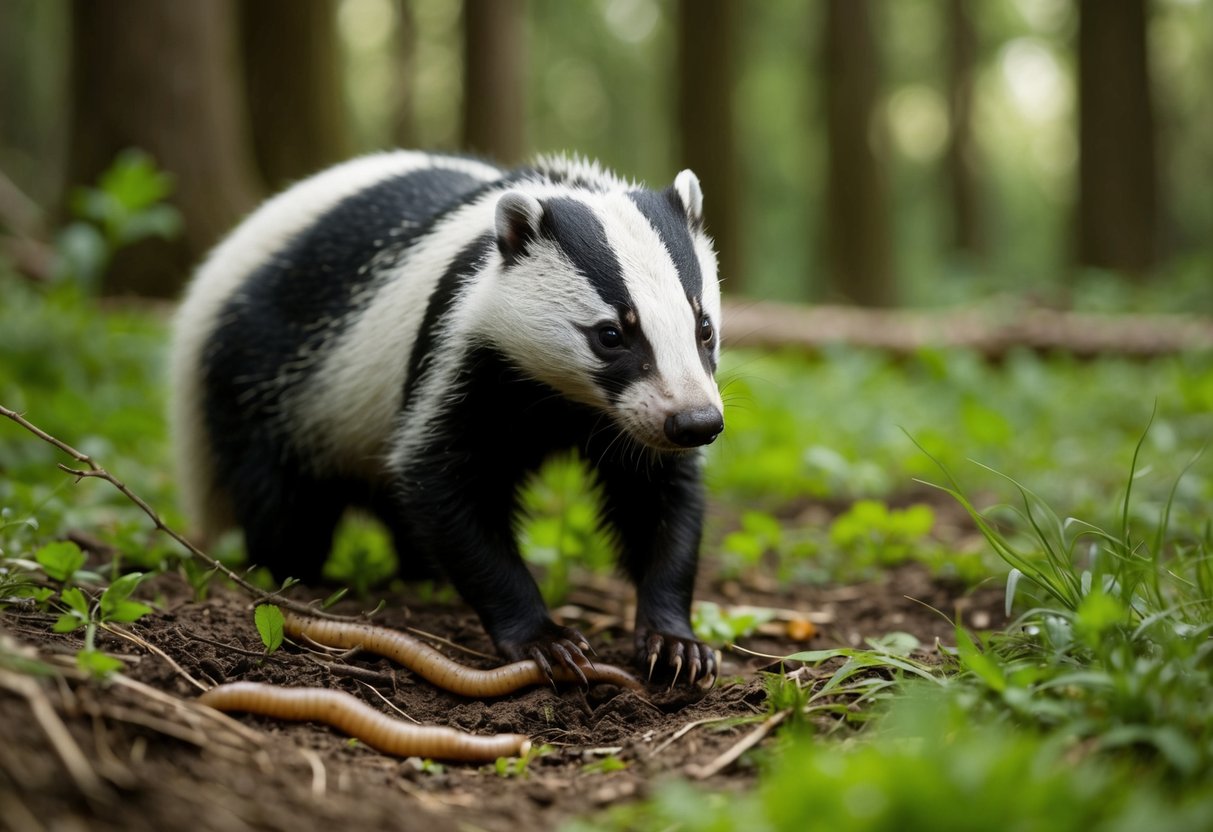
Badgers are fascinating creatures that play an important role in their ecosystems as omnivores. They primarily eat small animals like rodents, insects, and occasionally plants like corn and fruits. These mustelids use their keen sense of smell and strong claws to dig into the ground and find hidden food, making them interesting wildlife to observe.
Learning what badgers eat can deepen your appreciation for these mammals and their contribution to the environment. By controlling rodent populations and enriching the soil through their digging, badgers help maintain a balance in nature. Understanding their diet also highlights the importance of conservation efforts to protect their habitats and ensure these unique animals thrive.
Exploring the dietary habits of badgers can inspire you to look closer at the wildlife in your area. You may even find it rewarding to support local conservation initiatives that help protect these essential members of our ecosystem.
Badger Habitats and Lifestyle
Badgers have unique habitats and behaviors that make them fascinating creatures. Each type, like the American badger and the European badger, has adapted to its environment, leading to different lifestyles.
Understanding Badger Habitats
Badgers are found in various habitats, including grasslands, forests, and even urban areas. They dig sett to create their homes, which are complex systems of burrows. These burrows serve as safe spaces for sleeping and raising their young. The territory of a badger can be quite large, and they are known to create pathways through their habitats.
Different types of badgers, such as the honey badger and Asian badger, prefer specific environments. For instance, honey badgers thrive in much hotter, drier climates. In contrast, European badgers are often found in wooded areas, where they have plenty of shelter and food.
Badger Behavior and Activity
Badgers are primarily nocturnal, meaning they are most active at night. This behavior helps them avoid some of their natural predators. While hunting, they often work alone as solitary hunters but may share food with family members in their clans.
As they roam their territory, badgers use their keen sense of smell to locate prey, which mainly includes small mammals like gophers and ground squirrels. Although they are generally timid, badgers can be fierce when threatened. Their bravery allows them to confront larger animals, including coyotes and wolves. With a rich lifestyle built around survival, badgers play an important role in their ecosystems.
Dietary Overview of Badgers

Badgers have a varied diet that reflects their omnivorous nature. They eat a mix of plants, small animals, and various invertebrates. Understanding what badgers eat helps you appreciate their role in the ecosystem and their foraging habits.
Primary Foods in Badger Diets
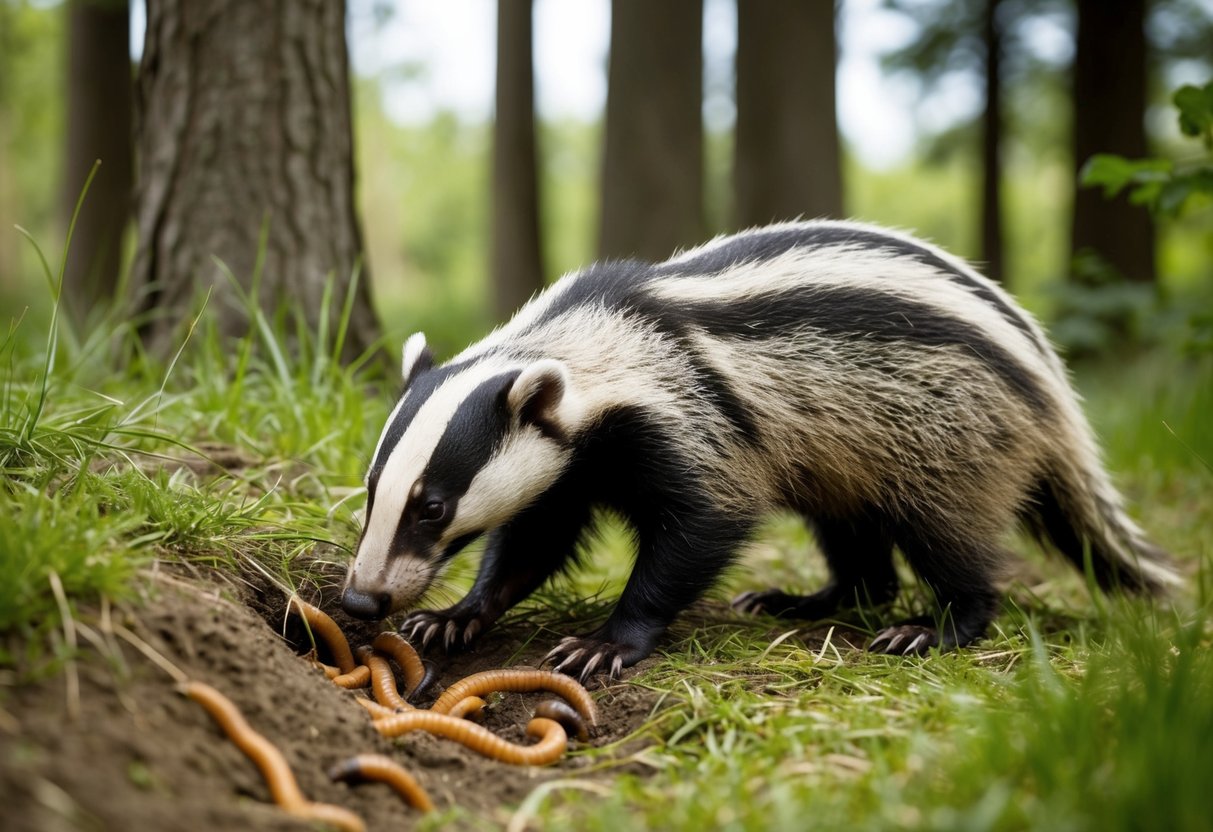
The primary foods in a badger’s diet include earthworms, insects, fruits, and small mammals. Earthworms make up about 80% of their meals. You might be surprised by how many they can eat—sometimes several hundred in a single night!
In addition to worms, badgers also enjoy grubs and insects. They forage for these tasty treats in the ground. When fruits are in season, such as berries and nuts, they readily consume them, especially when other food is scarce. Badgers also eat rodents and other small animals, which provide essential protein.
Foraging Strategies and Techniques
Badgers are skilled foragers. They use their keen sense of smell to locate food underground. Their strong claws help them dig up tasty earthworms and grubs. When foraging, they tend to be active at night, searching for food in fields and gardens.
Their diet changes with the seasons. In spring and summer, you’ll often find them munching on fruits and small mammals. As winter approaches, they rely more on stored food and what they can find underground. This adaptability is key for their survival in varying conditions.
The Impact of Badgers on Ecosystems
Badgers play a significant role in ecosystems, influencing both the wildlife around them and the environment they inhabit. Their activities as predators and prey create a balance that benefits various species and plants. Additionally, their role in conservation efforts and the health of ecosystems should not be overlooked.
Badgers as Predators and Prey
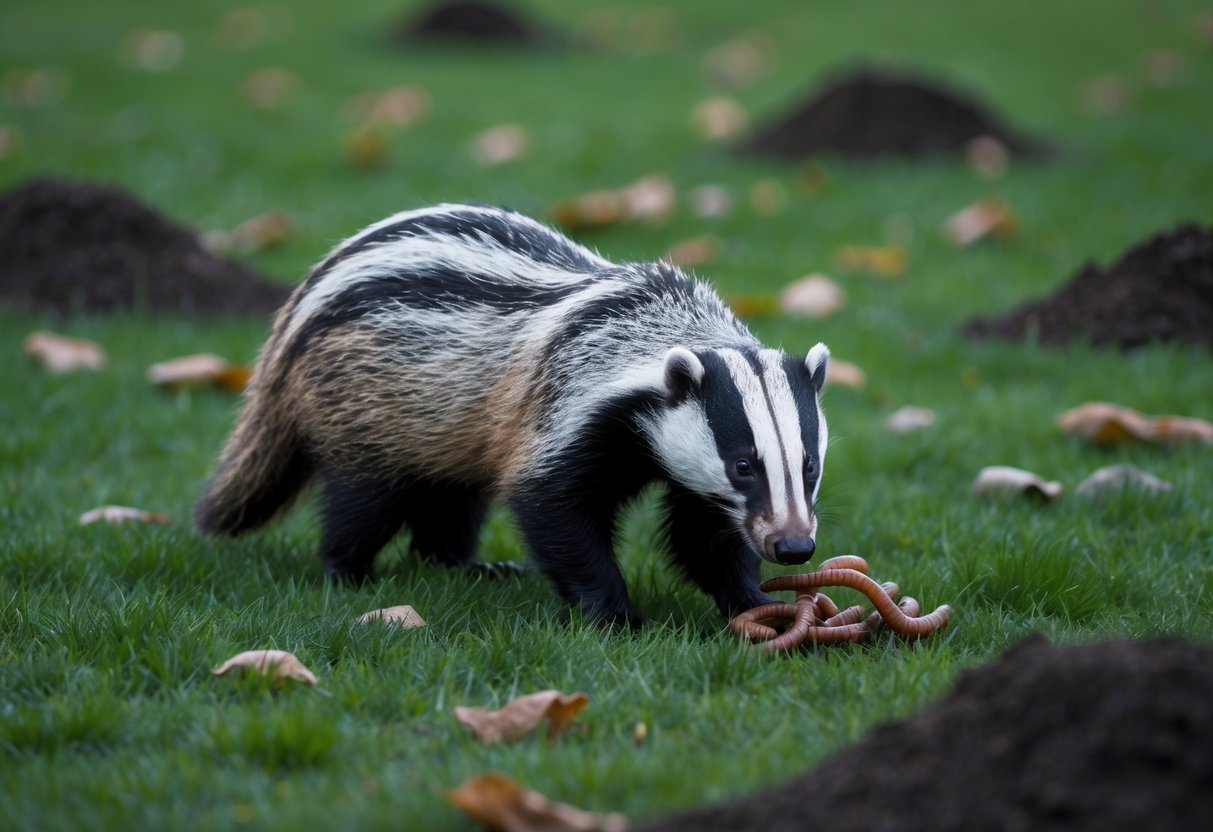
As predators, badgers help control populations of small mammals. They feed on creatures like gophers, rats, and rabbits. This predation is important for preventing overpopulation, which can damage vegetation. Badgers are skilled hunters, using their keen sense of smell to locate food.
When badgers consume carrion—decaying animal matter—they also help recycle nutrients back into the soil. Their scat serves as a natural fertilizer, benefiting plant life. Additionally, badgers are a food source for larger predators, adding another layer to the food web.
Conservation and the Role of Badgers
Badgers are considered sentinel species, meaning their health can indicate the overall condition of the ecosystem. Their presence suggests a balanced environment necessary for many other species to thrive.
In wildlife conservation, badgers contribute to maintaining biodiversity. They create latrines where they leave scat, which helps with soil health. The IUCN Red List categorizes badgers based on their conservation status, highlighting the need to protect their habitats. By fostering a healthy environment, you support not just badgers but a rich diversity of wildlife that relies on healthy ecosystems.
Badgers Across the World

Badgers can be found in various regions and come in different species, each with unique diets. These animals have adapted to their environments, allowing them to thrive on a wide range of food sources.
Different Species of Badgers and Their Diets
There are several species of badgers around the world, and each has its own preferred food.
-
Eurasian Badger: This badger enjoys a diet rich in invertebrates, including worms and insects, as well as fruits and small mammals.
-
American Badger: Known for its digging skills, it primarily feeds on ground squirrels and other rodents. It also eats insects and occasional roots.
-
Honey Badger: Famous for its fearless nature, it has a varied diet, enjoying snakes, insects, and bees. It will even raid beehives for honey and larvae.
-
Japanese Badger: This badger eats small animals and plants, like fruits and nuts.
-
Caucasian Badger: Similar to the Eurasian badger, it feeds on both small animals and plant material.
-
Burmese Ferret-Badger and Javan Ferret-Badger: These species consume insects, fruits, and small animals, showcasing their adaptability in different habitats.
Adaptations to Diverse Food Sources
Badgers have evolved remarkable adaptations that help them find and consume food effectively.
Their keen sense of smell is crucial for locating prey, especially small mammals and invertebrates. Thanks to their strong claws, these animals can dig into burrows and search for food underground.
Some species, like the honey badger, have thick skin that protects them from bites and stings while they hunt.
In addition, badgers can eat a variety of foods depending on what’s available in their environment. This flexibility in diet allows them to thrive in different habitats. It shows how adaptable they can be when it comes to finding a meal.
These traits contribute to the badger’s success as a resilient omnivore across the globe.


