
Ever wondered what skunks actually like to eat? You’re definitely not alone. These quirky little creatures chow down on all sorts of things, from insects and rodents to fruits and veggies.
Skunks are omnivores, and they mostly go after insects and small animals. But honestly, what they eat depends on the season and where they happen to live.
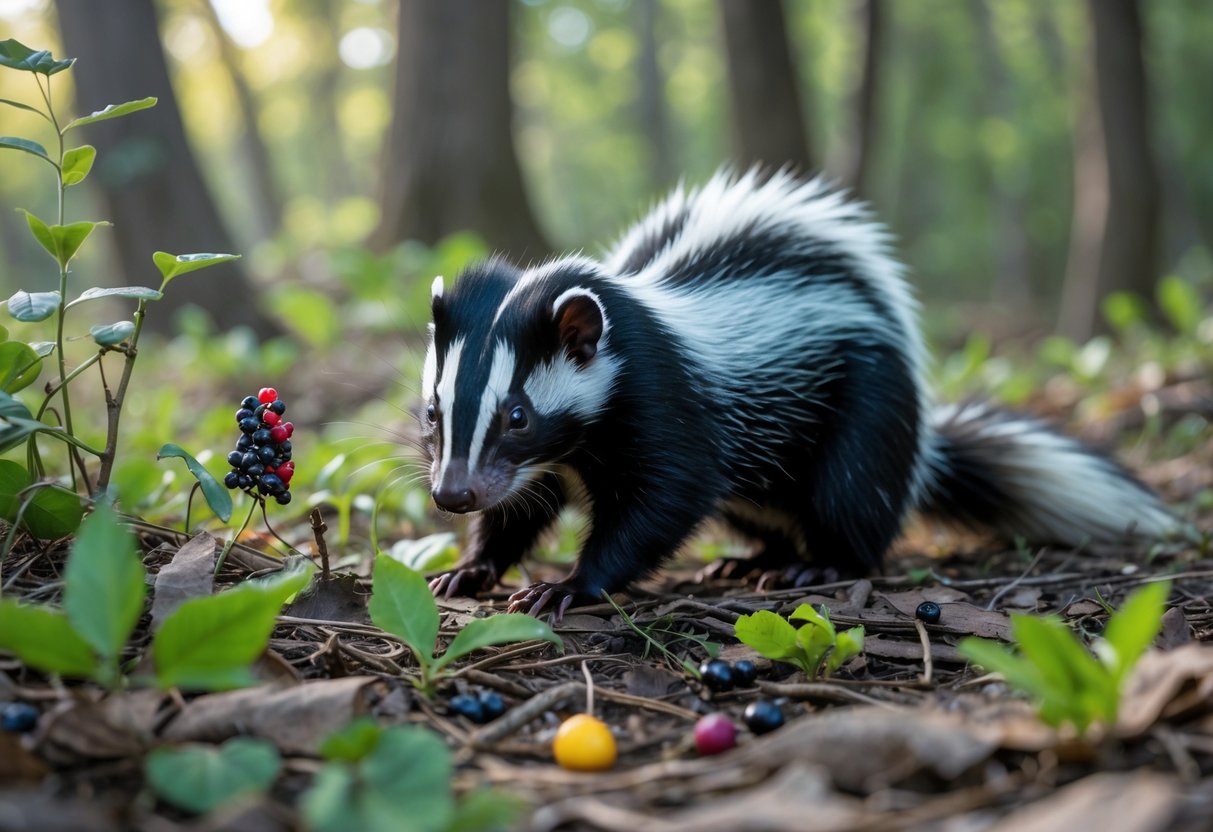
You might be surprised, but skunks will even eat bees, spiders, and, when they’re desperate, dig through garbage. Their flexible eating style lets them thrive in forests, deserts, and even busy cities.
If you spot a skunk near your house, knowing what they like to eat might explain why they’re hanging around.
What Do Skunks Like To Eat?

Skunks eat a surprising range of foods. They go for protein from insects and small animals, but they also munch on fruits and plants.
Since skunks are omnivores, their meals shift with the seasons and whatever is handy nearby.
Favorite Insects and Grubs
Insects make up a huge part of a skunk’s diet. Skunks love beetles, crickets, grasshoppers, and even roaches.
They’ll dig up larvae and grubs hiding in the soil or rotting wood. Insects give skunks plenty of protein, which keeps them active.
Bees and their honey are definitely on the menu, too—skunks’ thick fur helps protect them from stings. You might catch a skunk rooting around in leaf piles, searching for these snacks.
Small Animals and Eggs
Skunks don’t stick to bugs alone. They also hunt for small rodents and ground-nesting birds.
Eggs are an easy, protein-rich treat for them. Skunks sometimes catch frogs, toads, and the occasional small fish.
These foods pack a lot of nutrients and energy. Skunks are clever and usually go after easy prey close to home or while wandering at night.
Eating these critters helps keep pest numbers down, which isn’t a bad thing for people.
Fruits, Vegetables, and Plant Foods
When meat or bugs are hard to find, like in winter, skunks turn to fruits and veggies. They go for berries, grapes, cherries, and corn.
Roots and nuts fill them up when insects disappear. Skunks eat some plants for nutrients, but they don’t load up on veggies since too many can mess with their health.
Think of fruits and roots as important snacks mixed into their mostly protein-heavy diet.
Human Food Sources and Urban Diet
In towns and cities, skunks often raid garbage cans and bird feeders. They look for pet food, leftovers, and other scraps.
Trash piles attract insects and rodents, so it’s a double win for a hungry skunk. Still, feeding skunks human food isn’t good for them.
Processed foods, sweets, and some garden plants can make them sick. If you want to help wild skunks, it’s smarter to keep food waste out of reach than to offer them snacks.
For more details, you can check out what skunks like to eat here.
Skunk Diet By Age and Season
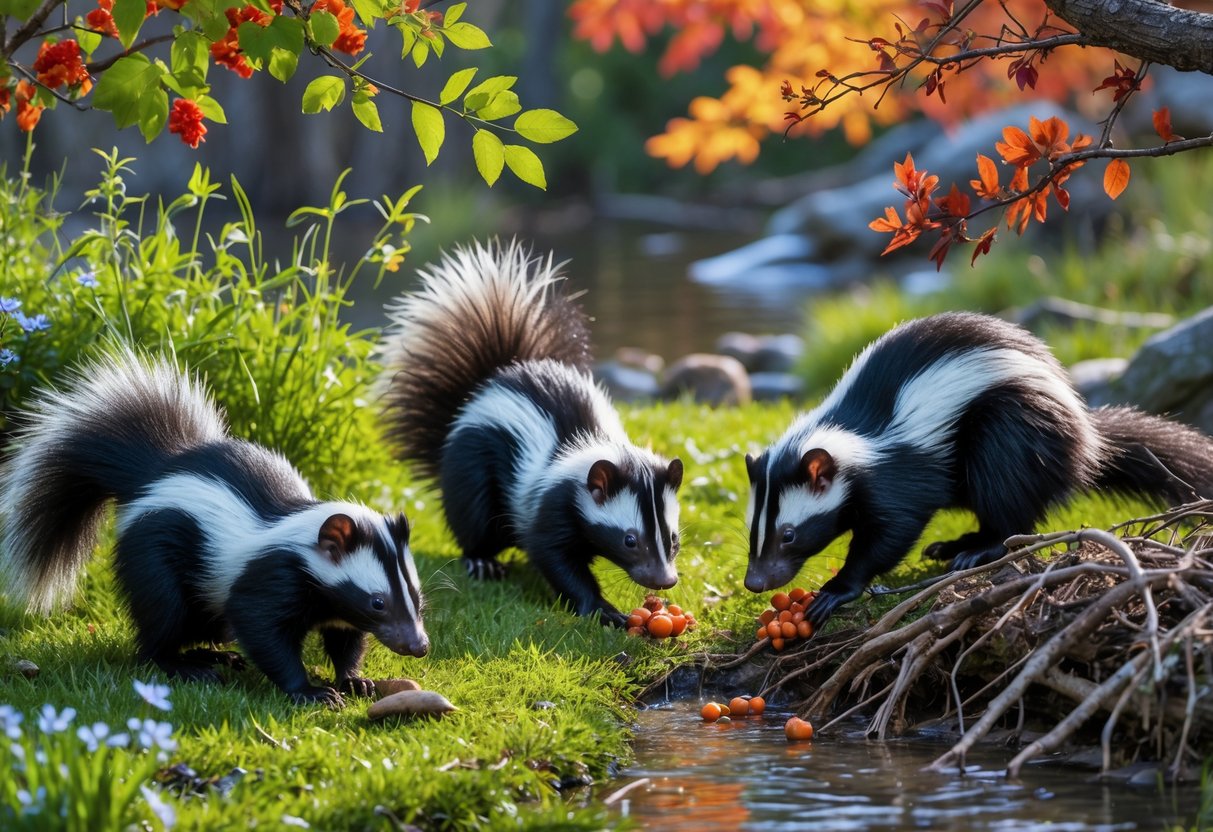
What a skunk eats changes as it grows and as the seasons roll by. Baby skunks need foods that match their age.
At the same time, skunks change their diet through the year to get the right nutrients. If you have a pet skunk or see wild ones, knowing these changes can help you understand them better.
What Do Baby Skunks Eat
Baby skunks—kits—start out drinking their mom’s milk. That covers all their needs for a while.
When they hit about 3 or 4 weeks old, they start trying solid food. You should give baby skunks soft, easy-to-digest stuff.
Cooked eggs, mealworms, and mashed berries work well. Protein is super important for their growth, so gentle animal foods are best.
Don’t give them hard or spicy foods. You can slowly add soft veggies like cooked carrots or peas as they get a bit older.
Just make sure everything is cut up small so they don’t choke.
Seasonal Food Changes
A skunk’s diet shifts as the seasons change. In spring, they look for protein-rich foods like insects and small rodents to recover energy after winter.
During summer, skunks eat lots of insects and juicy fruits like berries and apples. These fruits help them stay hydrated.
In autumn, nuts, roots, and some fruits become more important because insects start to disappear. These foods help skunks build up fat for winter.
When winter comes, skunks eat less fresh food. They rely more on stored fat, but might still find roots, scavenged food, or a few nuts.
Differences Between Wild and Pet Skunks
Wild skunks eat whatever they can find—bugs, little mammals, fruits, nuts, and even roots. They usually hunt and forage at night, relying on their sharp sense of smell.
Pet skunks? Well, they count on you for their meals. You’ll want to give them a mix of about 60% protein, 30% vegetables, and 10% fruits or nuts.
That mix keeps them healthy and mimics what they’d eat in the wild. It’s not always easy to get it just right, but it’s worth the effort.
Skip wild insects since they might carry pesticides or parasites. Instead, try cooked chicken, eggs, or fish.
Some veggies work well too—think peas or carrots. Definitely avoid toxic stuff like chocolate, onions, or grapes.
Switching up their portions and offering some seasonal variety can help your skunk stay active all year. If you want help planning, tools like the Skunk Diet Planner really come in handy.
You’ll find more details in the Skunk Eating Habits And Diet Planner.


