
If you’ve ever caught that unmistakable stench near a skunk, you might wonder what’s really going on. Skunks spray to defend themselves when they feel scared or threatened.
They don’t do it for fun or just to annoy anyone—it’s really a last resort when other ways to scare off danger fail.
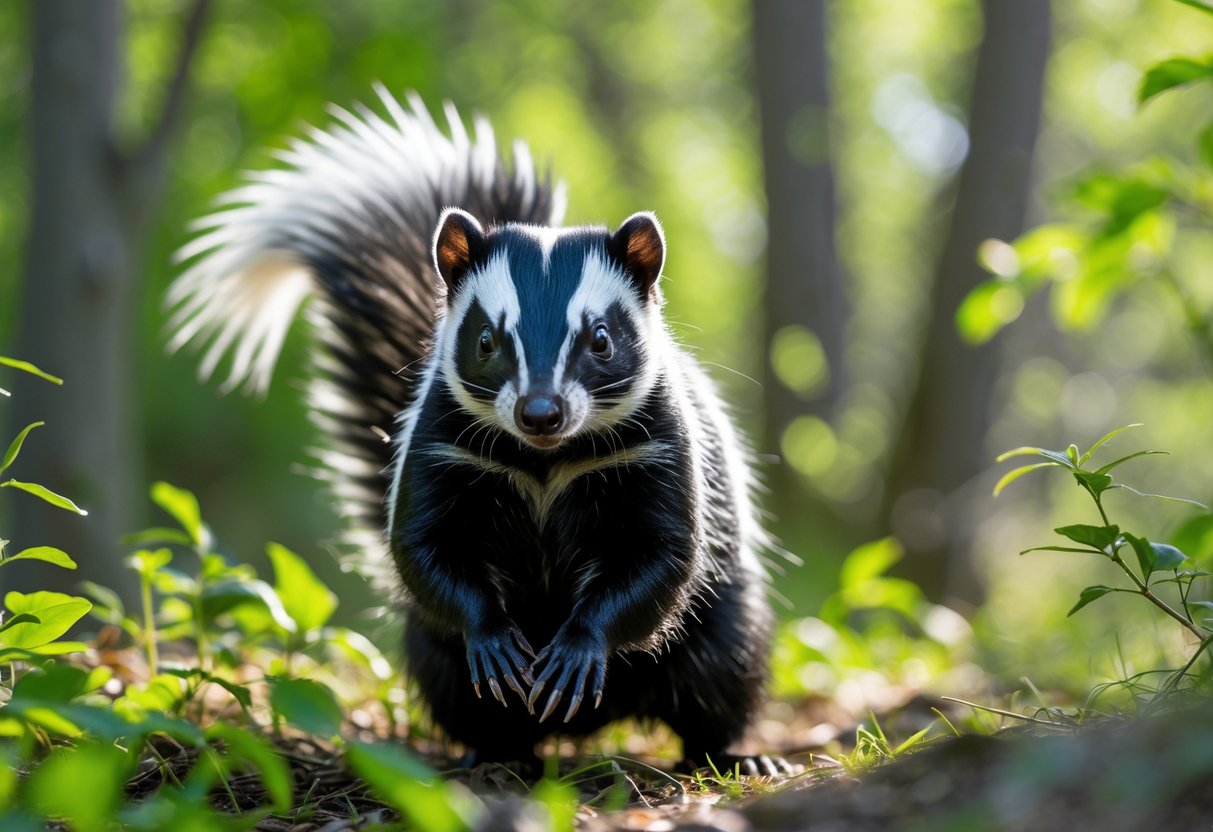
Before spraying, skunks usually try to warn off whatever’s bothering them. You’ll see them stomp their feet or raise their tails.
Sometimes, they’ll aim right for a threat’s face. Honestly, that spray is so strong it can stop a predator cold.
It’s almost like skunks are nature’s own stink bombs.
If you pay attention to their warning signs, like tail-raising or foot-stomping, you can usually avoid getting sprayed. Just give them space and you’ll be fine.
For more on how skunks use their spray, here’s a detailed explanation on why skunks spray.
The Science Behind Why Skunks Spray

When a skunk feels threatened, it relies on a powerful-smelling spray to protect itself. They actually mix up a cocktail of chemicals and can aim it pretty well.
That spray sticks around for ages, making it a solid warning for anything thinking about messing with them.
Skunks’ Defense Mechanism Explained
Skunks use spray only when they feel truly threatened. First, they’ll stomp, hiss, or raise their tail to try and scare you off.
These signals are your chance to back away. If that doesn’t work, then comes the spray.
Two glands sit near the skunk’s anus and hold the liquid. Each gland shoots the spray with surprising accuracy.
Small nipples attached to the glands act like nozzles, letting skunks control the direction.
Since spraying uses up their supply, skunks avoid it unless it’s really needed. It takes about 10 days to refill those scent glands, so they don’t want to waste it.
Chemical Compounds in Skunk Spray
The main stink-makers in skunk spray are thiols and thioacetates. These sulfur chemicals are what make the smell so awful.
Thiols smell like rotten eggs or strong garlic—definitely not pleasant. Thioacetates are sneaky; they don’t smell much at first, but when they break down, they release more thiols.
That’s why skunk spray can linger for days or even weeks if it gets on you or your pet.
How Spraying Works in Skunks
Skunks store their spray in two small sacs near their anus. When they’re scared, they lift their tail and squeeze those glands.
They can spray as a mist or a direct stream, and they’re really accurate—up to 10 feet away. That means they can hit a predator’s eyes or nose and cause a lot of pain.
The spray isn’t just about the smell—it also irritates skin and eyes. That gives the skunk a chance to escape while the threat is distracted.
Skunk Smell and Its Effects
Skunk smell is honestly one of the worst natural odors out there. On the right day, it can travel more than a mile.
Those chemicals stick to everything—skin, clothes, fur, you name it. That’s why regular soap and water usually don’t cut it.
The smell warns other animals to stay away. It’s like the skunk is saying, “Don’t mess with me.”
For more details, check out the science behind skunk spray.
Key Triggers and When Skunks Are Most Likely to Spray

Skunks mostly spray when they’re stressed or feel threatened. Their habits change depending on the time of day, their age, and what’s going on around them.
If you understand these triggers, you can better avoid any unpleasant run-ins.
Nocturnal Behavior and Nighttime Spraying
Skunks are night owls—they’re most active after dark. So, if you smell a skunk at night, it probably got startled while looking for food.
When a skunk feels cornered or surprised in the dark, it’ll spray to defend itself.
Nighttime sprays happen more often if pets or lights keep disturbing them. They don’t spray for no reason, but sudden noises or quick movements can set them off.
Territorial and Mating-Related Spraying
During breeding season, skunks spray to mark their territory. Males might spray to keep other males away when competing for females.
This kind of spraying shows dominance or protects their space.
Even outside mating, skunks may spray to signal boundaries. If you see a lot of skunk activity in your yard, they might be defending food or a den.
Differences Between Young and Adult Skunks
Baby skunks, or kits, usually don’t spray as much as adults because they don’t have a full supply yet. They learn how to use their defense as they grow.
Adult skunks are better at aiming and controlling their spray. They’ll usually warn you first by stomping or tail-raising.
If you see those signs, it’s best to back off and give them plenty of room.
Environmental Factors and Common Triggers
A lot of things can make a skunk spray. Sudden movements from people or pets, or loud noises—think barking dogs—often set them off.
If you trap a skunk in a small area, it’ll probably feel cornered and spray. When they feel threatened near their home or food, they don’t hesitate to defend themselves.
Leaving trash cans unsecured or pet food outside tends to attract skunks. That just bumps up your chances of a stinky surprise.
You might want to try motion-activated lights or block off spots under your deck to keep skunks away. If you’re curious about more triggers, check out what causes skunks to spray.


