
If you’ve got rats hanging around your home, figuring out what scares them can make life a lot easier. Rats hate strong smells like peppermint, garlic, and the scent of predators—think cats or birds of prey. Those odors hit their instincts hard and make your place way less appealing.
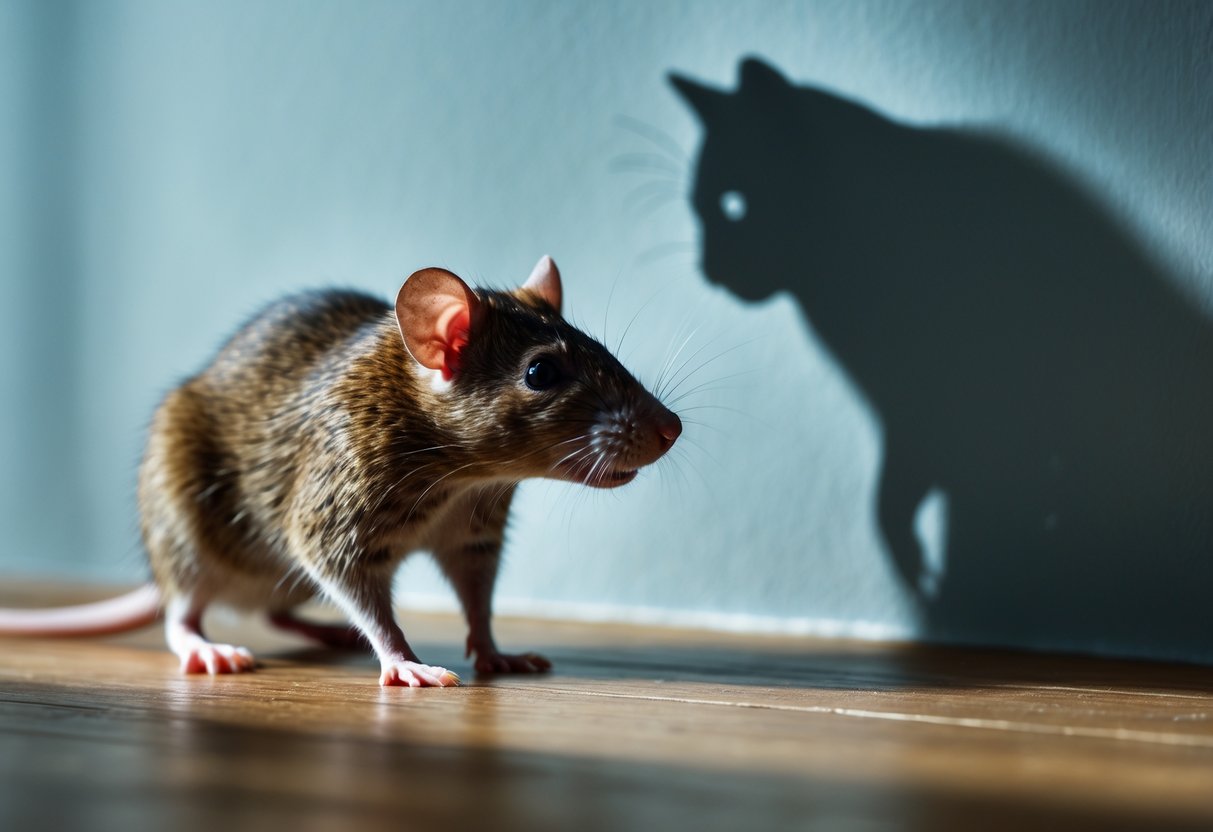
It’s not just smells. Loud noises and sudden movements freak rats out too.
Their natural fear helps them survive, so if you get what sets them off, you can use that to your advantage.
The Primary Fears of Rats

Rats stay on high alert to dodge danger.
Their fears keep them away from threats like predators, strong smells, and sudden noises.
If you know what rattles them, you’ll have a better shot at keeping them out.
Predators and Natural Enemies
Rats really don’t want to mess with animals that hunt them.
You’ll see them avoid cats, owls, hawks, and other birds of prey.
When these predators show up, rats do whatever it takes to stay out of sight.
Dogs, especially those little hunting breeds like rat terriers, make rats nervous too.
Rats know people can trap or kill them, so even humans are on their list of things to avoid.
They rely on quick reflexes to escape trouble, darting into tight spots or dark corners where nothing big can reach them.
If you know which predators scare rats most, you can use that to keep them away.
Strong Scents and Odors
Some smells just drive rats away.
Peppermint oil is a classic—lots of folks swear by it to keep rats out.
Other strong odors like ammonia, garlic, and onion also put rats off.
These scents mess with their sensitive noses.
If you put them near spots where rats might hide, you can cut down on rat activity without using harsh poisons.
Using strong smells is a smart, eco-friendly way to keep rats at bay.
Sudden Noises and Movements
Rats get jumpy around loud or unexpected noises.
Banging, clapping, or any sudden sound can send them running.
Quick movements around their territory also make them uneasy.
Bright lights bother them too since rats like things dark and quiet.
If you spot rats, sometimes just flipping on the lights or making a bit of noise is enough to chase them out.
Knowing how rats react to noise and motion gives you simple ways to protect your space.
How Fear Works in Rats

Fear in rats kicks off a bunch of behaviors and changes inside their brains and bodies.
These reactions help them either freeze, hide, or bolt when danger shows up.
Their brains and hormones work together to get them ready to deal with threats.
Rat Behavior and Fear Responses
When something scares a rat, you might see it freeze or dive for cover.
Freezing helps them avoid being seen by predators.
If the threat gets too close, rats might make a run for it or even lash out to defend themselves.
They also use sounds to signal fear.
Rats give off ultrasonic calls around 22 kHz—these are way above what we can hear.
Those calls warn other rats nearby that trouble’s coming.
Depending on what’s happening, rats might run and hide if there’s cover, or just freeze if there’s nowhere to go.
If you watch rats closely, you’ll see how their fear instincts help them stay alive.
The Role of the Amygdala and Hypothalamus
Two parts of the rat brain, the amygdala and hypothalamus, handle fear.
The amygdala spots threats and sends out signals to get the fear response going.
The hypothalamus controls the body’s reaction, kicking out stress hormones like adrenaline and cortisol.
These hormones get the rat’s body ready to act fast, speeding up the heart and sending more blood to the muscles.
The amygdala and hypothalamus work as a team to make sure rats react quickly.
That fast response boosts their chances of making it out alive when things get dicey.
Hormonal Stress Response
Picture a rat suddenly startled—its body immediately starts pumping out hormones to deal with the stress.
The adrenal glands jump into action, making adrenaline and cortisol when the rat feels fear.
Adrenaline rushes in first and gives the rat a burst of energy. You’ll notice its heart pounding faster, breathing picking up, and blood pressure climbing.
All of this helps the rat either run for its life or stand its ground.
Cortisol shows up a bit later, but it keeps the rat on high alert for a while. This hormone also helps the rat cope with stress, even after the danger passes.
These hormones work together, changing the rat’s body when fear hits. Scientists call this the “fight-or-flight” response, and honestly, it’s fascinating how central it is to fear in rats.
For more on rat fear signals and behavior, see Understanding Fear in Rats.


