
Think you might have rats sneaking around your place? It’s worth knowing the signs before things get out of hand. Rats cause all sorts of damage and, let’s be honest, nobody wants to deal with the health risks they bring. You might start spotting droppings, seeing gnaw marks, or hearing weird noises at night.
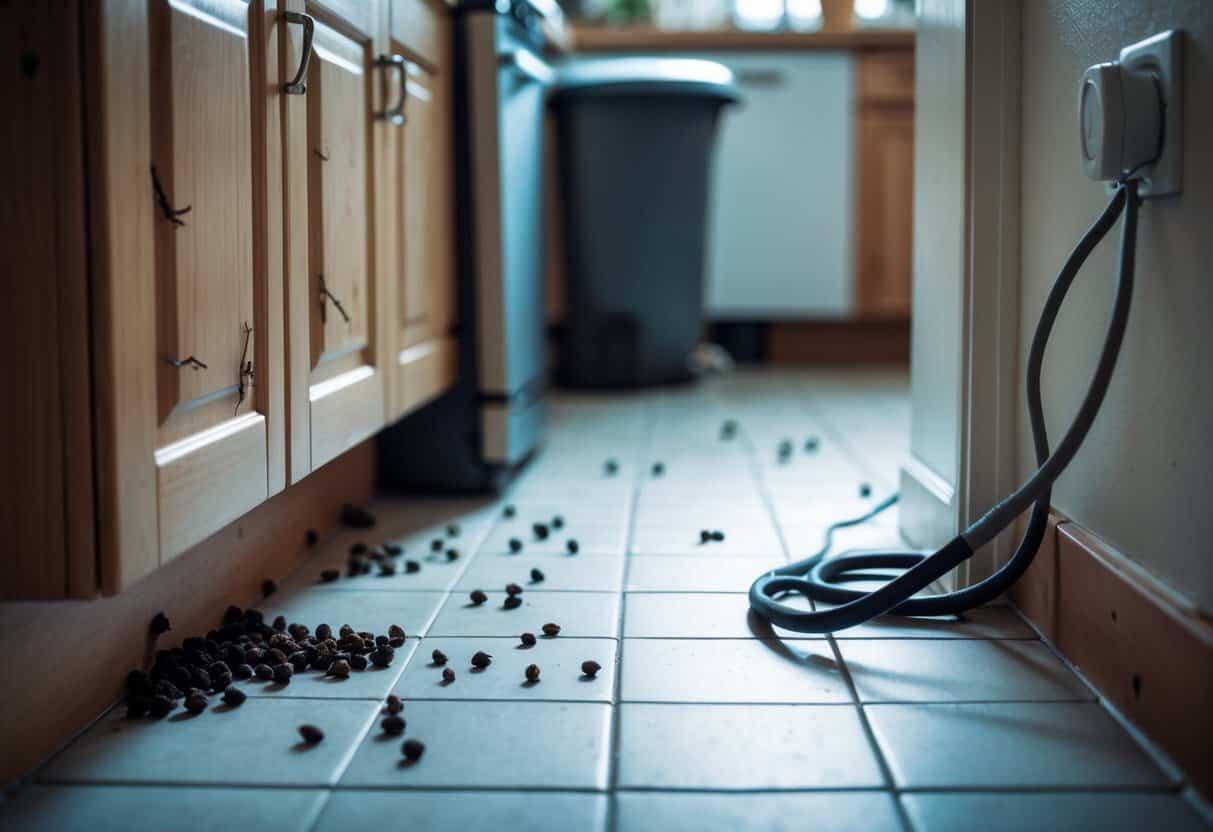
Three big signs you’ve got a rat problem: you find droppings, see gnaw marks on wood or plastic, and hear scratching or scurrying after dark. These clues usually mean rats have settled in, even if you haven’t actually caught one in the act.
Knowing what to look for saves you a lot of hassle. Spotting these things early lets you act fast and protect your family and your home.
If you’re curious about what each sign really means or what you should do next, stick around.
Top 3 Signs of a Rat Infestation
When you think rats might be close by, certain clues make it a lot easier to figure things out. You can look for droppings, damage to food and surfaces, and odd noises inside your home.
Rodent Droppings: Identifying Fresh vs. Old
Rodent droppings are probably the most obvious sign you’ve got a rat issue. They look like small, dark pellets—kind of like grains of rice. Fresh droppings show up shiny and dark, usually black or brown.
If you spot old droppings, they’ll be dull or gray and dried out. Fresh ones mean rats are still hanging around, while old ones just show they’ve been there before.
Check corners, behind appliances, or in hidden spots. Droppings usually show up near food or where rats nest.
Don’t touch droppings with your bare hands. Always use gloves and clean the area well.
Gnaw Marks on Food and Surfaces
Rats have to chew to keep their teeth in check. You might see gnaw marks on food packaging, wood furniture, wires, or even plastic stuff.
These marks look rough and uneven, with clear little tooth impressions. Check your kitchen, pantry, baseboards, and door frames.
If you find chewed-up cardboard or holes in containers, that’s a pretty strong sign rats are around. Gnawing can mess up your things and even cause bigger issues with your home.
Unexplained Noises and Scurrying Sounds
Rats get active at night, so you might hear things when the house is quiet. Scratching, squeaking, or scampering in the walls, ceiling, or under the floor could mean rats are on the move.
Sometimes you’ll catch soft thumps or footsteps, especially in attics or basements. Listening for these sounds helps you figure out if rats are hiding out, even if you haven’t seen them.
If the noises come with a weird musty smell, that’s another hint rats are nesting close by.
For more details on signs of chewing and droppings, take a look at Orkin’s guide on signs of rat infestations.
Other Important Clues of Rat Activity
If you think rats might be in your home, there are some less obvious signs to watch for. Paying attention to these clues can help you catch a problem before it gets out of control.
Footprints and Grease Trails Along Walls
Rats usually stick to the same paths, especially along walls where they feel safer. As they travel, the oils from their fur leave behind greasy smudges—dark, oily streaks on baseboards or corners.
You might also notice footprints in dusty or muddy spots. Rat prints have four toes in front and five in back.
Try sprinkling some flour or baby powder on the floor if you want to catch fresh tracks. Spotting these marks near food, water, or entry points is a pretty solid clue rats are active.
Look closely in basements, attics, or garages—places where rats like to stay out of sight.
Odd Pet Behavior or Reactions
Pets often know something’s up before you do. Dogs and cats might bark, hiss, or paw at walls where they hear scratching or scurrying.
You might notice your pet acting extra curious or even a little aggressive toward certain spots. Since rats mostly move around at night, their noises can make pets restless or anxious.
If your pet suddenly avoids a certain room or hides more than usual, check those areas for rat signs. Sometimes, your pet’s reaction is your first warning before you even see or smell anything yourself.
Strong, Musky Odors in Hidden Areas
Rats give off a strong, musky smell, especially in quiet, tucked-away spots like attics, crawl spaces, or closets.
You’ll usually notice this odor because of their urine and scent markings—they use these to communicate and claim territory.
If you suddenly pick up a musty or ammonia-like smell that wasn’t there before, it might mean rats have moved in. The odor gets worse in rooms that don’t get much air since it just lingers and builds up.
Opening windows and cleaning hidden areas can help, but if the smell sticks around, rats are probably nesting close by.
Watch out for this especially in places where you keep food or where there’s water, since those seem to attract rats and make the smell stronger.
To really solve the problem, you’ve got to deal with both the odor and whatever’s causing it. Sometimes, calling in pest control is the only way to get rid of rats for good and stop them from coming back.
For more signs and prevention tips, check out How to Identify Rat Infestations | Get Rid of Rats – Orkin.


