
When a storm rolls in, you might notice frogs croaking loudly or suddenly hopping into view. This isn’t just random noise or movement—frogs react to storms by coming out to find food, mate, and make the most of the wet conditions.
Rain creates a perfect environment for them to stay active and survive.
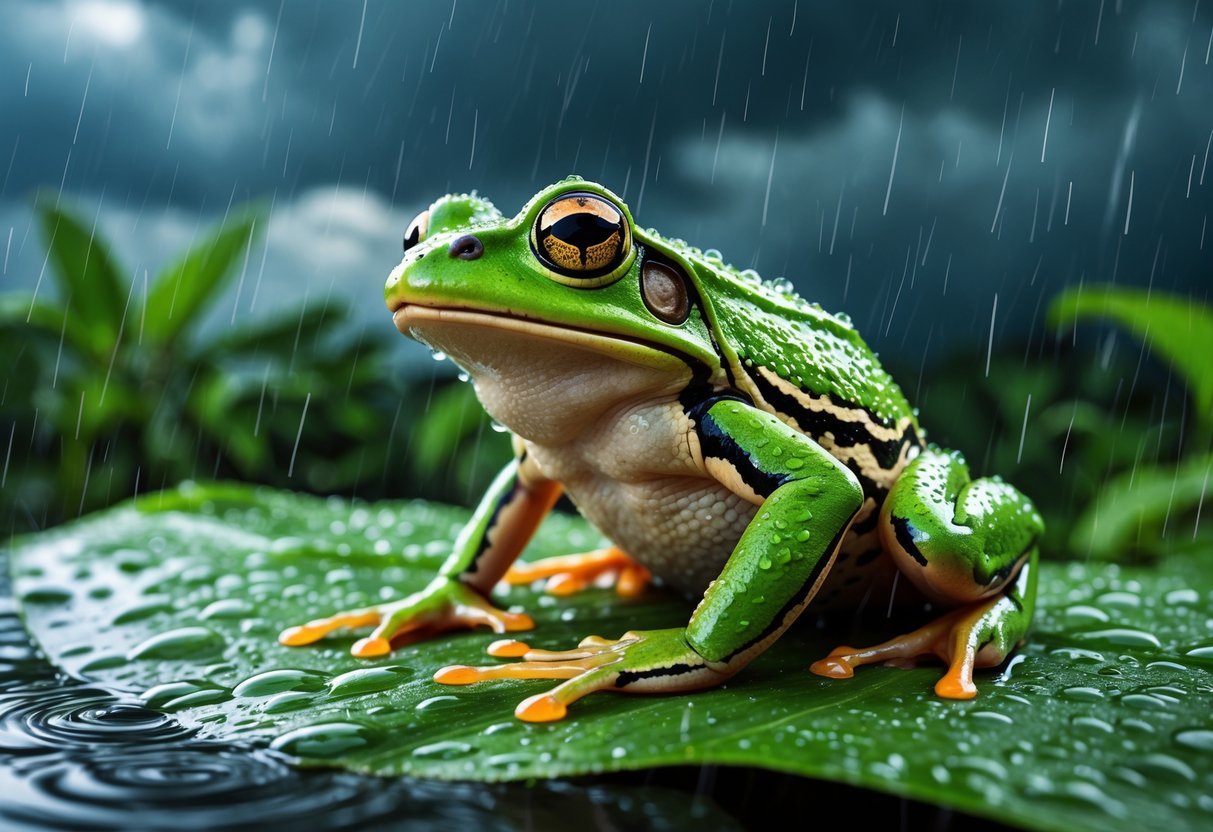
Frogs pick up on changes in air pressure and moisture really fast. Sometimes you’ll hear them before the rain even starts.
Their croaking lets them communicate and prepare for what’s coming. So next time you hear frogs singing during a storm, just know they’re out there making the most of the weather.
Ever wondered why frogs seem so connected to rainy days and storms? Let’s dig into what they do and why it matters for their daily lives.
How Storms Influence Frog Behavior

Storms shake up the temperature, humidity, and air pressure. Frogs pick up on these changes and become more active, especially during breeding season.
You’ll hear them croak to attract mates and guard their territory. Storms give them the perfect wet environment to hunt for food and find shelter.
Why Frogs Become More Active During Rainstorms
When rain and storms hit, frogs react to the higher humidity and dropping barometric pressure. These conditions help them manage their body temperature since they depend on the environment to stay warm or cool.
The wet ground makes it easier for frogs to move around without getting dried out. You’ll probably spot more frogs during storms because they’re out searching for mates or food.
Their activity spikes because rain signals good times for breeding and feeding.
Croaking and Mating Calls as Storms Approach
Frogs croak louder and more often before and during storms. Male frogs use these calls to attract females and warn other males to back off.
Moist air helps their calls carry farther, so frogs really take advantage of rainy weather. Croaking also helps them find each other in the noisy, wet world outside.
This burst of calling is a key part of mating season and keeps frog populations thriving.
Seeking Food and Shelter in Wet Weather
Rainstorms create puddles, ponds, and wet soil that lure out insects and other small creatures frogs love to eat. You might notice frogs out hunting more as the rain boosts their food supply.
At the same time, frogs look for shelter to stay safe from heavy rain or hungry predators. They’ll often hide under leaves, logs, or anything damp.
This mix of hunting and hiding helps frogs survive storms and enjoy their wet surroundings.
Curious about how frogs signal storms with their calls? Check out this article on why frogs croak before a storm.
Frogs, Storm Phenomena, and Extraordinary Events

Storms can really shake up how frogs live and move. They change temporary ponds where frogs breed and sometimes cause odd events like frogs actually falling from the sky.
We can even learn about the environment by watching how frogs act after storms.
The Connection Between Frogs and Temporary Ponds
Temporary ponds pop up after rain and usually last just a few weeks. Frogs depend on these little pools to lay their eggs.
You’ll find lots of tadpoles growing there since bigger lakes have more predators. When a storm hits, it often creates or fills these ponds.
Frogs rely on this rain to reproduce. If the ponds dry up too quickly, tadpoles might not make it.
Storms directly help frogs by giving them these much-needed breeding spots.
How Strong Storms Sometimes Make It ‘Rain Frogs’
Sometimes, wild storms create waterspouts—think tornadoes over water. These waterspouts can suck up light animals like frogs or fish along with the water.
The storm carries them for miles inside its updrafts. When the storm slows down over land, the pressure drops, and suddenly frogs or fish fall back to earth with the rain.
That’s how you get the bizarre “raining frogs” phenomenon. It’s rare, but people have seen it in different parts of the world during really intense weather.
The Role of Frogs as Bioindicators After Storms
Frogs react quickly to changes in their environment, so people often see them as great bioindicators.
If you spot frogs thriving or disappearing after a storm, that’s a pretty big clue about how the local ecosystem’s doing.
Storms mess with water quality and sometimes damage the areas around ponds.
When frogs have trouble surviving, it usually points to pollution or some other issue.
Paying attention to how frogs bounce back—or don’t—after storms gives you a real sense of how weather shapes nature.


