
When a deer gets scared, it usually freezes to check the danger and then bolts if it feels threatened. You’ll see deer either stand still to listen and smell, or they’ll sprint away with a raised white tail to warn others. This quick mix of freezing, snorting, stomping, and fleeing keeps them safe and gives you an idea of what to expect if one spooks nearby.
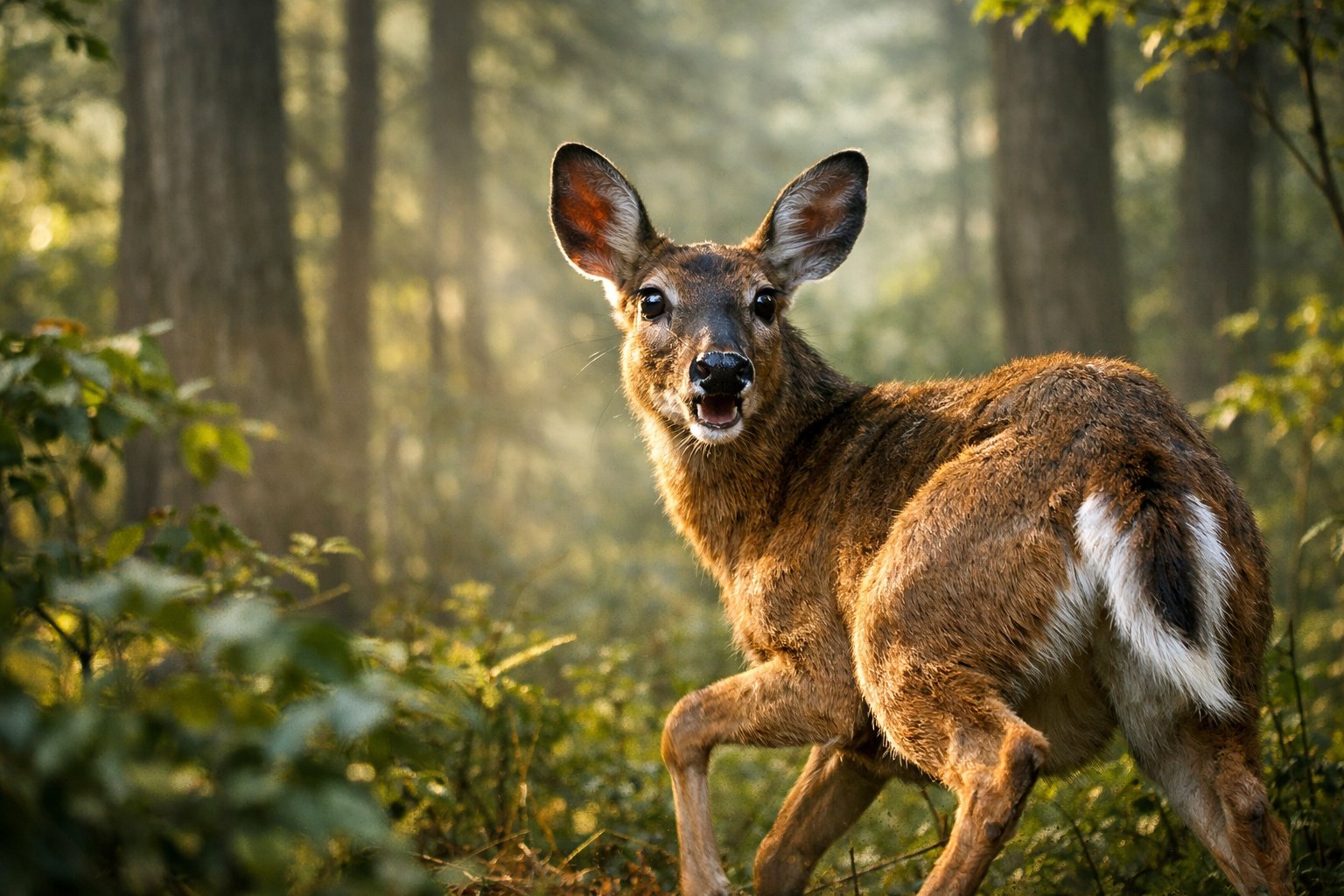
You’ll find out how deer signal alarm, where they hide, and what makes them come back or stay away. The next parts dive into how their senses guide each choice and what things—like cover, people, or new objects—change how they act.
How Deer React When Scared

You’ll see how deer first freeze to check danger, then flee if needed, and warn others with sounds and body signals. They rely on sharp senses and clear body language.
Freeze Response and Threat Assessment
When a deer freezes, it’s actively gathering information. The deer stands very still to use its sight, smell, and hearing without giving away movement.
Its wide-set eyes scan for motion while its ears swivel to catch faint sounds. Freezing buys the deer a little time to decide whether to run or hide.
If the scent or sound seems distant, the deer may creep toward cover. If the threat feels unclear, it might stomp a hoof to test the source and get even more alert.
You might spot fawns crouching and staying silent; their mothers count on this to avoid drawing attention. Freezing cuts down on detection and lets the deer choose the safest way out.
Flight and Escape Behaviors
If the deer thinks danger is close, it bolts using a bounding gait called stotting or pronking. You’ll notice those long, powerful leaps that help clear brush and throw off predators.
Deer head for cover—thick brush, gullies, or the forest edge—to break line of sight fast. Tail flagging often happens during flight; the deer lifts its white tail to signal alarm to others.
This visual cue keeps the herd coordinated as individuals dash along familiar escape routes. If a deer gets cornered, it might turn and use hooves or antlers to defend itself, but running usually works best for survival.
Deer Alarm Signals and Vocalizations
Deer use sound to warn others and draw attention to danger. You might hear a sharp snort or blow—a quick, loud exhale that tells nearby deer to look and run.
Fawns make high-pitched bleats when separated or scared to get their mother’s attention. Some species bark or grunt when alarmed, though it depends on the situation.
Close threats spark louder, more urgent calls; distant worries get a short snort. You can listen for these cues: several rapid snorts or a constant bleat usually mean an immediate threat and the group will flee.
Deer Body Language When Alarmed
Watch a deer’s posture to read its alertness. A rigid stance with ears forward means it’s assessing; ears pinned back and tense muscles mean it’s about to run.
Tail flagging—lifting that white underside—is the clearest visual alarm you’ll spot from far away. Stomping the front hoof shows the deer picked up a scent or sound but hasn’t figured it out yet.
If you see head tossing or nostrils flaring, it’s using scent to double-check what it heard or saw. Reading these signs helps you guess if the deer will hide, approach, or bolt, and gives you a chance to back off when they need space.
Factors Affecting Deer Fear and Their Return

Deer reactions shift with age, habitat, group size, time of day, and past experiences. All these things shape whether a deer freezes, bolts, or comes back after being spooked, and they affect how long it takes for deer to feel safe again.
Influences on Deer Responses
Different things change how deer react to danger. Young deer usually run faster than older ones.
A doe with fawns might act boldly to protect them and may not flee far from her young. Open fields push deer to use speed and run, while thick cover makes freezing or sneaking away more likely.
Group size matters; bigger groups spot threats sooner and use alarm signals like snorts or tail flashes. Time of day shifts behavior, too.
You’ll see more movement and watchfulness at dawn and dusk, when predators and people are out. Hunting pressure and repeated human activity make deer more skittish and can push them to change their daily routes.
Food scarcity also affects risk-taking. Hungry deer will risk more to find food, so they might come back to feeding spots even after being scared off.
Will Deer Come Back After Being Spooked?
Whether deer come back really depends on how badly you scared them and what you do afterward.
If you make a one-time noise or just pass by in the distance, deer usually bolt for a bit, but plenty will wander back within a few hours—assuming things stay calm.
But if you get too close, let dogs run loose, or fire a gun? Deer will probably steer clear for much longer.
Deer that live in parks or hang around farms often figure out that people aren’t always a threat, so they might return sooner.
Still, feeding deer isn’t a great idea. It takes away their natural caution and can make them dependent, which just ups the risk of disease or car accidents. You can check out more research on how repeated human activity shapes deer behavior here: https://biologyinsights.com/are-deer-scared-of-humans-why-their-fear-depends.
If you want deer to come back, try to keep things quiet, leash your dogs, and skip loud activities, especially during sensitive times.
Red deer and other species react pretty much the same way. How big the scare was, and what they’ve learned from past experience, really shapes whether they’ll return.


