
You’ll spot deer pushing, locking antlers, stomping, and bluffing their way through disputes. That’s how they settle things and win those all-important mating chances.
Bucks usually use their antlers for ritual fights—locking and pushing—while loud displays, strong scents, and posture help them avoid an all-out brawl.
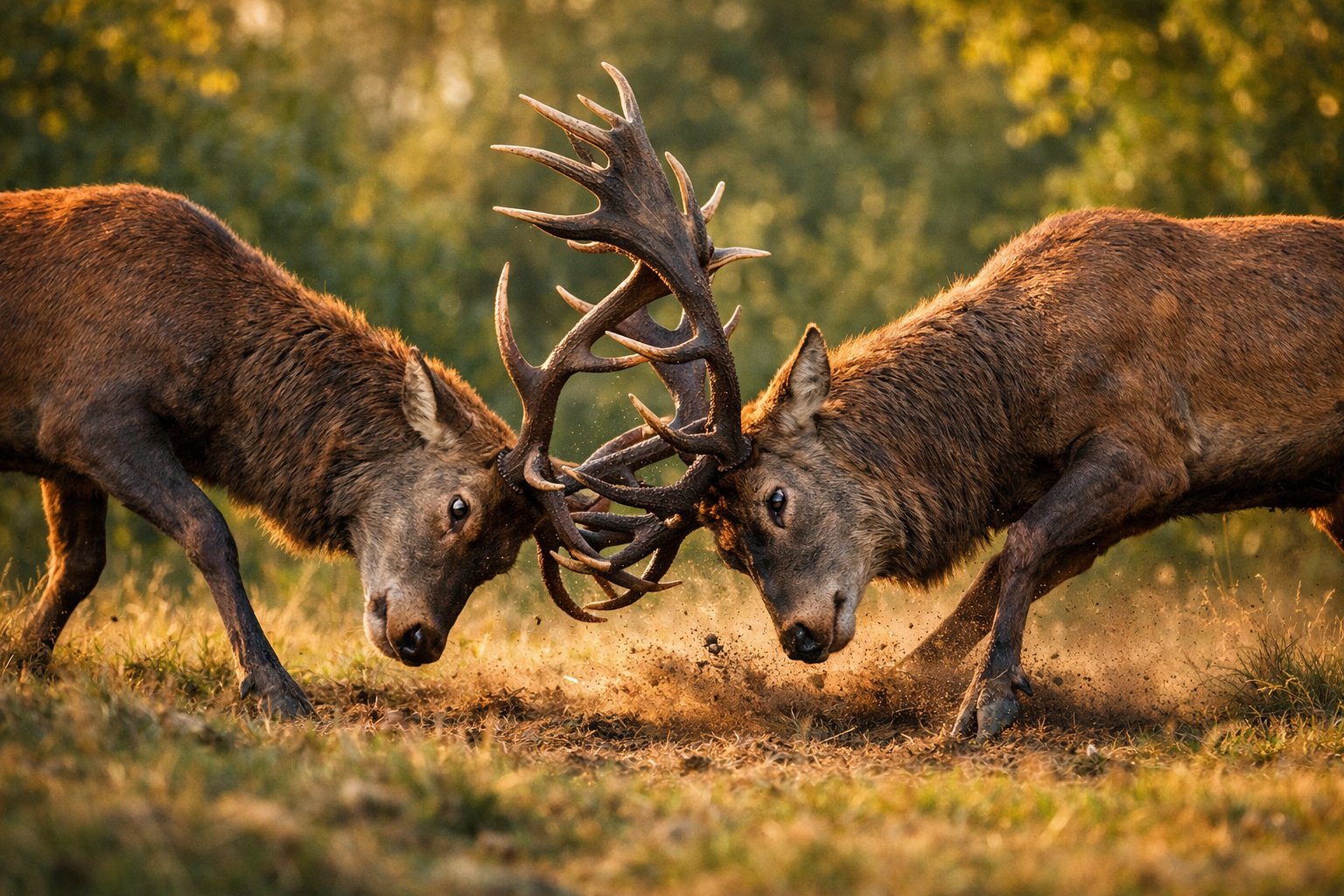
If you watch closely, you’ll catch the parallel walks, the head lowering, and then that twisting shove. These moves sort out who stays and who’s got to back off.
Why Deer Fight: Social Structure and Breeding Rights

Deer fights mostly come down to who gets the best space and who gets to mate. Bucks put on displays, push, and clash antlers to decide rank.
Does play a big role too—they pretty much set the stage for when and where these contests happen.
Dominance and Hierarchy Among Bucks
Bucks always seem to sort themselves into a pecking order. The older, bigger bucks usually end up at the top because, honestly, they’ve got the biggest antlers and more muscle.
Rank gives them first dibs on food, safe resting spots, and the chance to court groups of does.
When two bucks cross paths, they often try to size each other up before throwing down. If all that posturing doesn’t work, they’ll lock antlers and start pushing.
The stronger or just more experienced buck usually makes the other one back off. That helps keep things from turning into constant battles.
If you pay attention, you’ll notice some bucks win again and again. That streak lets them hang onto better resources and more mating chances.
Younger bucks? They mostly wait their turn—either for an older buck to get tired or to die off.
Role of Does in Deer Conflicts
Does seriously affect when and where bucks fight. They only enter estrus for short bursts, so bucks crowd around them and compete hard for those few days.
Fights aren’t just random; they’re all about breeding success.
Does also give off cues with their body language and movements. If a doe walks away or ignores a buck, the weaker ones usually get the message and leave.
Sometimes, does even fight each other over space or food, but it’s not about antlers and usually stays pretty minor.
When does travel in small groups outside the rut, a buck that manages to control one of these groups gets way more mating chances.
You’ll notice that the most successful bucks focus on holding onto a group of does instead of picking fights with every rival.
The Rut: Impact on Aggression
During the rut, everything changes. Testosterone spikes in bucks, and suddenly they’re chasing, sparring, or locking antlers way more.
They get more active at dawn and dusk, and fights ramp up in both intensity and frequency.
Bachelor groups split up. Bucks start roaming and checking out territories where does might be.
Because does are only receptive for a few days, all the competition gets squeezed into a short window. That really cranks up the pressure and the risk.
You’ll spot signs of rut activity—scraped-up soil, trees rubbed raw, and a lot of vocalizations. Those are bucks marking territory, advertising, and getting ready to defend mates. All of that just leads to more clashes.
Body Language Prior to Conflicts
You can often guess when a fight’s about to break out just by watching how deer move. Bucks do this “parallel walk,” sizing each other up side-by-side.
Look for stiff legs, heads held high, and flicking tails—these are warnings, not attacks.
Other signals? Bucks might sniff nose-to-nose or sidestep slowly. If neither one gives in, they’ll drop their heads and spread their front shoulders.
That’s usually when antlers lock and the real pushing starts.
Does and younger deer have their own signals too. A doe’s sudden turn or dash can set off a chase.
If you get used to these cues, you’ll start to notice when a display is enough to stop a fight and when things are about to get rough.
How Deer Fight: Methods and Consequences

Deer really use their whole bodies—posture, antlers, even their feet—to compete. These fights decide who gets to mate, who owns the best territory, and who eats first.
Antler Combat and Fighting Styles
If you’ve ever watched bucks go at it, you know antlers are the main thing. Whitetails lock antlers, then push, twist, or shove to test each other’s strength.
Fights start with a lot of showing off—lowered heads, hair standing up, scraping the ground. Most of the time, these displays end things before it gets serious.
But during the rut, fights can go from quick shoves to drawn-out matches. Younger bucks often spar lightly, just practicing, while the mature ones use all their muscle to force an opponent to quit.
The shape of their antlers—how long the tines are, how thick the beams, how wide the spread—really changes how a fight plays out and who comes out on top.
Doe and Antlerless Deer Techniques
Does and antlerless deer have their own way of fighting. You’ll see does rear up and strike with their front hooves, charge, or even bite if they need to protect a fawn or keep their spot at the feeder.
They go for quick, low strikes instead of locking up for a long time.
Young bucks without antlers or those still in velvet rely on body blows and kicking. They’ll push with their shoulders, nip at the neck, and stomp.
You might notice sideways shoves and fast retreats—deer really try to avoid serious injury, so they’ll break off quickly.
Their strategy? Make a decisive move, show dominance, and get out before anyone gets badly hurt.
Injuries and Risks Involved
Fighting definitely comes with some real risks you should know about. Sometimes, bucks lock antlers and end up stuck together—leaving both of them open to starvation or even predators.
Hooves and sharp antler tips can leave deep cuts. These wounds might get infected and slowly weaken a deer over several weeks.
Bucks also burn through a lot of energy when they fight. If a buck spends the rut battling, he can lose enough body fat to become an easy target once winter hits.
Occasionally, fighting leads to fatal outcomes, like bucks dying from being tangled up too long or from really bad injuries. If you’re studying whitetails or planning to hunt, it’s worth understanding these risks—maybe that’s why some bucks seem to vanish after a rough fight.


