
When you spot a chipmunk darting around, have you ever wondered how it sees the world? Chipmunks don’t see all the same colors we do.
Chipmunks can pick out some colors, especially ones that help them find food, but their color vision isn’t as rich as ours. They rely on certain colors more than others to survive.
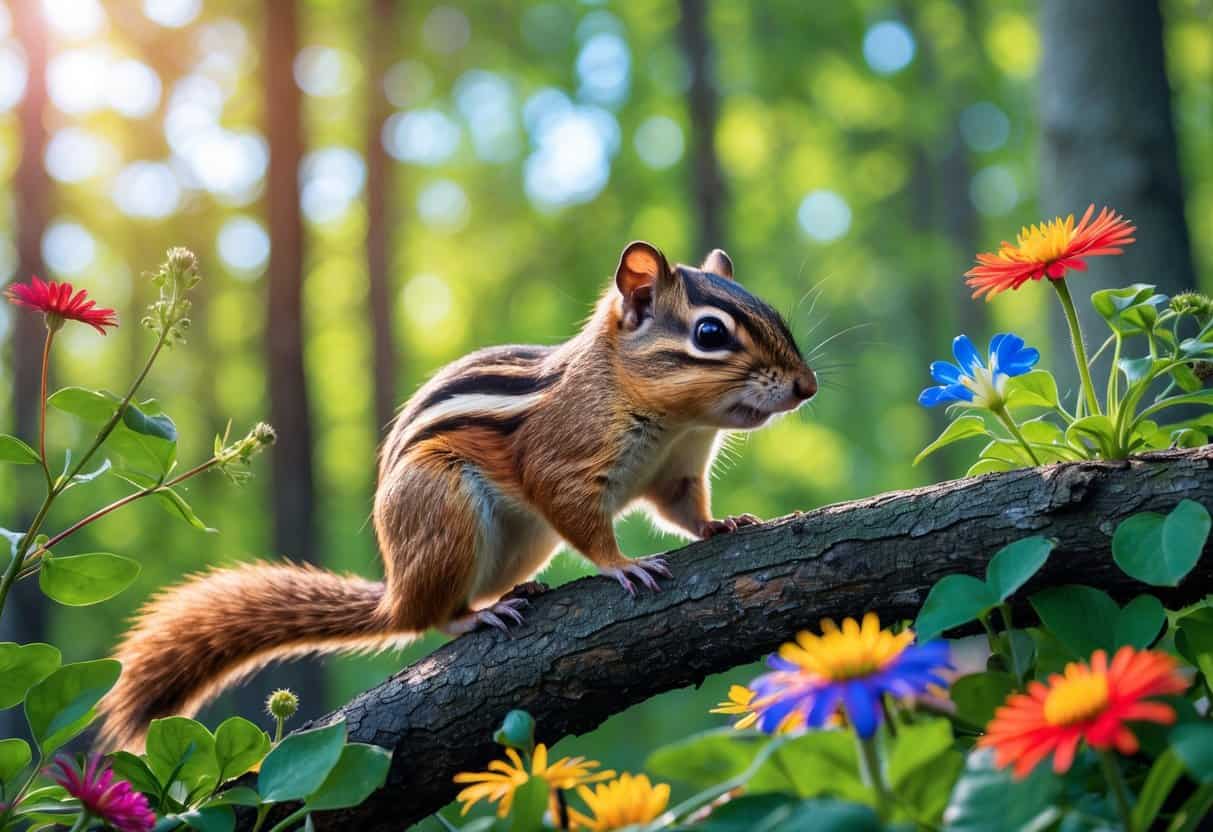
Your chipmunk pal probably uses color to spot nuts and berries. Scientists have noticed they prefer certain colors, which helps them figure out what’s safe to eat.
Learning how chipmunks see gives you a neat peek into how animals experience their world.
If you’re curious about exactly what colors chipmunks can see and why it matters, let’s get into how their eyes work and how it shapes their behavior.
Understanding Chipmunk Color Vision
Chipmunks see things in a way that’s honestly a bit surprising. Their eyes work best in daylight, helping them find food and spot danger.
But their color vision doesn’t cover as many shades as ours. You’ll see how their eyes pick up color, what makes rodent vision stand out, and how their sight stacks up to yours.
How Chipmunk Eyes Detect Color
Chipmunks use special cells in their eyes called cones to see color. These cones respond mostly to blue and green light.
So, they can see some colors, but not the full rainbow like we can. Their eyes don’t have as many rods, the cells that help with night vision.
Because of this, chipmunks focus on colors during the day but don’t see well in the dark. They do best at spotting colors in bright light and might miss details when it’s dim.
Unique Features of Rodent Vision
Most rodents, like chipmunks and squirrels, share similar eye features. Their eyes sit on the sides of their heads, giving them a really wide view.
That wide view helps them watch for predators while they gather food. Rodents usually detect motion well because of their rod cells.
Chipmunks, though, have fewer rods and more cones. They give up some night vision for sharper color vision in daylight.
This balance helps chipmunks spot colors that stand out in their surroundings, like bright green leaves or certain berries.
Comparing Chipmunk Vision to Human Vision
Compared to us, chipmunks see fewer colors but are better at catching movement in daylight. We have three types of cones, so we see red, green, and blue, which gives us a bigger color range.
Chipmunks usually have two cone types. They mainly see blues and greens, but reds and oranges don’t stand out for them.
Their small, rounded pupils let in plenty of light to keep their vision sharp during the day. But at night, their sight really isn’t great.
Knowing this, you can see how chipmunks use their vision to survive. Their eyesight is tuned more for safety and finding food than for seeing every color detail.
If you want to read more about how chipmunk eyes work, check out this detailed look at their sleep behavior and eye structure.
Color Vision Differences Between Chipmunk Species
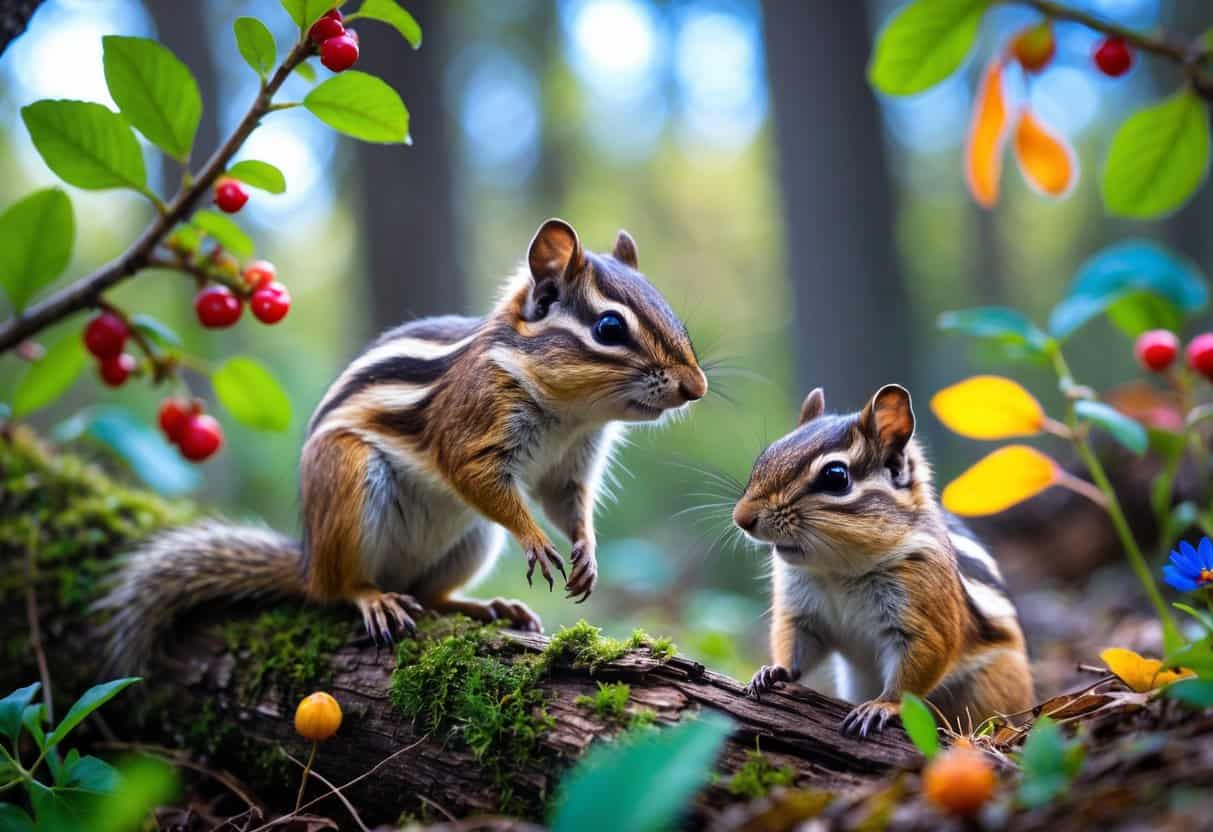
Different chipmunk species see colors in their own ways. Their color vision helps them find food and watch out for danger.
But some chipmunks pick up colors better than others. Knowing about these differences gives you a better idea of how each species fits into its world.
Eastern Chipmunk Vision
The Eastern chipmunk mostly sees in shades of brown and gray. Its color vision doesn’t match ours.
This chipmunk relies more on movement and shapes than on bright colors. That helps it spot predators in a hurry.
You probably won’t see the Eastern chipmunk picking out many colors. It mostly notices contrasts and brightness.
Even with a limited color range, it does just fine in forests and gardens, finding nuts and seeds.
Siberian Chipmunk Visual Capabilities
The Siberian chipmunk actually has better color vision than the Eastern chipmunk. It can see some colors more clearly, especially greens and blues.
This helps it recognize different plants and fruits in its habitat. The Siberian chipmunk’s eyes are also more sensitive to light.
That sensitivity lets it see better at dawn and dusk.
Western Chipmunk Color Perception
Western chipmunks live across different parts of North America. Their color vision is actually pretty fascinating.
They can spot some colors much like the Siberian chipmunk, especially greens and yellows. This ability helps them pick out berries, leaves, and insects while they’re out and about.
Sure, they depend a lot on hearing and smell too. Still, their color vision gives them a real edge in their varied habitats.
| Species | Color Vision Range | Key Benefit |
|---|---|---|
| Eastern chipmunk | Limited (browns, grays) | Spotting predators through contrast |
| Siberian chipmunk | Broader (includes green/blue) | Recognizing varied plants |
| Western chipmunk | Mid-range (green/yellow) | Finding food in diverse habitats |


