
Hearing scratching or scurrying behind your walls, ceiling, or floors? That could mean chipmunks have snuck into your home. You might see small holes or burrow openings near your foundation or in the garden.
You could also spot chew marks on wires, wood, or insulation. Sometimes, you’ll find opened food or little waste trails inside.
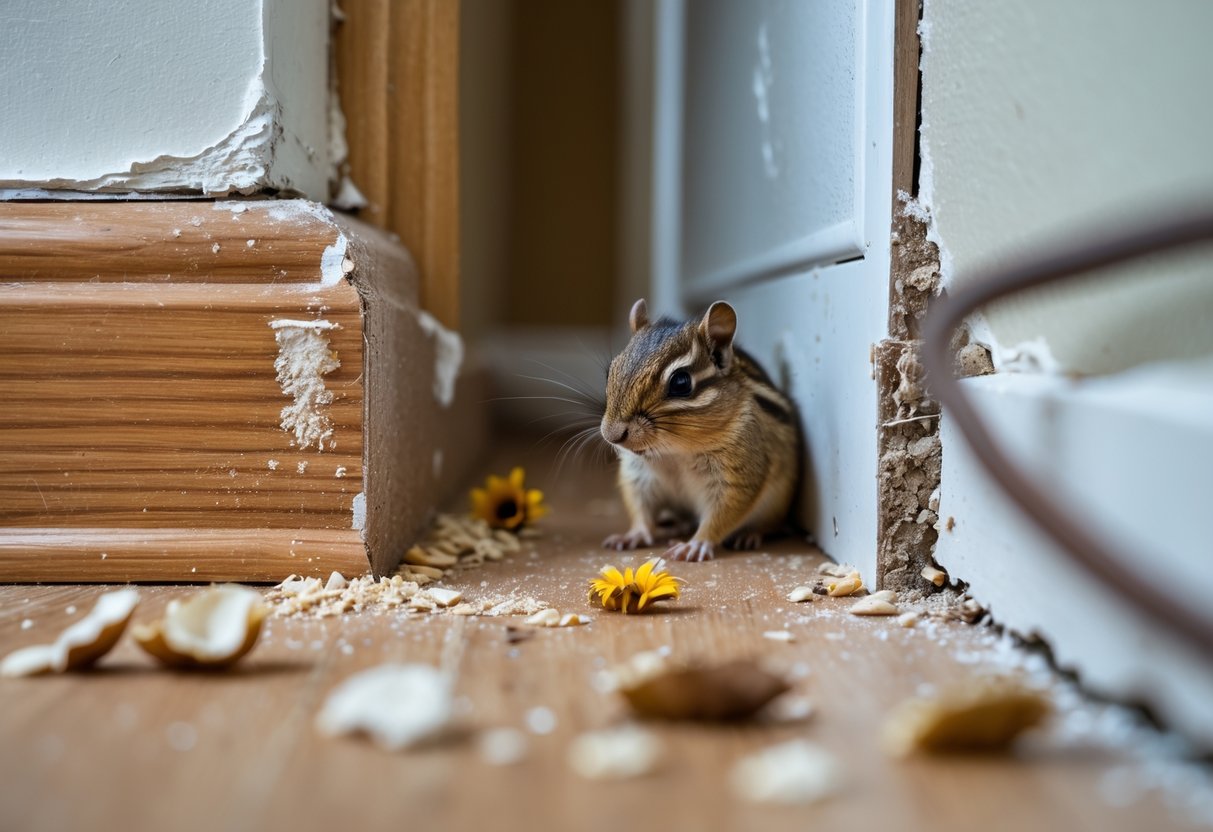
Chipmunks usually act skittish and dart away fast, but they definitely chew things up to keep their teeth in check. If you actually see chipmunks inside during the day or hear their high-pitched chirping, that’s a big red flag.
Catching these signs early gives you a chance to fix things before they get out of hand.
If you spot any of these clues, don’t wait around. Start sealing up your house and get rid of easy food sources outside.
That way, you make your place less appealing for chipmunks. If you want more details, check out chipmunk infestation signs and prevention tips.
Identifying Signs of Chipmunks Indoors

When chipmunks get inside, they leave behind pretty obvious evidence. You’ll probably notice droppings, nests, or odd noises.
Catching these things early can really save you from bigger headaches later.
Droppings and Urine Trails
Chipmunk droppings look tiny—about as big as a grain of rice. They usually show up near nests or food stashes.
You might find dark, pellet-like droppings in corners, cupboards, or under furniture. Sometimes, you’ll notice shiny or wet streaks along walls or baseboards.
That’s probably chipmunk urine, especially in dusty spots.
Both droppings and urine can carry diseases. Always use gloves and disinfect thoroughly when you clean them up.
Stored Food and Nests
Chipmunks love to stash food in random places. You might stumble across seeds, nuts, or dried fruit hidden in corners, behind appliances, or even inside walls.
They build nests out of shredded paper, fabric, or insulation. Usually, these nests show up in dark, quiet spaces like attics, vents, or behind walls.
If you find piles of food or shredded bedding, chances are chipmunks have moved in—even if you never see them in person.
Burrow Entrances and Tunnels
Chipmunks sometimes dig small burrow entrances or tunnels inside, especially in basements, crawl spaces, or wall gaps. These holes are usually just 1 or 2 inches wide.
You might spot loose dirt or sawdust near these openings.
If you see burrow holes close to pipes, wiring, or insulation, it’s time to act. Chipmunks can cause real damage and even fire hazards if you ignore them.
Footprints and Scratching Sounds
You might catch chipmunk footprints on dusty floors or soft surfaces. Their tracks show four toes in front and five on the back, usually in a hopping pattern.
But honestly, you’re more likely to hear them than see their prints.
Scratching or scampering sounds in your walls, ceilings, or attic, especially at dawn or dusk, usually mean chipmunks are busy inside.
If these noises don’t stop, it’s probably time to call in some help. For more tips, check out how to identify chipmunks indoors.
Related Issues Caused by Indoor Chipmunks

Chipmunks sneaking indoors can bring a bunch of problems. You might deal with property damage, health risks, or even a bigger infestation if you don’t handle it quickly.
Property Damage and Foundation Risks
Chipmunks dig burrows that weaken your home’s foundation. Sometimes their tunnels stretch up to 30 feet, shifting the soil under your house.
Inside, they chew on wires, pipes, insulation, and even furniture. That kind of damage can get expensive and might even cause electrical fires.
You might spot gnaw marks on wood, boxes, or even clothing. If you see these, chipmunks are probably looking for food and shelter inside—and the problem can get worse fast.
Contamination and Health Concerns
Chipmunks sometimes carry diseases like plague, salmonella, and Hantavirus. Their droppings, which look like tiny dark rice grains, can contaminate surfaces.
That raises the risk of getting sick.
If you find chipmunk droppings or urine, clean up carefully. Wear gloves and disinfect the area to protect yourself.
Escalation to Larger Infestations
Spotting even one chipmunk indoors could hint at a bigger issue. These little rodents usually have babies twice a year—once in spring, then again when summer fades into fall.
If nobody deals with them, just a couple of chipmunks can turn into a real crowd. You might start hearing odd scurrying or scratching noises behind the walls or up in the ceiling.
Try sealing up any gaps they could sneak through and get rid of tempting food sources. If things seem out of hand, it might be time to call a wildlife removal pro before it gets worse.


