
Ever spotted a tiny, striped critter zipping across your yard or darting through the woods? That’s probably a chipmunk. You might’ve wondered what really sets these little guys apart.
Chipmunks climb and swim much better than most folks realize, which helps them dodge danger and find food in all sorts of places.
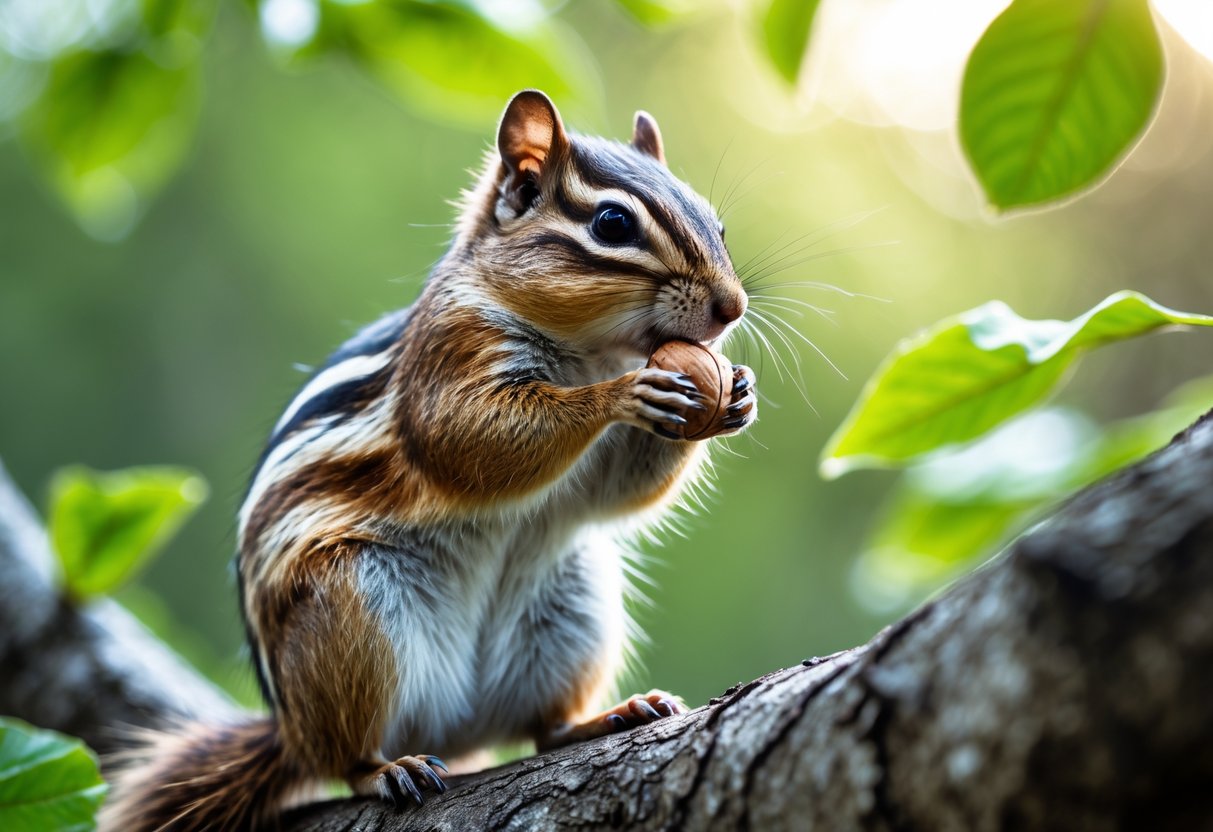
Most people assume chipmunks just scurry along the ground. Actually, they climb trees and even swim across streams when they need to.
Their quick moves and clever hiding spots help them stay safe and find snacks.
Honestly, watching chipmunks do their thing is kind of fascinating. They’ve got a mix of talents that let them thrive in wild forests and even in suburban backyards.
What Chipmunks Are Excellent At
Chipmunks stay busy with a bunch of special skills that help them survive. They find and save food, build safe homes, climb fast, and carry loads in pretty creative ways.
No wonder chipmunks stand out among squirrels.
Expert Food Gathering and Hoarding
Chipmunks are foraging experts. You’ll spot them searching for nuts, seeds, berries, and sometimes even bugs.
They don’t just eat on the spot. Instead, they stash extra food in little underground hideouts.
This hoarding habit is a lifesaver in winter. Chipmunks remember where they hide each type of food, thanks to their sharp memory.
That organized system really shows how they prep for tough times when food is hard to find.
Their menu changes with the seasons. In fall, they focus on nuts and seeds to store up energy. When it’s warm, they snack on fruit and insects.
That flexibility helps them survive in all kinds of places across North America.
Remarkable Burrowing and Den Building
Chipmunks dig burrows that work as homes, hiding spots, and pantries. Their tunnels usually have more than one entrance, which gives them a quick escape if something’s after them.
These tunnels keep them safe from rough weather and hungry predators.
Inside, they set up separate little rooms for sleeping, food storage, and waste. It’s kind of like a tiny underground apartment, each space with its own purpose.
Eastern chipmunks, in particular, really go all out with their burrows. Some tunnels stretch several feet below ground, which shows just how much effort they put into staying safe.
Impressive Climbing and Escaping
Chipmunks climb like pros. Unlike some rodents that stick to the ground, chipmunks scale trees, walls, and whatever else gets in their way.
Climbing helps them escape danger and reach things like fruit or even bird eggs.
You might see a chipmunk dash up a tree faster than you’d expect. They swim pretty well too, which gives them another way to avoid trouble or grab a meal.
If you pay close attention, you’ll notice how quickly chipmunks change direction when something chases them. Their speed and agility give them a real shot at outsmarting hawks, snakes, and other predators.
Cheek Pouch Storage Abilities
One of the coolest things about chipmunks? Those cheek pouches. Each side of their face has a stretchy pocket that holds way more food than you’d think.
When they’re out foraging, chipmunks stuff their pouches with nuts, seeds, or berries. That way, they can haul several meals at once back to their burrow.
It’s honestly pretty efficient.
A chipmunk can fit dozens of seeds in its cheeks, making them tiny but mighty food carriers. Watching them pack away food for winter is oddly satisfying.
These cheek pouches really set chipmunks apart from other squirrels and make their food-gathering routines even more impressive.
Want more details? Check out this chipmunk behavior article.
Unique Chipmunk Skills by Species

Chipmunks show off different skills depending on their species and where they live. Some have clever tricks for dodging predators or dealing with cold weather.
Others have their own ways to communicate or store food.
Eastern Chipmunk Adaptations
Eastern chipmunks build some of the most complex burrows around. You’ll find their tunnels with several entrances and little rooms for sleeping and storing food.
These burrows help them hide from danger and bad weather.
They’ve also got huge cheek pouches—sometimes up to three times the size of their head. That lets them haul a ton of nuts and seeds home in one trip.
During winter, eastern chipmunks go into torpor, which is a light kind of hibernation. Their bodies slow down to save energy, but they wake up now and then for a snack.
You’ll notice their bold stripes, too. Those markings help them blend into leaves and dirt, making it tough for hawks or snakes to spot them.
Distinctive Behaviors of Siberian Chipmunks
Siberian chipmunks mostly live in parts of Asia, and honestly, they’ve figured out how to handle cold weather pretty well. Instead of sticking to the ground like most chipmunks, they often climb trees to dodge danger or hunt for food.
It’s not unusual to spot them racing around with their tails straight up. That tail actually helps them keep their balance when they jump—kind of clever, right?
Compared to other chipmunks, these guys seem a lot more social. Sometimes you’ll find them living near each other, and they use all sorts of warning calls to let their neighbors know when a predator’s nearby.
Their communication is surprisingly detailed. They make different sounds depending on what kind of threat is coming.
When it comes to food, Siberian chipmunks store all kinds of things—fruits, insects, whatever they can find. Their cheek pouches play a big role here, letting them stash food away for the winter, when finding a snack gets a lot tougher.
If you’re curious about their quirks and how they’ve adapted, you can check out the chipmunk guide from a-z-animals.com.


