
Ever wondered why bees seem to follow you more than other people? Sometimes it feels like they’re just drawn to you out of nowhere.
The truth is, bees notice certain smells, colors, and even your body chemistry. Bees love floral scents, bright colors, sweat, and the natural chemicals your body gives off.
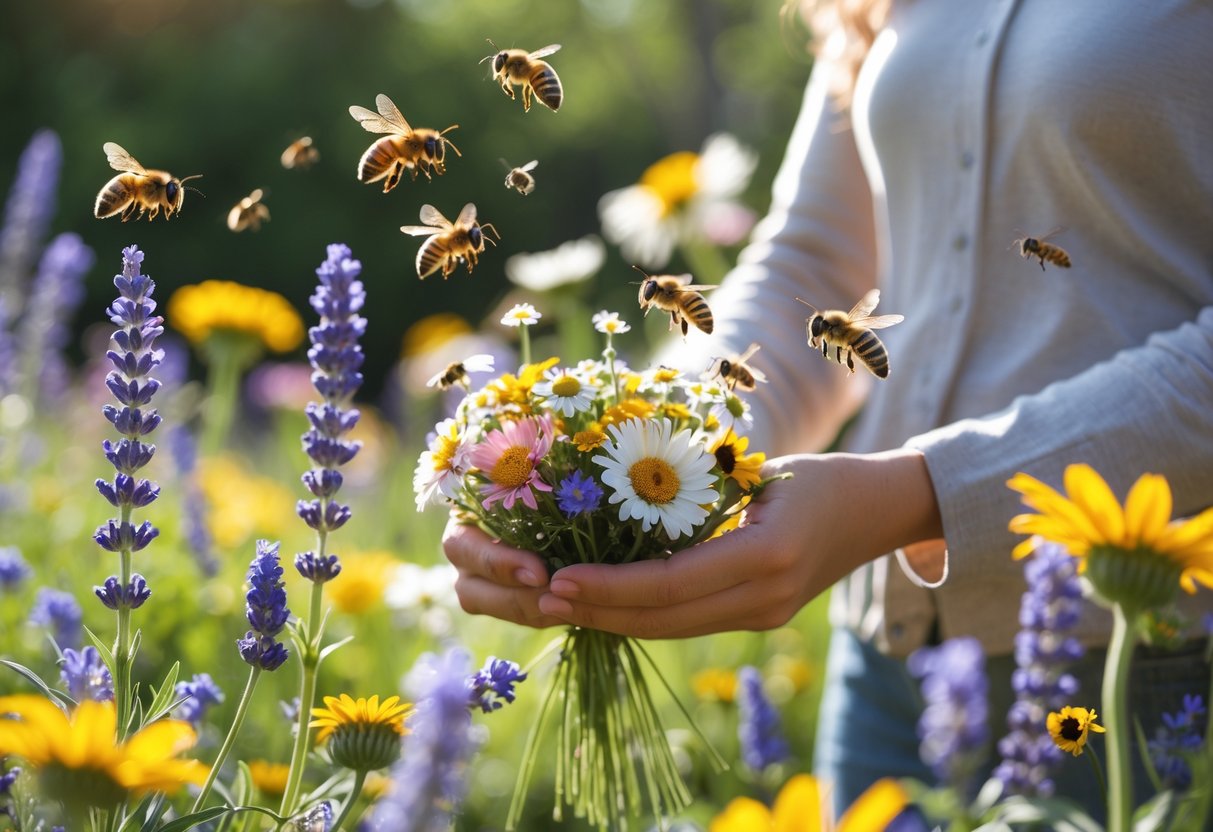
Your perfume or lotion, the clothes you toss on, and even how much you move can make a difference in whether bees buzz around you. Salty sweat or some hair products can catch their attention too.
If you know what pulls bees in, you can avoid awkward encounters—or at least understand why they seem to like you so much.
Curious about what makes bees pick you out of a crowd? Stick around. This stuff can help you feel more comfortable outside and maybe see these busy insects in a new light. If you want more details, take a look at what attracts bees to humans.
Key Factors That Attract Bees to a Person

Bees notice a bunch of things about you before they come closer. Your smell, your outfit, and even your body’s natural signals can catch their attention.
These little things can make you seem like a source of nectar or pollen.
Scents, Fragrances, and Hair Products
Bees have an amazing sense of smell, and they love sweet scents. If you use floral perfume, scented lotion, or fruity hair products, bees might think you’re a flower packed with nectar.
That can make them come check you out.
Even your shampoo or conditioner can get bees interested if it smells flowery. Sometimes, your own scent mixed with these products tricks bees into thinking you’re a good food source.
If you want to keep bees at bay, it’s smart to skip strong floral scents.
Bright Clothing and Visual Cues
Bees go for bright colors because they remind them of flowers. Wearing yellow, red, or orange can catch a bee’s eye.
Patterns that look like plants or flowers can also grab their attention.
Movement matters too. If you wave your arms or move a lot, you might look like a flower blowing in the wind.
That ups your chances of a bee landing nearby.
If you stick to dark or dull colors, you’ll likely attract fewer bees. Light or neutral colors can help keep them away if you’re not looking for a bee encounter.
Sweat and Natural Body Odor
Bees get drawn to the salty smell in sweat. When you’re active or hot, your sweat puts out scents bees find interesting.
Some natural body odors can remind them of nectar or honey.
If you’ve been eating sweet stuff, your sweat might get sweeter too. That makes you even more appealing to bees.
The heat from your body can carry these smells farther.
To keep bees from buzzing too close, try to stay cool and skip sugary foods before hanging out near flowers or bees. Washing up after a workout helps get rid of sweat odors that attract bees.
Other Influences on Bee Attraction
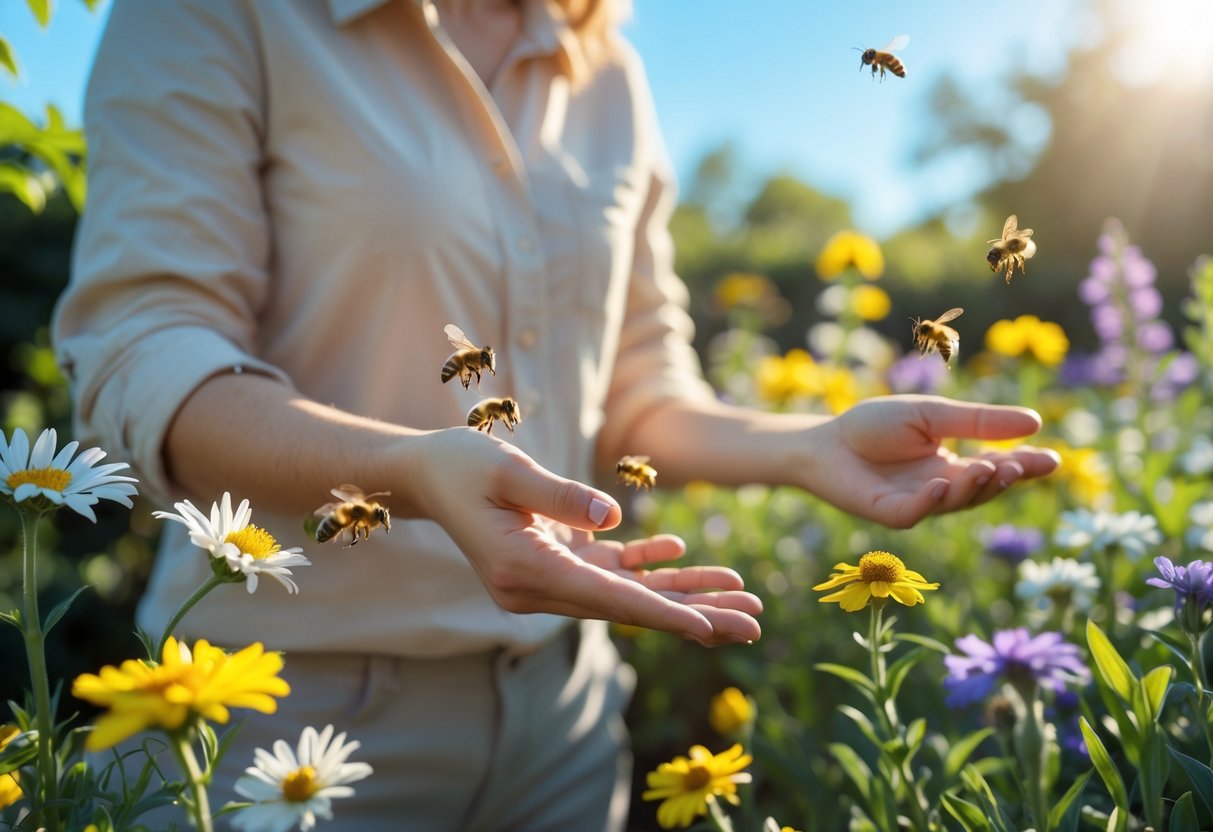
Bees notice more than just scent or color. How you move, where you hang out, and what’s around you can all play a part in why bees come close.
Behavior and Movements
Bees watch how you move. Fast or jerky movements can make them feel threatened.
If you wave your arms or swat at them, they might feel like they need to defend themselves with a sting.
Calm, slow movements make you seem less scary to bees. If you stay still or move gently, you’re less likely to bother them.
Since bees work hard as pollinators, they’ll protect their space if they sense danger. Moving carefully helps keep both you and the bees safe.
Nearness to Wildflowers and Fruits
Bees love spots near wildflowers and ripe fruit. These places give them nectar and pollen.
If you hang out in gardens or orchards, you’ll probably see bees gathering around the plants.
Being close to these food sources gives bees a reason to fly near you.
If you cover sweet snacks or drinks, you can keep bees from getting too close. Sweet smells from fruit or juice can bring them in, too.
Distinguishing Bees, Wasps, and Bumblebees
It’s useful to know how to tell bees, wasps, and bumblebees apart when you spot them outside.
| Insect | Appearance | Behavior | Sting Risk |
|---|---|---|---|
| Bee | Fuzzy, round body, striped | Usually calm, pollinates flowers | Can sting, but sting once |
| Wasp | Smooth body, bright yellow/black | More aggressive, carnivores | Can sting multiple times |
| Bumblebee | Large, fuzzy, black and yellow | Gentle, slow | Can sting but usually calm |
If you know these differences, you’ll probably react more calmly.
Wasps act a lot more aggressively than bees or bumblebees, and they might sting over and over if you bother them.
Bees and bumblebees just want nectar and tend to mind their own business, unless you give them a reason not to.
See a bunch of bees nearby? It’s usually best to step back and let them get on with their pollinating.


