
Ever notice bees buzzing around your place and wonder what’s pulling them in? Usually, bees show up because they spot food, water, or safe places to rest and nest nearby.
Flowers, plants, and anything offering nectar or pollen are the biggest reasons bees flock to your house.
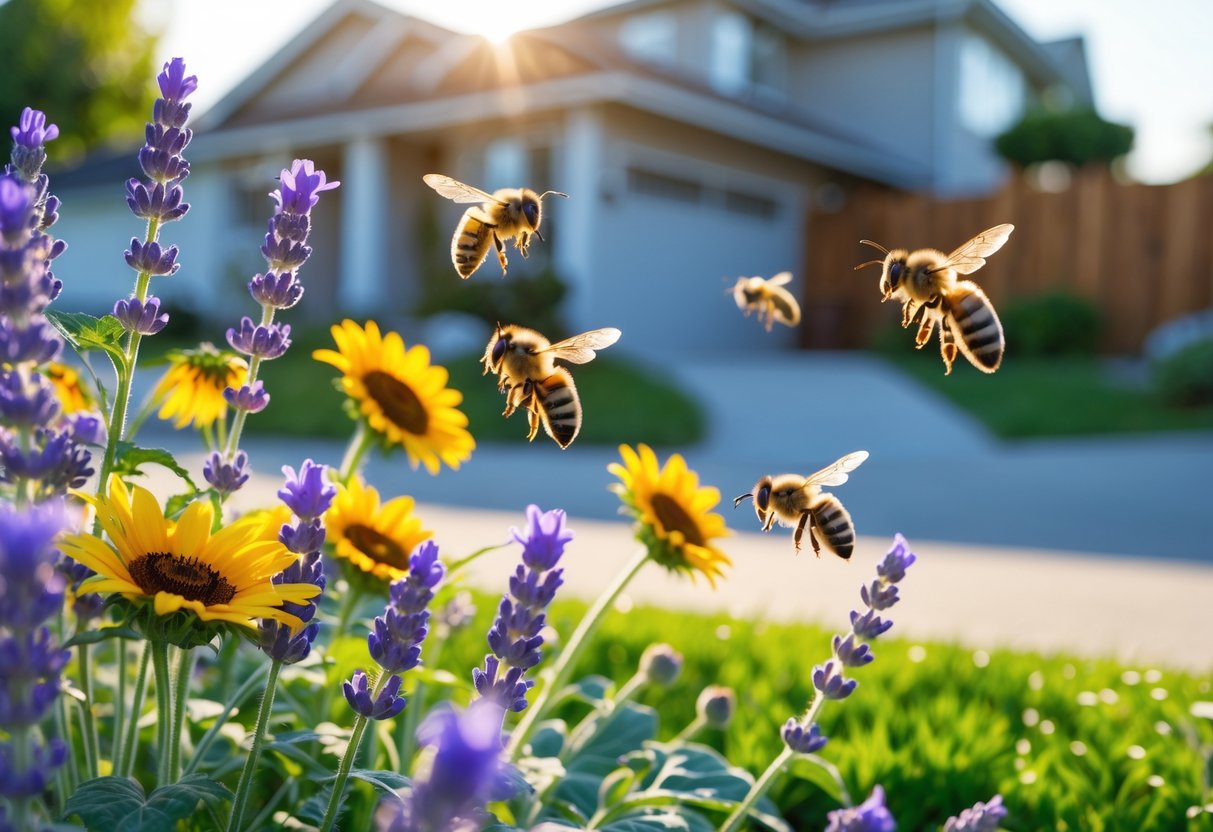
Bees also hunt for easy entry points like small cracks, vents, or chimneys. Scents from bold colors, fruit, or even garbage can lure them. These simple reasons might explain why bees seem so interested in your space.
If you know what draws bees close, you can decide whether to make your yard more welcoming or try to gently keep them away. Keep an eye on flowers, water sources, and open entrances if you want to understand what attracts bees to your home.
For more details, check out what attracts bees around your house.
Key Factors That Attract Bees Around Your House
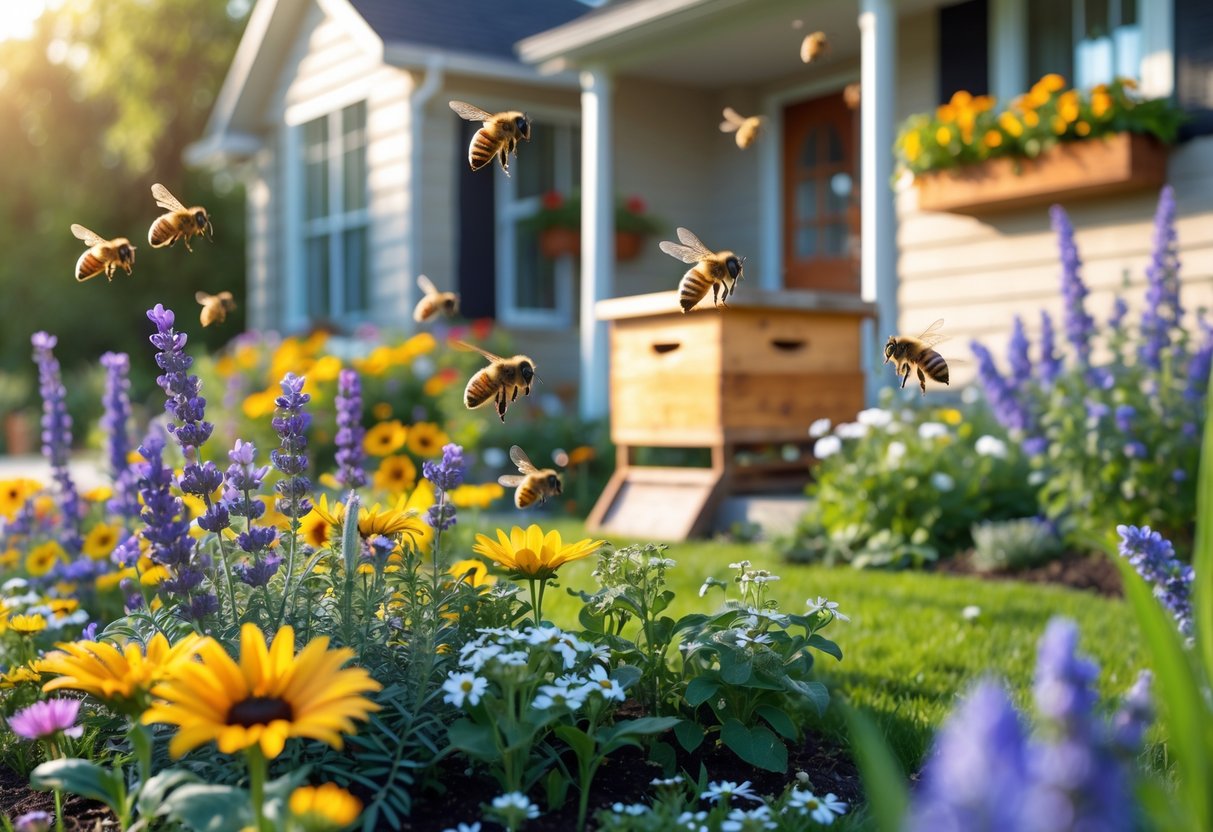
You’ll probably spot bees near your home because your yard offers them just what they need. They’re after food, water, and safe spots to rest or build nests.
If you pay attention to these factors, you’ll start to see why bees keep coming back.
Flowers and Flowering Plants
Flowering plants are like magnets for bees—they rely on nectar and pollen for food. Plants such as lavender, sunflowers, marigolds, rosemary, thyme, and lemongrass really attract them.
These flowers give bees both nutrition and color signals. Pollinating plants help bees and make your garden thrive, too.
If you want to invite bees, plant a variety of these flowers. Just remember, more flowers near the house means more bee activity close by.
Water Sources Near the Home
Bees need water to stay hydrated and cool their hives. Fountains, ponds, or even bird baths become favorite bee hangouts.
If you place water features close to your house, you’ll probably see more bees. Even tiny puddles from gutters or plant saucers attract them.
If you want fewer bee visits, move water sources away from doors and windows. Change the water regularly so it’s less tempting for thirsty bees.
Sweet Substances and Food Waste
Sweet drinks like soda, juice, and sugary leftovers pull bees in fast. They love the smell and taste since it gives them quick energy.
Open containers or spilled drinks invite bees to stick around. Garbage bins become hotspots because leftover food and sticky residues attract them.
Keep trash sealed and clean up spills quickly to cut down on bee visits. Watch out for bees around patios and picnic areas where sweet stuff is common.
Shelter and Nesting Opportunities
Bees search for safe, warm, hidden places to build nests. Attics, wall cracks, wood piles, or holes in fences make great shelter for them.
If your home has openings, bees may see it as a perfect spot for a hive. Wooden fences or exposed wood also attract bees looking for nesting spots.
If you spot bee activity inside walls or attics, you might have a problem. Seal up cracks and check your property often to keep bee colonies from settling in.
For more on what attracts bees and how to handle it, check out this guide on what attracts bees around your house.
How to Reduce Bee Activity and Prevent Infestations
If you want to control where bees gather, focus on what draws them in. Adjust your plants, water sources, trash, and seal up entry points to keep bees out of your walls or attic.
Removing and Managing Attractive Plants
Certain flowers and plants provide nectar and pollen, which bees love. Some plants like marigolds, rosemary, thyme, and lemongrass can actually help keep bees away.
Try planting these near doors and windows if you want fewer bees. Avoid bouquets or bright flowers by your entrances.
If you already have bee-friendly plants, trim them back or move them away from busy spots. Removing flowering weeds or overgrown shrubs helps, too.
Bees visit dense clusters of plants, so thinning out crowded areas can make your yard less attractive to them.
Eliminating Standing Water and Water Sources
Standing water around your home gives bees a reason to hang around. Check for puddles, birdbaths, clogged gutters, or leaky hoses and fix them.
Don’t leave pet water bowls or garden fountains full overnight. Dry them out when you can.
Even damp soil or muddy spots attract bees looking for water. Keeping your yard dry makes it less appealing for bees.
If bees show up, taking away water sources gives them less reason to stay near your place.
Properly Handling Trash and Sweet Foods
Bees can’t resist the smell of sugary foods and rotting fruit. Use sealed trash cans and clean up spills or crumbs near outdoor eating spots.
Don’t leave fruit or sweet drinks outside, especially on patios or decks. Wash recycling bins often to get rid of sticky stuff.
Take out the trash regularly to cut down on smells that attract bees. Cover compost piles and keep fruit trees tidy to limit fallen fruit that draws them in.
Sealing Entry Points and Using Natural Bee Repellents
Bees tend to sneak into your home through cracks, gaps, vents, or even chimneys. Take a close look around doors, windows, attic vents, and along the foundation for any little openings.
Grab some caulk or weather stripping and seal up those spots. That way, bees can’t slip inside your walls or attic and start building a nest where you definitely don’t want one.
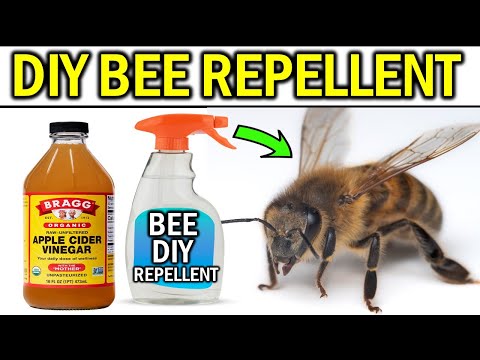
Natural bee repellents can help too. Try citronella, a bit of vinegar, or plant some mint and lemongrass near your doors and windows.
These scents usually keep bees away, and you don’t have to worry about hurting them.
If you spot carpenter bees drilling into wood, go ahead and sand or paint those surfaces. They really don’t like treated wood, so this simple fix can make a big difference.


