
If you love watching birds darting around the sky, maybe you’ve wondered about the names of aerial birds. These birds spend most of their lives flying or soaring way above the ground.
Aerial birds include well-known species like hawks, swallows, swifts, hummingbirds, and albatrosses—all built for life in the air.
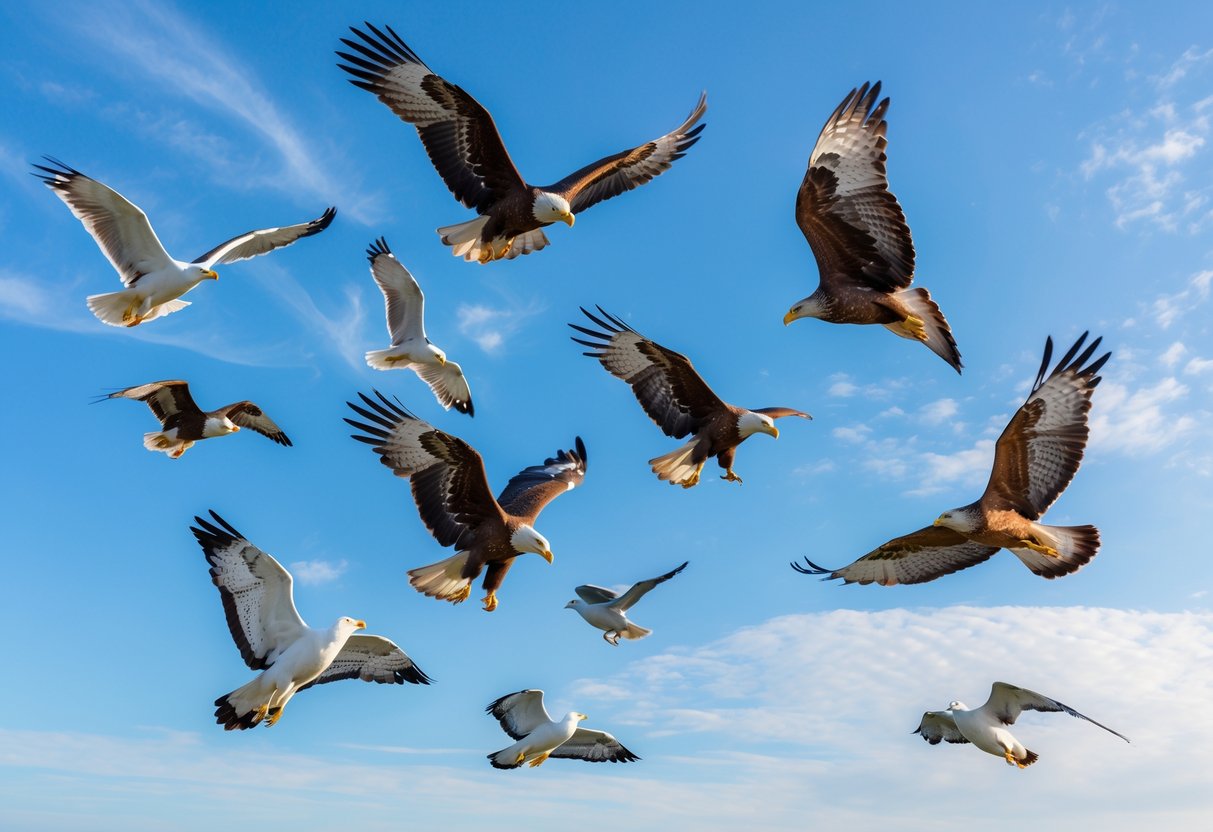
You’ll notice aerial birds have strong wings and lightweight bodies that help them glide, hunt, or migrate for miles. Knowing their names makes it easier to spot and identify these amazing creatures next time you’re outside.
By learning about them, you can appreciate how they manage to live and survive up there in the sky. If you’re curious about which birds spend most of their time flying and what makes each one unique, well, let’s get into some popular aerial birds and see what sets them apart.
Names of Well-Known Aerial Birds

Some aerial birds are famous for their speed, epic flights, or just wild flying skills. These birds really show just how different flying creatures can be.
Some are amazing hunters, while others travel thousands of miles without much of a break.
Swallow
Swallows are small birds, and people know them for their graceful flight. When you watch swallows, you’ll see them dart quickly through the air, catching insects on the wing.
They have slim bodies, long pointed wings, and a forked tail that lets them change direction fast. These birds often build nests in barns or under eaves, so you might spot them close to people.
Swallows migrate long distances, heading to warmer places in winter. Their flying style is smooth and agile, which makes them easy to spot up in the sky.
Swift
Swifts are incredible flyers and spend most of their life in the air. You might even see some swifts eating and sleeping while flying—seriously, they rarely land.
Their wings are long and narrow, built for fast and endless flight. Swifts never land on the ground except when nesting.
They feed on tiny flying insects high above, staying airborne for hours. Swifts can fly higher and faster than a lot of other birds, making them true aerial experts.
Albatross
The albatross is famous for flying long distances over the ocean. When you picture a bird gliding smoothly above the waves, it’s probably an albatross.
They have the largest wingspan of any bird, which lets them soar for hours without flapping. These birds use air currents over the sea to travel huge distances while barely moving their wings.
You can spot albatrosses far from land, since they spend most of their time flying over open water. Their skill in riding the wind is a great example of energy-efficient flying.
Falcon
Falcons are fast and fierce hunters. If you ever see a falcon in the wild, you’ll notice it can dive at incredible speeds to catch prey.
Their sharp eyes spot food from high in the sky. Falcons have strong, pointed wings that let them fly quickly and change direction in a flash.
They often hunt birds and small animals. Their speed and hunting skills make them some of the most impressive aerial birds to watch.
Common Types of Aerial Birds and Their Names

Aerial birds come in all shapes, sizes, and behaviors. Each type has its own features—maybe it’s their hunting style, color, or favorite hangout.
Knowing these differences helps you spot them and understand how they manage life up in the air.
Eagle
Eagles are big birds, and people know them for their sharp eyesight and strong flight. You can spot them soaring high as they search for prey like fish or small mammals.
Their hooked beaks and powerful talons help them catch and carry food. The bald eagle is probably the most famous, with its white head and brown body.
They often live near lakes or rivers. Eagles build large nests called eyries in tall trees or on cliffs, where they raise their young.
When you see an eagle, check out its broad wings and steady gliding. This bird can fly fast and high, and it’s a skilled hunter up there.
Parrot
Parrots are colorful birds, usually found in warm places like rainforests. They have strong, curved beaks for cracking nuts, seeds, and fruits.
You might hear their loud calls or even catch them imitating sounds around them. Unlike a lot of aerial birds, parrots spend plenty of time perched in trees, but when they fly, they do it well.
Some parrots use their feet to hold food while they eat. Their bright green, red, or blue feathers make them easy to spot.
Parrots often travel in flocks, so you might see a bunch flying or sitting together.
Kingfisher
Kingfishers are smaller birds famous for their bright blue or orange feathers. You’ll usually find them near rivers, lakes, or wetlands.
They hunt by diving quickly into the water to grab fish. When you watch a kingfisher, you’ll notice it sits quietly before dropping down to catch something.
Their sharp beaks make grabbing slippery fish look easy. These birds have compact bodies and short wings made for fast, direct flight.
Their hunting style mixes flying and diving, showing just how well they’ve adapted to their watery world.
Pigeon
Pigeons pop up everywhere—cities, parks, even quiet countryside roads. You’ll probably spot them strutting around on the sidewalk or darting through the air in small flocks.
They’ve got short necks, chunky bodies, and wings that look kind of rounded. If you pay attention, you’ll notice they’re actually pretty skilled at flying.
Pigeons can cover some serious ground when they want to. They rely on a sharp sense of direction to find their way back home.
Their feathers show off all kinds of colors, from plain grey to white. Sometimes you’ll catch a glimpse of those shiny, iridescent patches on their necks.
What do they eat? Mostly seeds and fruit, but honestly, they’ll grab any food scraps you leave outside.
If you watch for a minute, you might see a pigeon flapping its wings like crazy to get off the ground, then gliding along as if it’s no big deal. That quick burst helps them dodge predators and save energy.
Curious about other birds that spend their lives in the air? Here’s a handy list of 20 aerial animals names and habitats.


