
So, you’re curious about the Celtic name for a bird? You’ll hear “éan” in Irish, “edhen” in Cornish, or “adyryn” in Welsh, depending on which Celtic language you’re talking about.
These names come from old roots that connect all the Celtic languages. That’s one way you can see how closely linked they are.
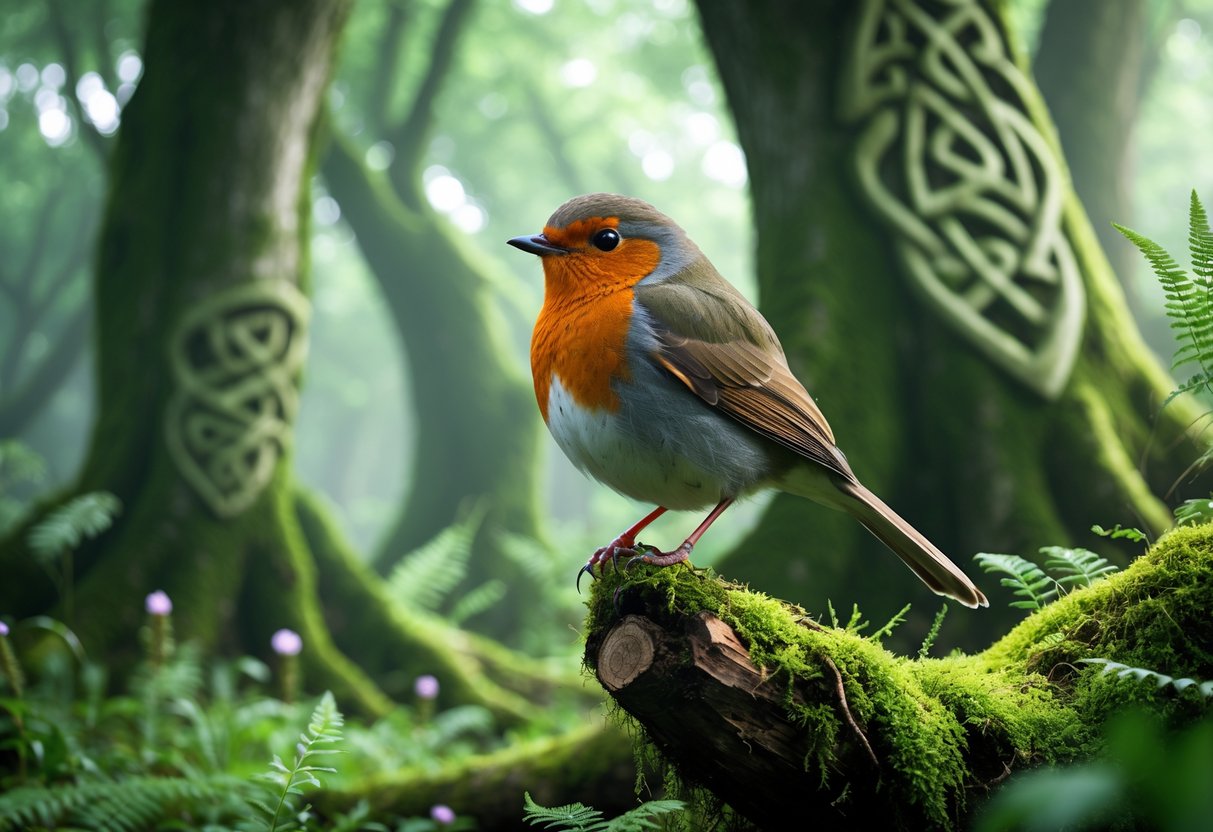
Birds have always meant something special in Celtic culture. Their names carry more than just the idea of the animal itself.
If you learn these words, you get a little window into Celtic history and tradition. You might even spot a few familiar words that stuck around in modern languages.
Keep reading, and you’ll run into more bird names in different Celtic languages, along with what they mean. Maybe you’re learning a new language, or maybe you just love birds—either way, it’s kind of fun to see how these old words still connect people today.
Want more examples? Check out this page on Names of birds in Celtic languages.
Celtic Names for Birds in Language and Culture
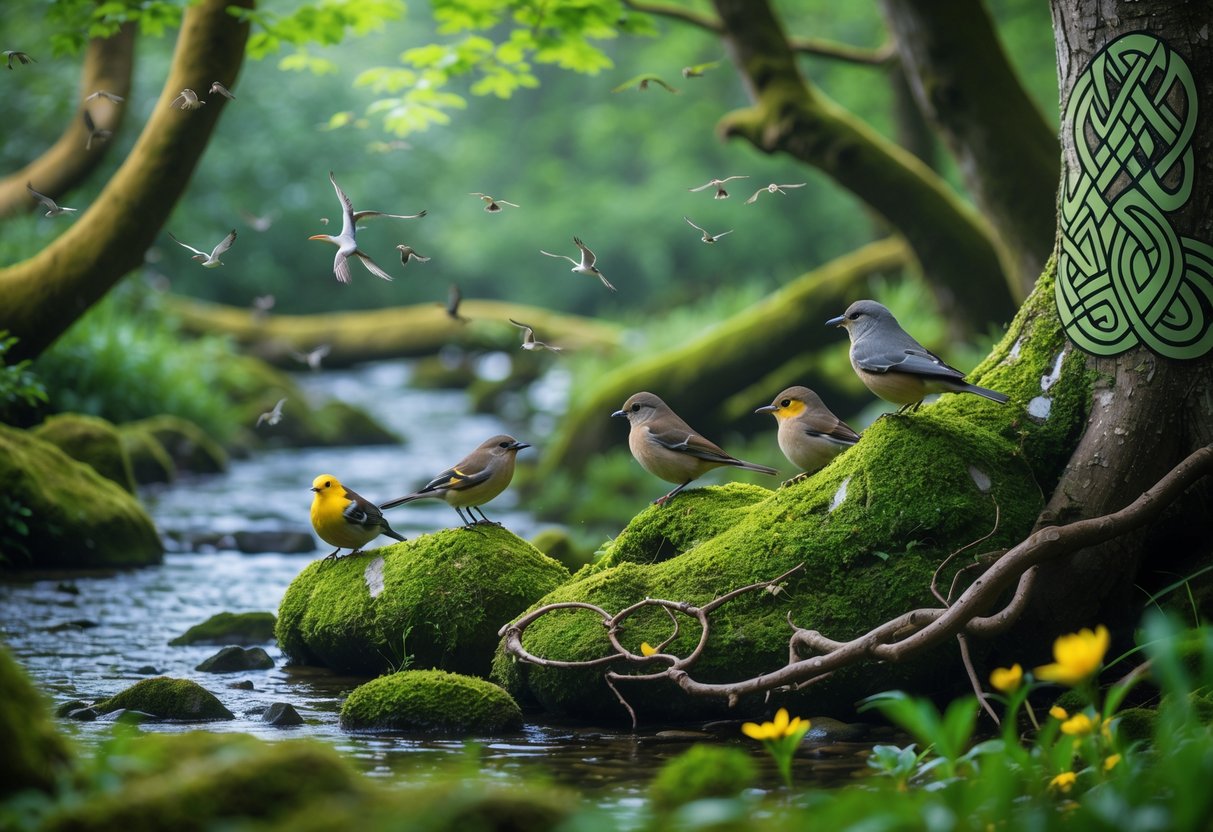
Bird names in Celtic languages come from old roots that stretch across lots of dialects. You’ll notice patterns in the way the words sound and what they mean.
Different regions shaped how people say and write bird names. You’ll also find special words for parts of birds, like beak or bill, in these languages.
Proto-Celtic Origins and Etymology
The word for bird in Celtic languages started with Proto-Celtic, the ancestor of all Celtic tongues. This root comes from the Proto-Indo-European word péth₂r̥, which meant feather or wing.
That’s why a lot of bird names in Celtic languages sound similar, even if they look a bit different now.
For instance, Irish uses éan for bird. Welsh has aderyn, Breton says labous, and Manx uses ushag.
All these words trace back to the same ancient root. Over time, each language changed the word a bit.
If you look at these words, you can spot the connections between the languages. It’s kind of cool to see how they sound alike but still keep their own twist.
Common Bird Names in Irish, Welsh, Breton, Manx, and Gaulish
You can find plenty of common bird names across Celtic languages, and some of them are surprisingly close.
| English | Irish (Gaeilge) | Welsh (Cymraeg) | Breton (Brezhoneg) | Manx (Gaelg) | Gaulish* |
|---|---|---|---|---|---|
| Bird | éan | aderyn | labous | ushag | unknown |
| Blackbird | lon dubh | aderyn du | moualc’h | lòn-dubh | unknown |
| Robin | spideog | brongoch | born-buzhug | spittag | unknown |
| Sparrow | gealbhan | aderyn y to | golvan | sparroo | unknown |
(*Gaulish bird names are less well documented.)
Notice how bird names often combine a color or trait with the main word for bird. “Blackbird” in Irish and Welsh uses dubh or du, which means black.
Regional Variations and Pronunciation
Each Celtic language pronounces bird names in its own way.
Irish says éan like “awn.” Welsh’s aderyn has a gentler “n” at the end, and Breton’s labous ends with “-ous,” pronounced “loo.”
Manx tends to stick close to older Irish pronunciation, but it can sound pretty different.
Spelling changes too, reflecting the way people actually say the words. For example, Irish calls robin spideog with a hard “g,” while Welsh uses brongoch, putting the stress on “bro” and ending with a rough “ch.”
These differences help each region’s language stand out, but you can still spot their shared roots.
Beak, Bill, and Other Bird-Related Words
Celtic languages also have their own words for bird parts, like the beak or bill.
Irish uses cluideog for beak, while Welsh says cilg. Breton has krennu for bill, and Manx uses kione—which can mean head or bill, depending on what you’re talking about.
Most of these words come from roots about shape or function. For example, cluideog in Irish relates to something small and sharp, just like a beak.
If you know these words, you’ll catch more details in Celtic stories or when people talk about nature. It adds another layer to how you see these birds.
For a longer list of bird names in Celtic languages, check out Names of birds in the Celtic languages – Omniglot.
Significance of Birds in Celtic Mythology and Folklore

Birds show up everywhere in Celtic stories, and they usually mean much more than just birds. They often connect humans to spirits or the gods.
You’ll see birds linked to war, prophecy, protection, and even the turning of the seasons.
Ravens, Crows, and the Morrigan
Ravens and crows hold a lot of power in Celtic myth, especially with the war goddess Morrigan. The Morrigan turned into a raven or crow during battles.
People saw this bird form as a sign of fate or death.
Ravens could predict how a fight would end. Their black feathers and harsh calls made people think of doom or, sometimes, protection.
Crows, on the other hand, sometimes helped settle arguments or even picked out the best spots for new towns.
You can dive deeper into their role at Birds (Raven- fiachra crow- bran) – Animals in Celtic Myth.
Birds of Prey in Celtic Symbolism
Hawks and eagles, the birds of prey, symbolized strength and sharp vision in Celtic tradition.
These birds ruled the sky and stood for power and freedom.
The golden eagle, for example, was admired in Irish myth for its sharp eyes and hunting skills. It represented leadership and a kind of spiritual guidance.
People respected these birds not just for their strength, but also because they seemed to move between our world and the spiritual one.
Blackbird, Bustard, and Golden Eagle in Irish Myth
The blackbird pops up a lot in Irish stories. Sometimes it stands for home, or for big changes.
People often tied this bird to magic or transformation.
The bustard, which is a big game bird, also had meaning—usually linked to bravery or noble traits in some Celtic tales.
The golden eagle, besides being strong, showed up as a sign of kingship and wise judgment. It stood for a ruler’s sharp mind and ability to see the bigger picture.
Seasonal Associations: Samhain and Winter Solstice
Birds played a big role in marking Celtic festivals, especially Samhain and the Winter Solstice. During Samhain, when people believed the veil between worlds felt thin, folks saw birds like ravens as guides for wandering spirits.
Celtic people watched bird migration closely. They took it as a sign that the seasons were shifting. This helped them figure out the best times for farming or moving their herds.
At the Winter Solstice, birds became symbols of life returning. As the days slowly grew longer, people saw birds as hopeful signs during the darkest part of the year.
Curious to dig deeper into these seasonal connections? Check out Birds: Messengers of the Otherworld – Their Celtic Symbolism.


