
Bed bugs can turn your home into a stressful place fast, especially when bites keep showing up and you are not sure where the pests are hiding.
The best remedies combine heat, cleaning, isolation, and careful monitoring. A single quick fix rarely clears a full bed bug infestation.
If you want the fastest real progress, focus first on methods that kill bed bugs on contact or reduce bed bug populations at the source. Follow up consistently until you stop seeing bed bug eggs, bugs, and new bites.

Best Remedies That Work First

The most reliable bed bug treatment methods target the places where bugs live, hide, and lay bed bug eggs.
Heat, steam, vacuuming, and dusts like diatomaceous earth help when you use them together and keep repeating the work.
Heat Treatment For Bedding And Clothing
You can use heat treatment for washable items. Run bedding, clothes, and soft items through a hot dryer cycle long enough to raise the temperature through the entire load.
Heat kills bed bugs and helps destroy bed bug eggs.
Steam Cleaning For Mattresses And Furniture
A steam cleaner reaches seams, tufts, folds, and upholstery edges where bed bugs hide. Slow passes work better than speed because the heat needs to penetrate deep enough to reduce living bugs in cracks and fabric surfaces.
Vacuuming And Isolation To Reduce Spread
Vacuum mattresses, bed frames, baseboards, carpet edges, and furniture joints often. After vacuuming, seal the contents in a bag and remove it right away.
Isolate the bed from walls and clutter so bugs have fewer paths to move.
Diatomaceous Earth For Cracks And Crevices
You can use food-grade diatomaceous earth in dry cracks and crevices where bugs travel. A thin layer is enough, since a heavy pile is less useful.
The powder works best as part of a broader bed bug treatment plan rather than as a stand-alone fix.
Home Remedies With Limited Results
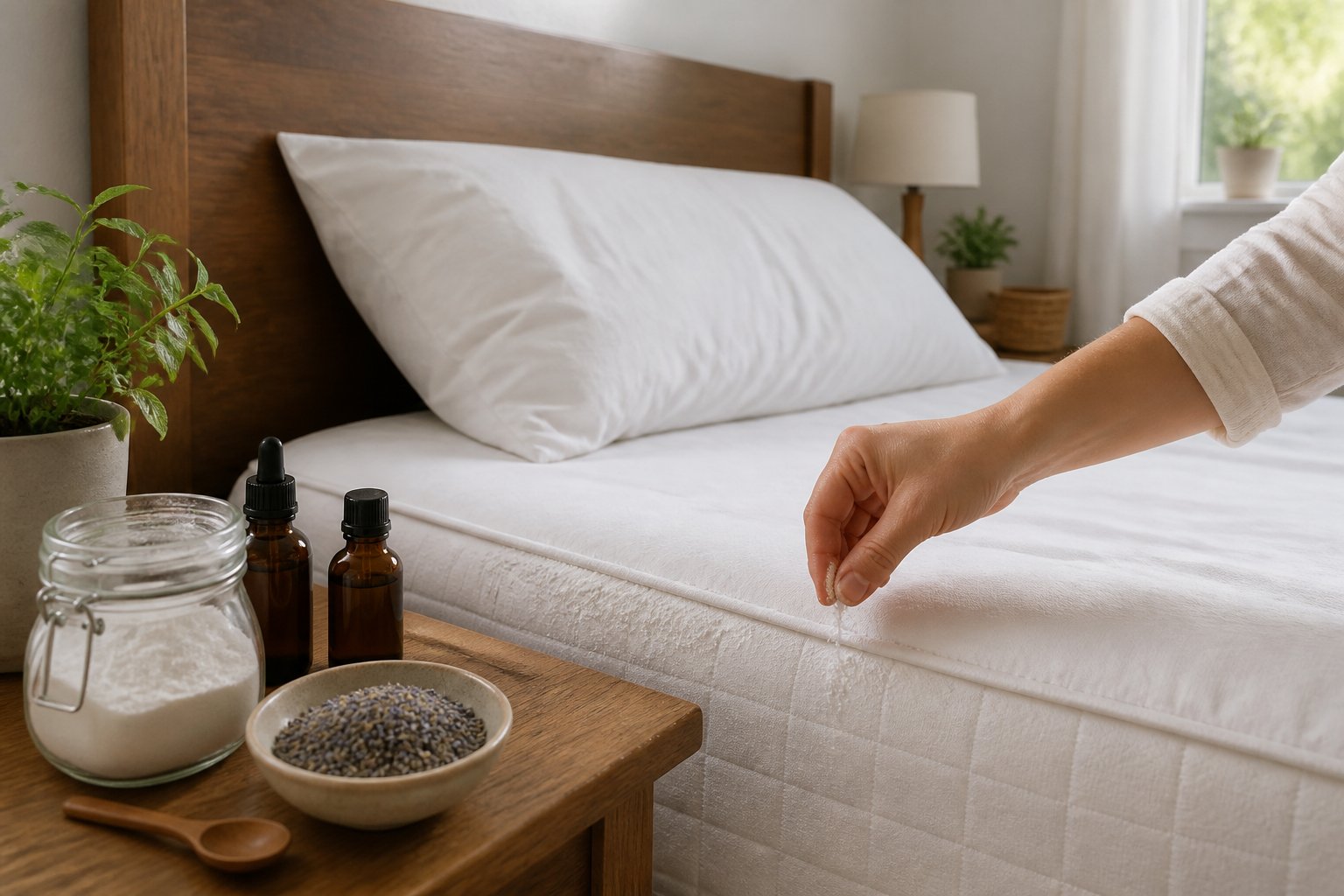
Some home remedies for bed bugs can kill a few visible bedbugs on contact. Others mostly repel them or create a stronger smell than a real solution.
These options may help as short-term support, yet they rarely finish the job alone.
Rubbing Alcohol As A Contact Killer
Rubbing alcohol kills bed bugs when you spray it directly on them. It evaporates fast, so it does little against hidden insects or eggs, and it also creates a serious fire risk around heat or sparks.
Tea Tree Oil, Lavender Oil, And Mint Oil
People often use tea tree oil, lavender oil, and mint oil as natural repellents. Some like the scent, and direct contact may affect exposed bugs, yet these oils do not reliably eliminate a widespread problem.
White Vinegar And Other DIY Sprays
White vinegar and similar DIY sprays may disturb bugs you can see, especially in small spots. Their effect fades quickly, and they are not strong enough to reach deep hiding places or stop a growing infestation.
How To Treat The Room And Monitor Progress

You can manage a bed bug infestation more easily when you treat the room methodically and track whether activity is dropping. Look for hiding places, clean to remove eggs and bugs, and keep checking for fresh signs after each round.
Finding Hiding Spots And Signs Of Activity
Inspect mattress seams, bed frames, headboards, baseboards, outlet areas, and furniture joints. Look for live bugs, dark spotting, shed skins, and tiny clusters of bed bug eggs.
Washing, Drying, And Sealing Infested Items
Wash bedding and clothing in hot water when possible, then dry on high heat. Seal clean items in bags or bins after treatment so they do not pick up new bugs from untreated rooms.
Using Bed Bug Traps And Mattress Covers
Bed bug traps help you monitor movement around bed legs and nearby surfaces. Mattress covers, also called encasements, trap remaining bugs inside and make it easier to spot activity.
Pair them with isolation and cleaning for best results.
Checking For Bed Bug Bites And Ongoing Activity
Watch for new bed bug bites, fresh spotting on sheets, or new live bugs after cleaning. If signs keep showing up, the problem is still active, and you need to keep treating and monitoring until the room stays quiet.
When To Call A Professional

Some infestations become too widespread or persistent for DIY methods alone. When that happens, professional pest control can save you time, reduce repeat bites, and give you a better chance to get rid of bed bugs fully.
Signs DIY Methods Are Not Enough
Call for help if bugs keep returning after repeated treatment, if the infestation has spread beyond one room, or if you cannot find all the hiding spots. Persistent bed bug bites and visible activity after several cleanings usually mean you need stronger help.
What Professional Pest Control Usually Involves
A professional exterminator will inspect, use targeted heat, apply residual treatments, and return for follow-up visits to kill bed bugs more completely. According to the U.S. EPA guidance on getting rid of bed bugs, professional help is a strong option because these pests are hard to eliminate with one quick treatment.
How To Choose A Professional Exterminator
Choose a licensed provider with bed bug experience. Make sure they offer clear treatment steps and a plan for follow-up inspection.
Ask what methods they use and how they handle eggs and hidden bugs. Find out if their approach aims to get rid of bed bugs without unnecessary guesswork.


