
Finding a tiny bug in your bedroom can make you jump to the worst-case scenario.
The good news is that you can usually narrow it down by shape, color, hiding place, and whether you see signs like shed skins, stains, or clustered bites.

Many bugs that look like bed bugs are harmless or need a very different fix from a true infestation.
If you know the most common bed bug look-alikes and where to check first, you can avoid wasted time and get the right help faster.
How To Tell A Real Bed Bug From Similar Pests
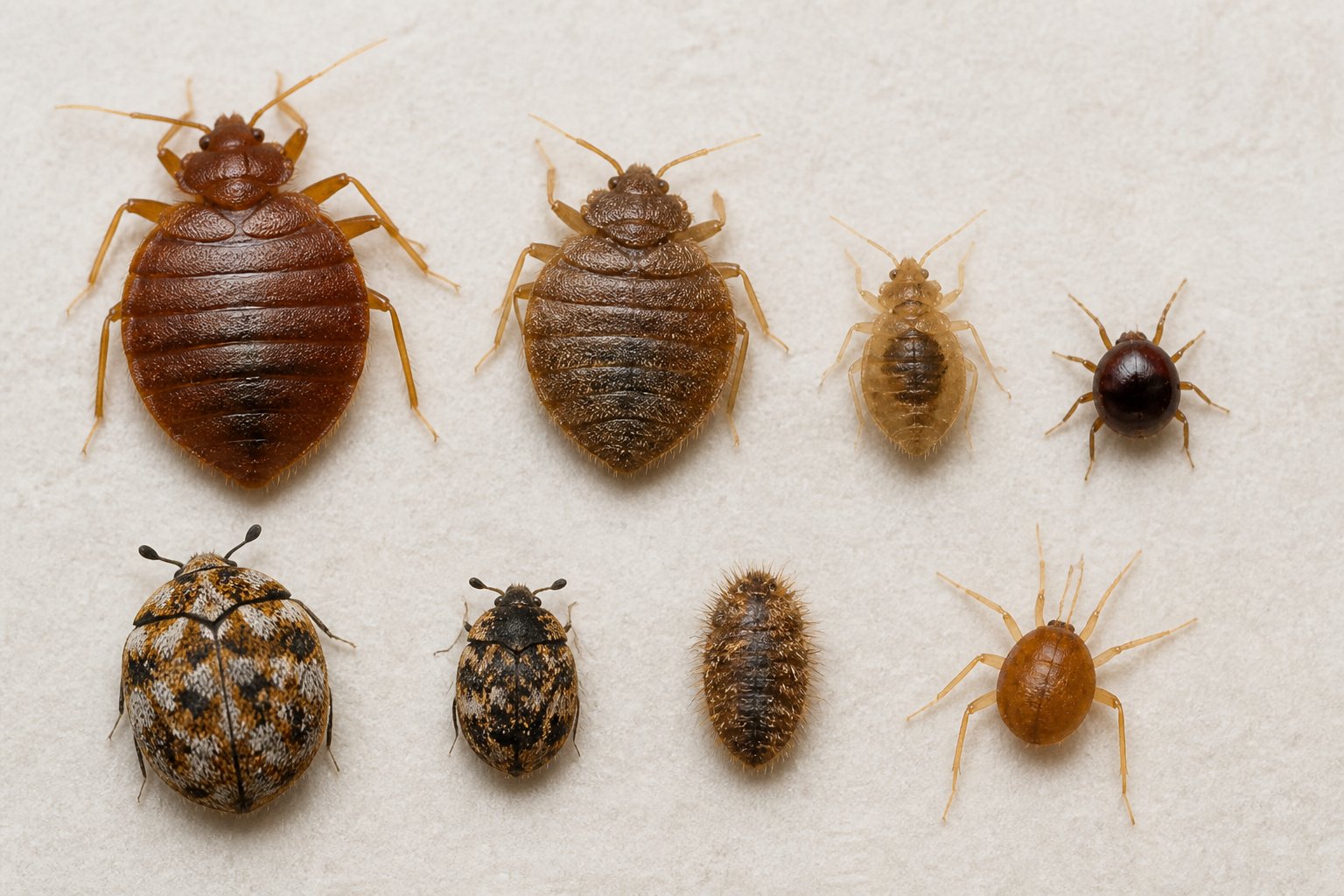
Real bed bugs have a very specific look and habit pattern.
When you compare adults, nymphs, eggs, and the places they hide, you can separate them from other household pests more reliably.
What Adult Bed Bugs, Bed Bug Nymphs, And Bed Bug Eggs Look Like
Adult bed bugs are flat, oval, and reddish brown, with six legs and visible antennae.
Nymphs are smaller and lighter in color, often pale yellow or translucent before feeding.
Bed bug eggs are tiny, white, oval, and usually tucked into cracks or seams, as pest identification guides note.
Where To Check First: Mattress Seams, Bed Frames, And Nearby Crevices
Start with mattress seams, box springs, bed frames, headboards, and nearby wall cracks.
These are some of the most common hiding spots during a bed bug infestation, especially close to where people sleep.
If you live in a warmer region, remember that tropical bed bug sightings can also come up in identification searches for Cimex hemipterus.
How To Find Bed Bugs Using Stains, Skins, And A Bed Bug Interceptor
Look for black or rust-colored stains, shed skins, and live insects near sleeping areas.
A bed bug interceptor under bed legs can help you monitor activity and catch stragglers.
If you see bites along with signs in the bed, that raises suspicion, though bed bug bites alone are not enough for a certain ID.
Common Indoor Bugs People Mistake For Bed Bugs
Many small indoor pests share a similar size or color, especially when you only catch a quick glimpse.
Paying attention to movement, body shape, and where the insect was found can save you from misidentifying it.

Fleas
Fleas are narrow, wingless, and built for jumping.
They often show up around pets, rugs, and bedding, and their flea bites tend to cluster on ankles or legs.
Ticks
Ticks are usually rounder and have eight legs, unlike bed bugs.
If you find one attached to skin or clothing, that points more toward a tick than a bed bug.
Mites
Mites are extremely tiny and can be hard to see without magnification.
Some bird mites can wander indoors from nests near the home, which makes them easy to confuse with other pests.
Lice, And Head Lice
Lice live on hosts, not in mattresses or furniture.
Head lice stay tied to the scalp and hair, which makes them very different from bed bugs hiding in seams and crevices.
Booklice, Psocids
Booklice, also called psocids, are soft-bodied and pale.
They prefer damp areas, old books, wallpaper, and moldy spots, not human blood.
Carpet Beetles, And Spider Beetles
Carpet beetles can look similar at a glance, yet they are rounder and often mottled in color.
Spider beetles are another look-alike, with a more bulbous body that sets them apart from flat, oval bed bugs.
Cockroach Nymphs, Baby Cockroaches
Cockroach nymphs and baby cockroaches may be mistaken for bed bugs when they are small and dark.
Their longer antennae and faster running behavior usually give them away.
Flour Beetles, And Weevils
Flour beetles and weevils are pantry pests, not bedroom pests.
If you find them near dry goods, cereals, or stored food, that points away from bed bugs and toward a kitchen or pantry issue.
Close Relatives And Other Biters That Cause The Most Confusion
The most confusing cases usually involve insects that share a body shape, habitat, or feeding habit with bed bugs.
Roosting birds and bats can create especially tricky situations because their parasites may travel indoors.

Bed Bug Vs Bat Bug And Other Roost-Linked Species
People often compare bed bugs and bat bugs because the insects look nearly identical.
Bat bugs are tied to bat roosts, attic spaces, and wall voids, so nearby wildlife activity is a big clue.
Swallow Bugs, Bird-Associated Pests, And When Nests Are The Clue
Swallow bugs are another close relative tied to bird nests, often around eaves, vents, and porches.
If you find the insects near nesting birds rather than beds, the nest itself may be the real starting point.
Kissing Bugs And Pirate Bugs That Get Misidentified
Kissing bugs can resemble bed bugs in size and color, yet they have a different head shape and are not tied to mattress seams the same way.
Pirate bugs are small plant-feeding predators that sometimes wander indoors, which makes them easy to blame for bites they did not cause.
What To Do After You Identify The Bug
Once you know what you are dealing with, your next step should match the pest, not your first guess.
Bite patterns can help, yet they can also send you in the wrong direction if you rely on them alone.

When Bite Clues Help And When They Mislead
Clusters of itchy bites can fit bed bugs, fleas, or even mosquitoes, so bites are a clue, not proof.
If you keep getting new bites but cannot find insects, keep checking for signs in seams, furniture joints, and nearby hiding spots.
Choosing The Right Bed Bug Treatment Or Alternative Fix
If you confirm bed bugs, choose a targeted bed bug treatment plan instead of a general spray.
If the insect turns out to be fleas, lice, carpet beetles, or another pest, the fix may involve laundry, vacuuming, pet treatment, or moisture control instead.
When To Call Pest Control
Call pest control when you see repeated live bugs or signs of a spreading infestation.
If you cannot match the insect with confidence, contact professionals.
Seek professional help when bites continue or travel brought the problem home.
You should also get help if you need a definite answer before treating your bedroom.


