
As a rabbit owner, you want the best for your furry friend. Understanding what rabbits cannot eat is crucial for their health and happiness. Feeding your rabbit the wrong foods can lead to serious health problems, including digestive issues and toxicity.
Many popular foods that may seem healthy for pets are actually quite harmful to rabbits. Items like chocolate, lettuce, and even some fruits can cause more harm than good. Knowing these dangers helps you create a safe and nutritious diet for your companion, ensuring they thrive in your care.
By staying informed about rabbit nutrition, you can provide a balanced diet that consists mainly of hay, fresh greens, and safe treats. This knowledge not only keeps your bunny healthy but also strengthens the bond you share.
Get ready to discover the essential foods to avoid for your beloved pet!
Foods Rabbits Should Avoid
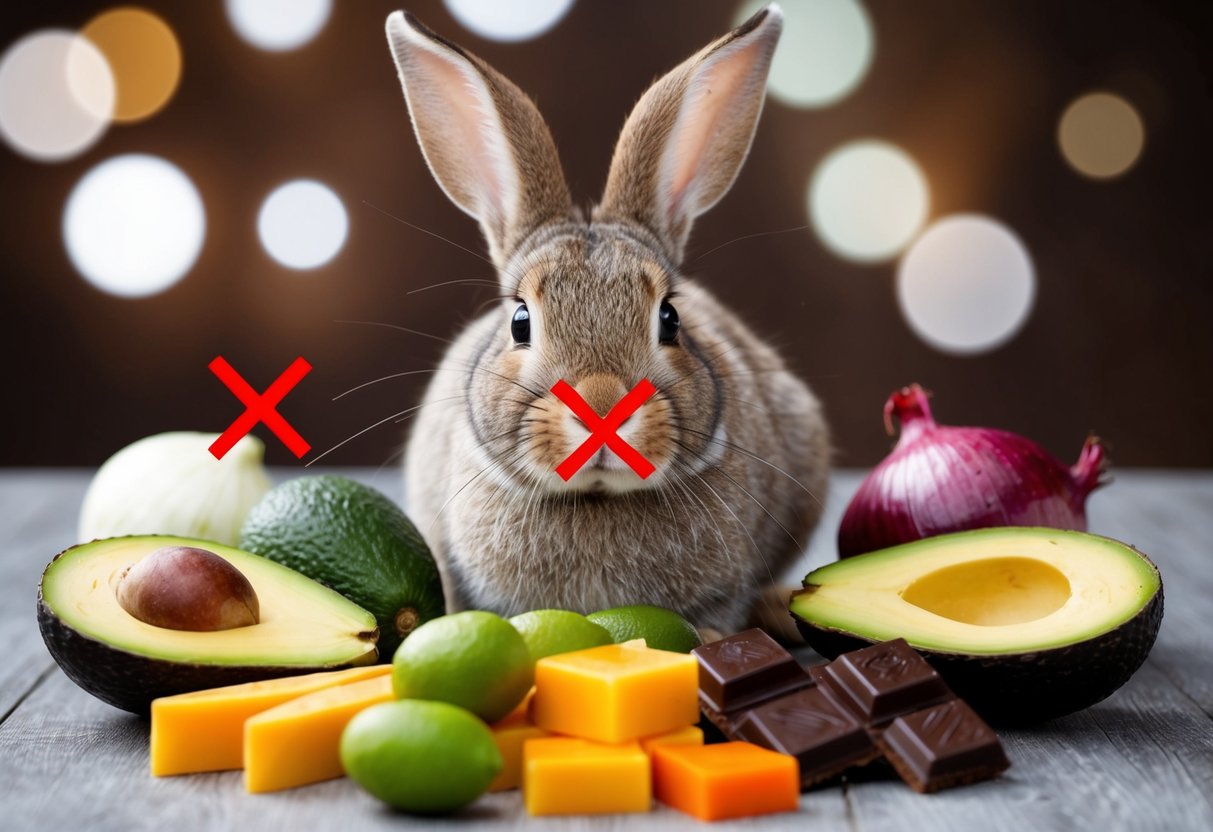
It’s important to know what foods can harm your rabbit. Certain plants, processed foods, and animal products can be dangerous for their health. Here are some specific categories of foods you should keep away from your bunny.
Toxic Plants and Vegetables
Some plants and vegetables can be toxic to rabbits. For example, avocado is highly toxic. Even small amounts can cause serious health problems.
Avoid feeding your rabbit rhubarb as well. This plant contains harmful compounds that can lead to kidney failure.
Other harmful items include garlic and leeks, both part of the allium family. These can cause anemia and digestive issues.
Even seemingly safe veggies like iceberg lettuce should be avoided. It offers little nutrition and can cause digestive upset.
Unhealthy Processed Foods
Processed foods are not suitable for rabbits. These items often contain sugar, artificial ingredients, or high starch levels.
Common rabbit treats, like those made from yogurt or grains, may seem tempting but are bad for bunnies. They can lead to obesity and other health issues.
Always read labels to avoid unhealthy snacks for your pet. It’s best to stick to fresh hay and leafy greens for snacks.
Dangerous Dairy and Meat Products
Rabbits are herbivores, so they should never eat dairy or meat. Foods like cheese, milk, or any form of beef can upset their stomachs.
Dairy products may cause digestive issues because rabbits’ bodies cannot digest lactose effectively.
Avoid giving your bunny any meat. It can lead to serious nutritional imbalances that can be harmful.
Stick to a diet mainly composed of hay, fresh veggies, and safe fruits to keep your rabbit healthy and happy.
Risky Foods That May Cause Health Issues

When caring for your rabbit, it’s crucial to know which foods can lead to health problems. Some common risks include high sugar and fat foods, legumes, seeds, and items containing caffeine. Understanding the dangers will help keep your furry friend healthy.
High Sugar and High Fat Foods
You should avoid feeding your rabbit foods with high sugar or fat content. Treats like muesli can be very tempting, but they often contain dried fruits and sweet ingredients that can lead to obesity and digestive issues.
Instead, stick to fresh vegetables and hay. Fresh fruits can be given, but only in small amounts. Too much sugar can disrupt their gut bacteria, leading to more serious health issues.
Always read labels on processed human food. Many contain hidden sugars or fats that are not suitable for rabbits. Your rabbit will thrive better on a diet rich in fiber rather than sugary snacks.
Legumes and Seeds Chaos
Legumes and seeds are often marketed as healthy snacks, but they can be risky for rabbits. Foods like chickpeas, lentils, and seeds may seem harmless, but they are high in protein and can cause stomach upsets.
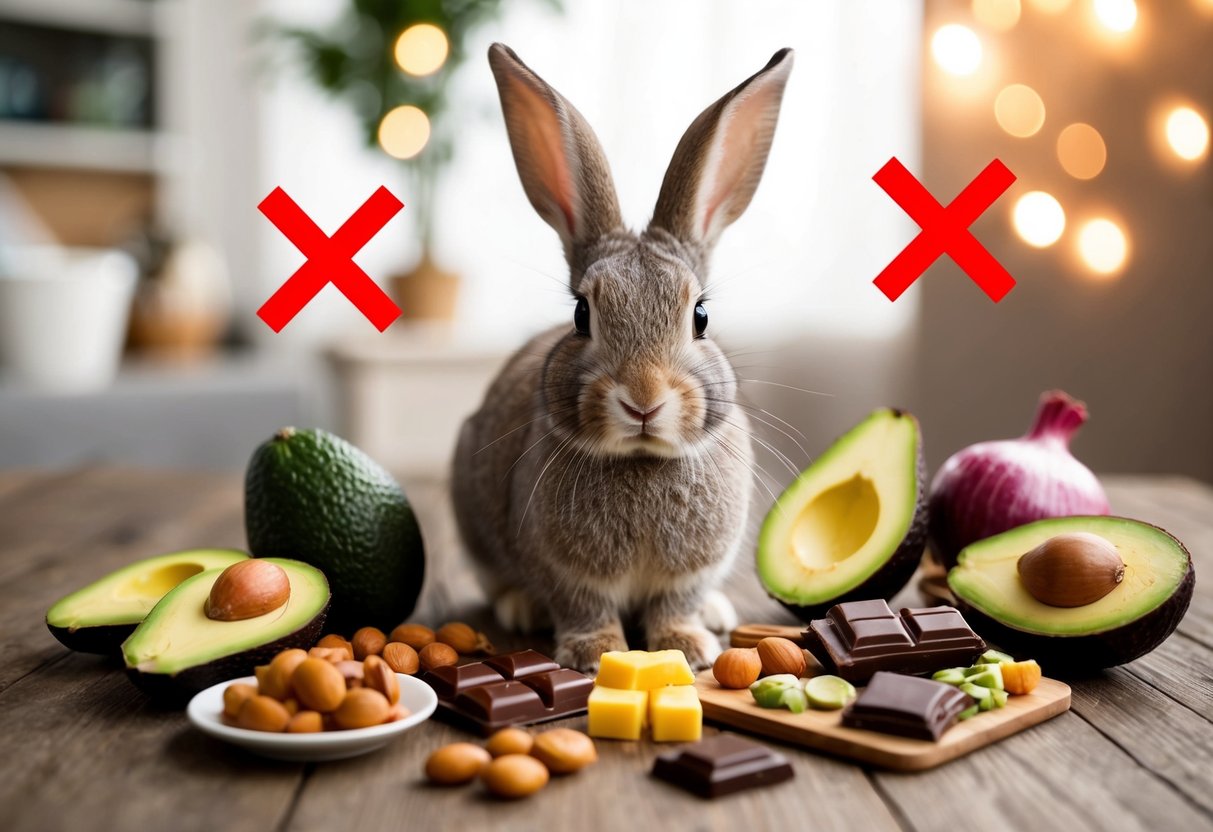
Rabbits don’t digest these foods well, which can lead to bloating and discomfort. Instead of offering beans or legumes, focus on providing hay and leafy greens. Avoid giving them nuts as well, as these can also cause choking and digestive problems.
Limit the amount of treats, and always choose options that are specifically safe for rabbits. When in doubt about a food, it’s best to err on the side of caution.
Beware of Caffeine and Alkaloids
Certain compounds like caffeine and alkaloids, found in some plants, can be toxic to your rabbit. Caffeine can affect their heart and nervous system, leading to serious health risks.
You should never give your rabbit coffee, tea, or chocolate. Even small amounts can lead to hyperactivity, seizures, or worse.
Lactucarium, found in some types of lettuce, can also cause digestive issues in excess. Be sure to research any new foods before introducing them to your rabbit’s diet. Being cautious will help you protect your pet from harmful effects.
Safe Alternatives and Proper Rabbit Nutrition
Providing a balanced diet for your rabbit is essential for their health. You should focus on safe alternatives that meet their nutritional needs. Here are some important aspects to consider.
Healthy Herbs and Fresh Greens
Rabbits love fresh greens! You can offer various herbs like parsley, cilantro, and basil. These not only add variety but also provide important nutrients.
When feeding greens, wash them well to remove any pesticides. Start with small amounts to avoid digestive upset. Introduce new vegetables slowly. Some safe options include romaine lettuce, kale, and bell peppers. Always avoid iceberg lettuce as it has little nutritional value.
Fresh herbs and greens should make up about 10-15% of your rabbit’s diet. It keeps their meals interesting and healthy.
Importance of Hay and Water
Hay should be the main part of your rabbit’s diet. It provides essential fiber to keep their digestive system working properly. Timothy hay is a great choice, but you can also use other types like meadow hay.
Make sure your rabbit has access to hay at all times. This not only promotes dental health but also prevents obesity. Along with hay, fresh water is critical. Change the water daily to keep it clean. You can use a shallow bowl or a water bottle, depending on what your rabbit prefers.
Balanced Commercial Rabbit Food
Your rabbit’s diet can be supplemented with commercial rabbit food. Look for high-quality rabbit pellets that are rich in fiber and made with timothy hay. You want a product that contains 18% or more fiber for optimal health.
Avoid products that contain seeds, nuts, or dried fruits, as these can be unhealthy for rabbits. If you prefer organic options, seek out organic rabbit food to ensure no harmful chemicals are present. And don’t forget, you can make DIY rabbit treats using safe ingredients like oats and shredded hay for a special snack!


