
Here’s a quick rundown of five real facts about deer—useful whether you’re watching them in the wild or just curious about animal life. Deer belong to the cervidae family, and they come in all sorts of types, with different antler shapes, coat patterns, and some surprising skills like rapid antler growth, a sharp sense of smell, and a four-chamber stomach.
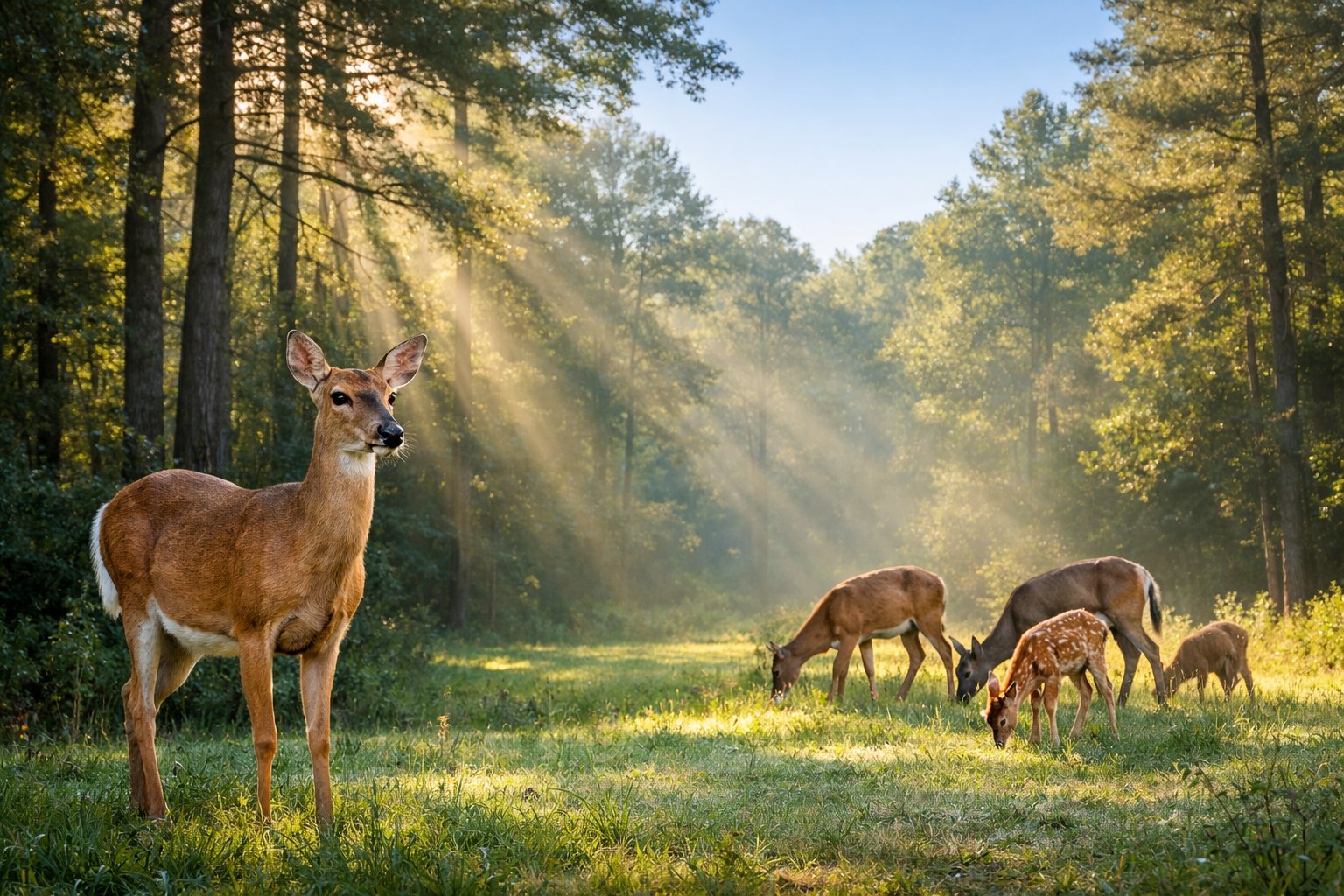
If you’ve ever seen a fawn’s spots, that’s camouflage in action. Bucks use those big antlers for show during mating season, and you’ll even find deer that swim or live surprisingly close to cities.
Let’s jump into the five key facts, and see how different deer species and their unique adaptations shape what they do and where they live.
Five Key Facts About Deer
Deer can grow antlers quickly, rely on strong senses, eat only plants with help from a four-chamber stomach, and use clear social signals. You’ll get a sense of how antlers form and drop, how fawns use spots to hide, how smell and hearing keep deer alert, what they eat, and how they talk and group up.
Antlers: Growth, Shedding, and Purpose
Male deer (bucks) grow antlers made of living bone every year. In spring and summer, antlers can grow about an inch per day in the fastest species.
A soft, blood-rich velvet covers new antlers and provides nutrients. Once the antlers harden, bucks shed the velvet.
After the breeding season, bucks lose their antlers. Shorter days trigger hormone changes, which cause the antlers to drop.
Bucks use antlers to compete during the rut and to impress does. Some species, like caribou, let both males and females grow antlers.
Antlers can look different by species and age, which makes it easier to tell deer apart.
Fawn Camouflage and Development
Fawns arrive with white-spotted coats that help them blend into the dappled light on the forest floor. Those spots break up their outline and make it tough for predators to spot them.
Mothers leave fawns hidden in thick vegetation while they feed. The fawn lies very still and gives off almost no scent.
Fawns nurse for several weeks but start nibbling plants pretty early on. After about a month, you’ll see fawns following their mothers closely.
Most fawns lose their spots and join small groups within a few months. Growth speeds up with good food and varies by region—better nutrition means healthier, bigger deer, especially for young bucks.
Deer Senses: Smell, Hearing, and Vision
Deer really depend on their sense of smell. Their noses pick up scents from people, predators, and other deer.
Scent glands on their legs and faces help them mark territory and send messages to other deer. You might notice deer sniffing the air to check for danger.
Their hearing is sharp, and deer can rotate their ears to catch even the quietest sounds. Their eyes sit on the sides of their heads, giving them a wide field of view.
They spot motion easily, but their depth perception straight ahead isn’t great. A layer called the tapetum lucidum behind their retina helps them see in low light, which is why deer move around at dawn and dusk.
Herbivore Diet and Four-Chambered Stomach
Deer eat only plants, and they’re ruminants. Their menu includes leaves, twigs, fruits, nuts, grasses, and crops if they can get them.
Their diet changes with the seasons. In spring, they munch on tender shoots; in summer, it’s broadleaf plants, and in winter, they switch to woody twigs and buds.
A four-chambered stomach helps deer break down tough plant fibers. They swallow food, then regurgitate it as cud to chew again.
This process lets them pull more nutrients from plants. Deer thrive best where there’s a mix of different plants, and bucks in good habitats grow bigger antlers.
Communication and Social Structure
Deer use scent, body language, and sounds to communicate. They mark trails and bedding spots with scent glands and urine.
Bucks rub their antlers on trees and scrape the ground to show they’re ready to mate. Does use nasal and forehead glands to recognize their fawns and other deer.
Social life changes by species and season. Sometimes you’ll spot a lone deer, other times small family groups, and occasionally larger herds.
During the rut, bucks get more aggressive—staking out territory, fighting, or trailing does. Fawns stick close to their mothers until they’re strong enough to keep up and survive alone.
Distinctive Species and Deer Adaptations

Deer come in all sizes, act differently, and live in a range of places. You’ll find out which species are the biggest or tiniest, how deer move and swim, and what roles they play in different ecosystems or near people.
Largest and Smallest Deer Species
Moose take the title for the largest living deer. Adult bulls can stand over 6 feet at the shoulder and weigh up to 1,800 pounds.
You’ll find moose across northern North America and Eurasia, where they browse on willows and aquatic plants. Elk (also called wapiti) and red deer are also big; mature males grow heavy antlers for mating displays.
On the flip side, pudus are the smallest deer. Southern pudu adults weigh only about 20–40 pounds and stand under 20 inches tall.
Pudu and other tiny species like muntjac live in thick forests and eat low shrubs and leaves. Size affects what deer eat, which predators go after them, and even how you might spot them.
Big deer change forests by eating saplings, while small deer hide in dense undergrowth.
Swimming, Jumping, and Speed Abilities
Many deer swim well. Caribou (reindeer) cross wide rivers during migration and swim for long stretches.
You might see deer jump into water to escape predators or reach tasty aquatic plants. They’re good jumpers too; some species can clear fences over 8 feet, though it depends on their size and build.
Speed is a lifesaver for deer. White-tailed, mule deer, and roe deer can sprint up to 30–40 mph for short bursts.
That quickness helps them dodge wolves, coyotes, and people. If you drive, watch out—deer move most at dawn and dusk, and that’s when the risk of collisions goes way up.
Deer Worldwide and Ecosystem Roles
Deer show up just about everywhere—except for Australia and Antarctica.
Red deer, sika deer, and roe deer munch on young trees, shaping how woodlands grow. In open places like grasslands and wetlands, elk and caribou change plant communities and end up as prey for big predators.
People change the game for deer. When predators disappear and farms offer more food, deer populations can explode. That means more overbrowsing and, unfortunately, more deer-vehicle crashes.
If you look around, you might notice fewer tree seedlings or different mixes of plants. Songbird habitats can shift too.
Deer do more than just eat, though. They spread seeds and fertilize the soil with their droppings. Your local deer—like it or not—play a big part in shaping the ecosystem’s risks and rewards.


