
Beavers are fascinating creatures that often go unnoticed in the natural world. They play an important role in their ecosystems, making them truly remarkable animals. Three interesting facts about beavers are that they are the second-largest living rodents, their tails serve multiple purposes, and they can significantly improve their habitats.
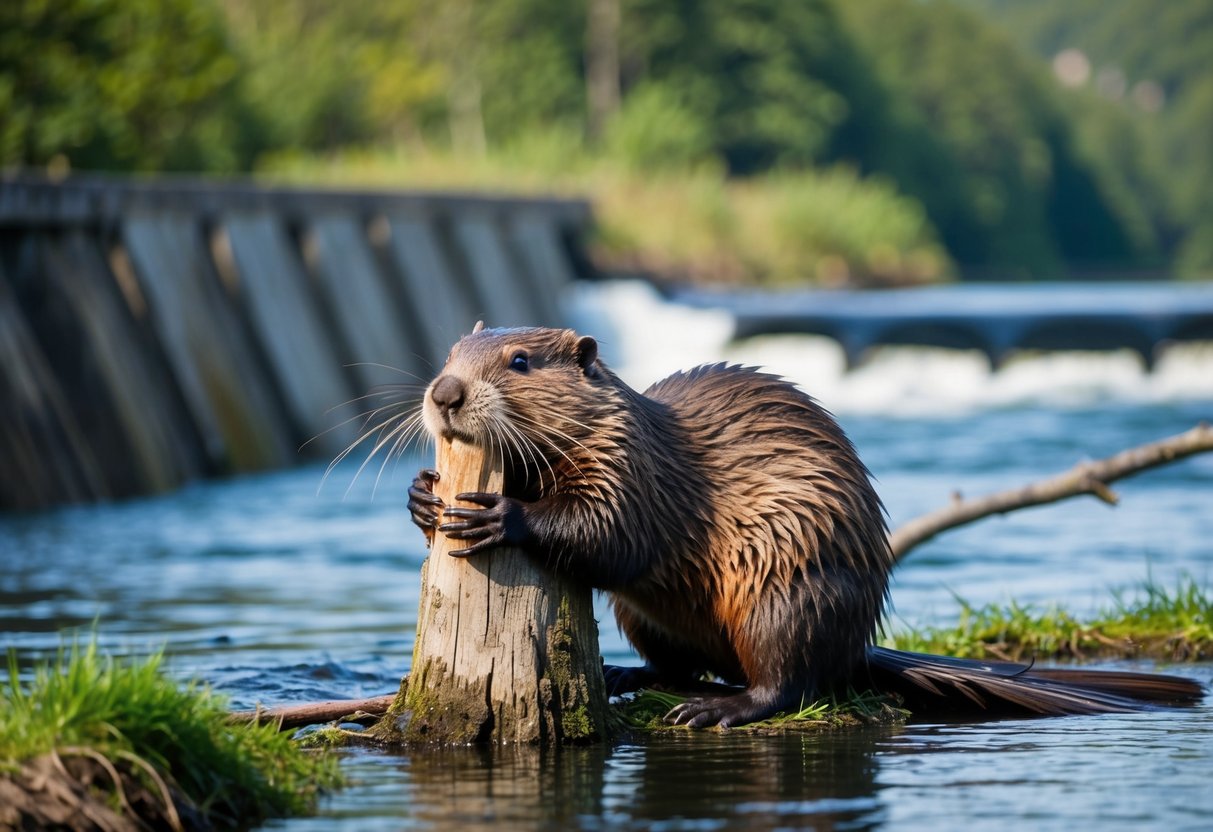
These clever animals can grow up to 120 cm long and weigh nearly 30 kg, making them impressive in size. Their iconic flat tails not only help them swim but also serve as a tool for communication and balance.
You might be surprised to learn how much beavers contribute to their surroundings by creating wetlands that benefit various species.
As you explore the world of beavers, you’ll discover how their behavior impacts the environment and the amazing adaptations that help them thrive. Reading further will reveal more about these incredible animals and what makes them essential to nature.
Beaver Basics

Beavers are fascinating creatures known for their unique features and habitats. Understanding their physical traits and where they live helps you appreciate their role in nature.
Physical Characteristics
Beavers are the second largest rodents in the world, just after capybaras. They can reach lengths of about 3 to 4 feet (1 to 1.2 meters) and can weigh between 35 to 65 pounds (16 to 30 kg).
A standout feature of beavers is their large, orange teeth. These teeth continuously grow throughout their lives, which is essential for their wood-chewing habits.
To protect their eyes while swimming, beavers have transparent eyelids. This adaptation allows them to see underwater, which is crucial for avoiding predators.
Additionally, their webbed feet help them navigate in water efficiently. They also have thick fur that keeps them warm in chilly waters.
Species and Habitat
There are two main species of beavers: the North American beaver and the Eurasian beaver. Both species thrive in freshwater habitats like rivers, ponds, and wetlands.
Beavers build dams to create ponds, which offer a safe environment for them. This behavior not only protects them but also promotes biodiversity in their habitats.
By building these structures, beavers improve water quality and reduce flooding.
Their preferred habitats are rich in willow, aspen, and other softwoods, which they use for food and construction. Beavers are well-adapted creatures that play a vital role in their ecosystems.
Beaver Behavior and Lifestyle
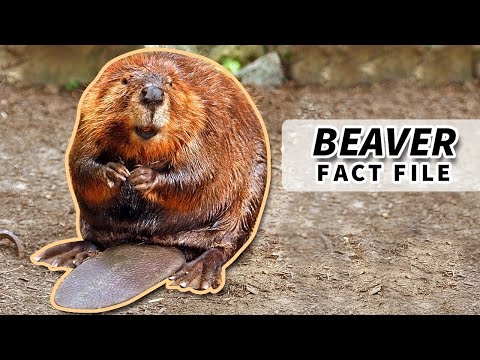
Beavers are fascinating creatures with unique social structures, feeding habits, and adaptations. Understanding these aspects of their lives helps you appreciate their role in nature and their impressive skills.
Social Structure
Beavers live in family groups called colonies. A colony typically consists of a breeding pair and their kits. These kits stay with their parents for at least two years, helping build dams and lodges. This learning experience is important for developing their survival skills.
Within the colony, communication plays a vital role. Beavers use vocal sounds, tail slaps, and scent marking to convey messages.
They are generally peaceful animals, working together to maintain their home. Maintaining a strong family bond helps them protect their territory and resources.
Diet and Feeding Habits
As herbivores, beavers primarily eat wood, bark, leaves, and aquatic plants. They use their strong front teeth to gnaw on trees and shrubs.
Their feeding habits can significantly shape their environment, as they often cut down trees for food and building materials.
Beavers usually forage at night, as they are nocturnal animals. They gather food and store it underwater near their lodges to ensure a steady supply during winter.
Their ability to adapt their diet according to the seasons is crucial for their survival.
Adaptations for Survival
Beavers have several fascinating adaptations that aid in their survival. Their webbed feet help them swim efficiently, allowing them to escape from predators like coyotes and eagles.
Additionally, their thick fur keeps them warm in cold waters.
Another important adaptation is their impressive ability to build dams and lodges. They create these structures using branches, mud, and stones.
The dams not only provide protection from predators but also create a habitat for other animals and plants. Building these structures is a learned skill, with young beavers observing their parents and older siblings. This teamwork reinforces their social bonds and helps ensure the colony’s success.
Beaver Engineering
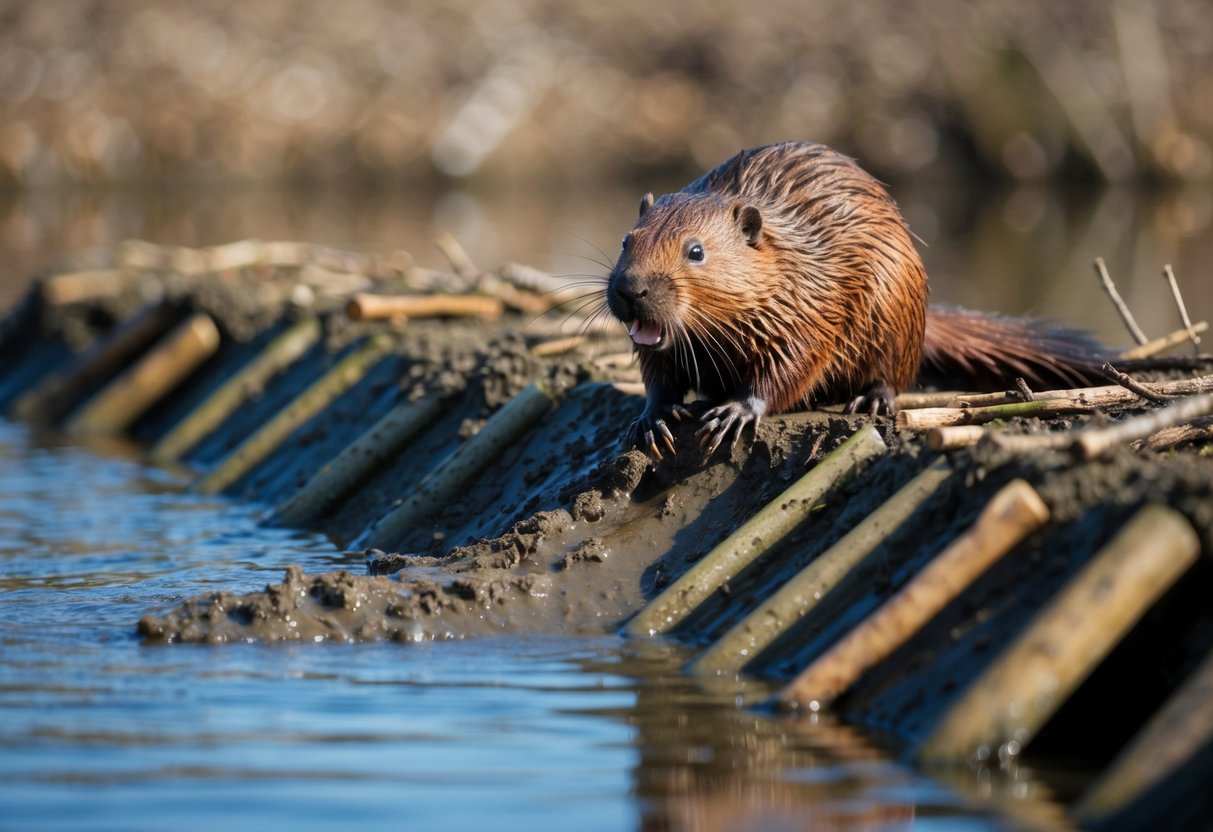
Beavers are remarkable builders that play a vital role in their ecosystems. Their dam and lodge construction techniques showcase their skills as nature’s engineers. This section explores how they create these structures and the significant impact they have on the surrounding environment.
Dam and Lodge Construction
Beavers construct dams to create ponds, providing them with a safe habitat. They use trees, branches, mud, and stones to build these sturdy structures.
First, beavers gnaw down trees, making them easier to transport. They then carry the branches to the water and float them for dam building.
Their lodges are made from similar materials and often feature underwater entrances. This design protects them from predators while allowing easy access.
Dams can alter water flow in an area, creating wetlands and promoting biodiversity. Beavers are truly fascinating when you see how their engineering shapes the land.
Ecosystem Impact
As a keystone species, beavers significantly affect their ecosystems. Their dams create wetlands, which are crucial for many plants and animals.
These wetlands help improve water quality by filtering runoff and reducing erosion.
Moreover, when beavers build dams, they can raise the water level in an area. This allows various species to thrive, including fish, birds, and insects.
These changes enhance habitat diversity, making the environment healthier for all living things.
Conservation and Challenges
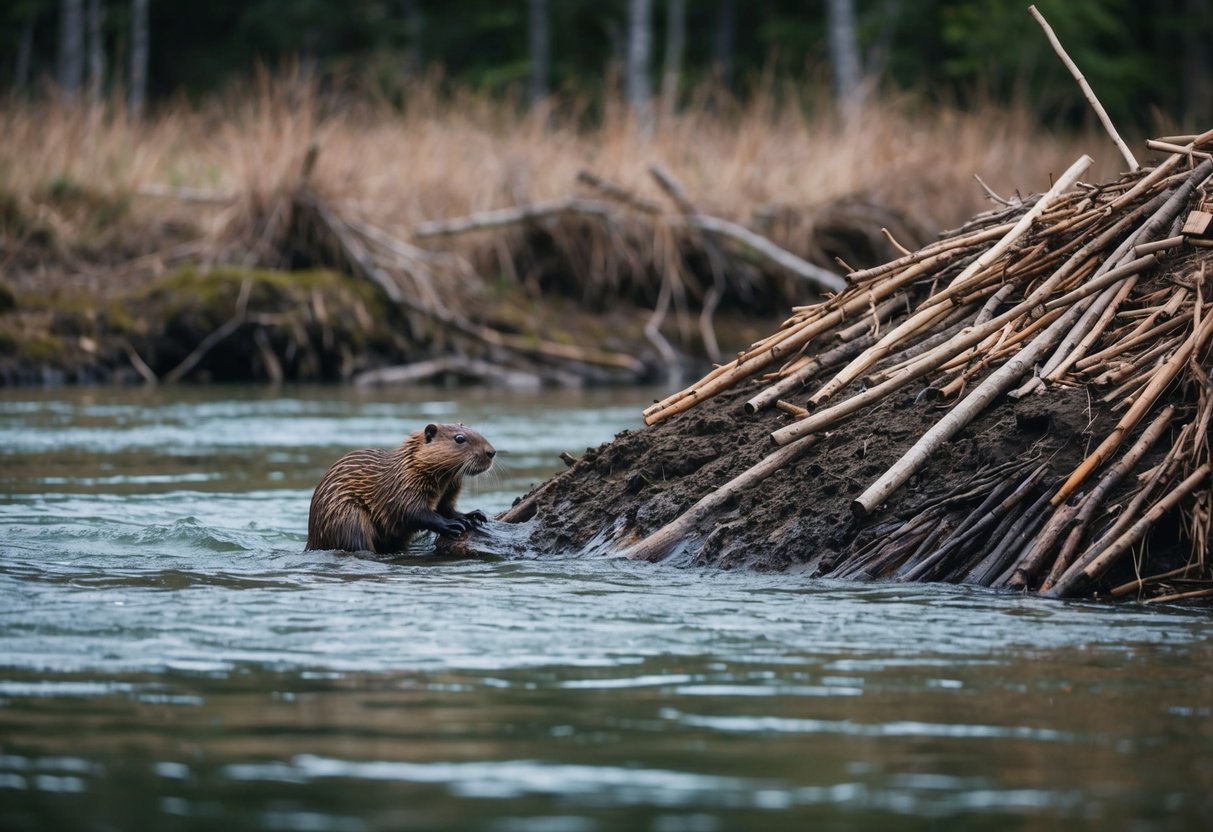
Beavers have faced various challenges over the years, affecting their populations and relationships with humans. Understanding these issues is important for recognizing the role beavers play in our ecosystem.
Population Changes
The beaver population has fluctuated significantly through history. At one point, during the Ice Age, a much larger species known as the giant beaver, or Castoroides, thrived.
As time progressed, habitat changes and human activities led to a drastic decline in their numbers, primarily due to over-hunting for their valuable fur.
In the fur trade, beaver pelts were highly sought after, causing massive reductions in their population.
Conservation efforts have improved the situation, allowing beaver numbers to recover in many regions. Their role as natural engineers helps maintain ecosystems, making beavers vital to environmental health.
Beavers and Humans
Your relationship with beavers can be quite complicated. Many people view beavers as pests due to their building habits, which can lead to flooding and damage to crops or property. This has resulted in regulations that sometimes allow for their trapping.
However, some states, like Oregon, have shifted focus toward non-lethal coexistence strategies. This encourages ways to manage beaver populations while protecting their habitat.
With increased awareness, you can appreciate the positive impact beavers have on ecosystems. Their dam-building provides habitat for other wildlife and improves water quality.


