
Ever wonder why bees suddenly get angry, even though they usually seem so chill? Bees mostly lose their cool when they sense their home or colony’s in danger. Stuff like loud noises, quick movements, or even certain smells can set them off and make them go into defense mode.
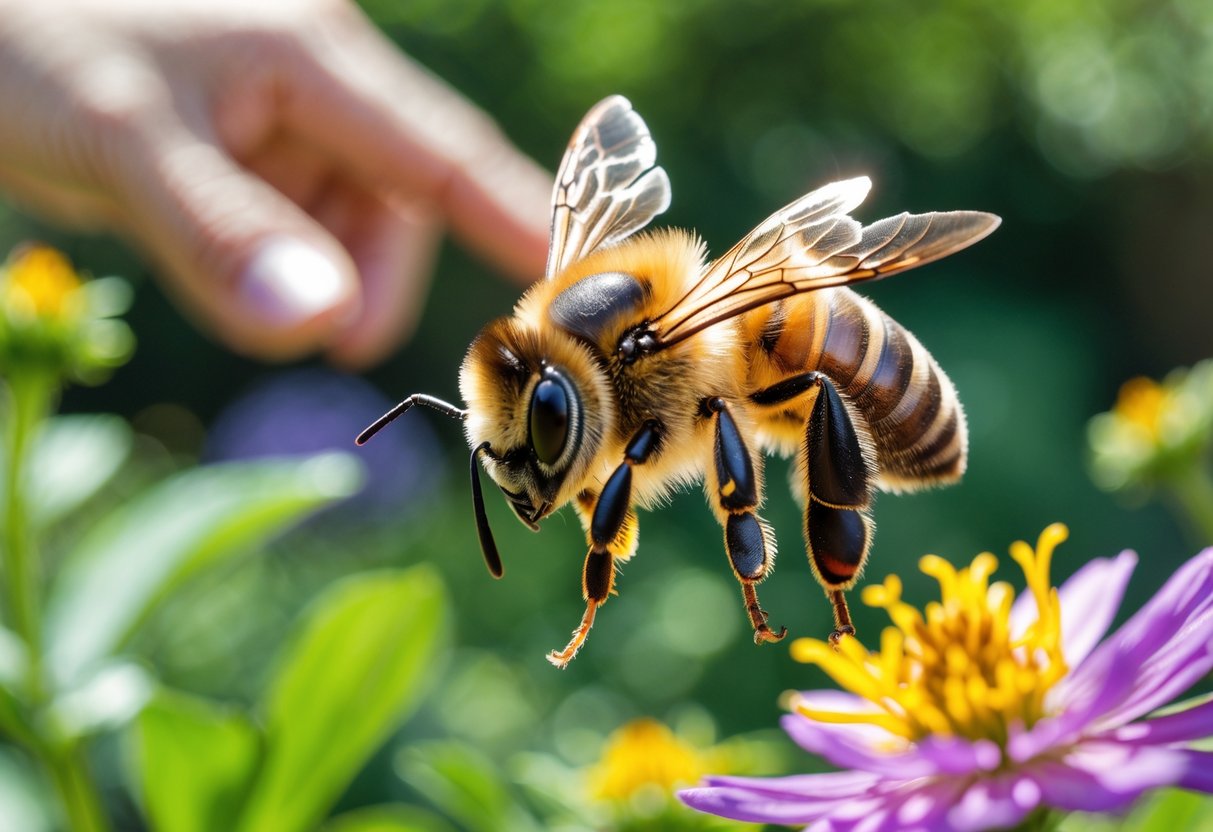
If you’ve felt a bee sting before, you know it doesn’t take much to annoy them. Once you get why bees act this way, it’s easier to keep the peace and avoid trouble.
Let’s look at the signs and triggers that can make bees angry.
Main Triggers That Anger Bees

Bees can get worked up for all sorts of reasons—changes in their environment, worries about food, or stress in the colony. Sometimes, tiny changes you wouldn’t even notice can make them act more defensive.
Knowing what sets them off helps you avoid ticking them off.
Alarm Pheromone and Defensive Behavior
When a bee feels threatened, she releases a chemical called an alarm pheromone. This scent tells other bees nearby to get ready to defend the hive—or attack if needed.
As soon as a guard bee sprays this pheromone, her sisters join in fast, and suddenly the whole colony’s on high alert.
That pheromone is why bees swarm when they sense threats like loud noises, jerky movements, or strong smells. If you blow on a hive or wear heavy perfume, you might be sending the wrong signals.
Guard bees especially pick up on these things and react quickly to protect their home.
Nectar Dearth and Resource Shortages
Bees get more defensive when there’s not enough nectar or pollen around. This shortage—called nectar dearth—stresses out the whole hive because they need food to survive.
When food runs low, bees start guarding what they have. They react to anything nearby with suspicion.
During these tough times, honey bees might sting more often since they’re desperate to protect their stash.
Hive Disturbances and Predator Threats
If you mess with the hive—open it, shake it, or bump it—the bees take it as a serious threat.
Predators like bears or wasps make bees furious because they try to steal honey or hurt the colony. Bees fight back by swarming and stinging to drive them away.
Even loud noises or sudden moves near the hive can trigger this aggressive side.
Queenlessness and Colony Stress
Losing the queen throws the whole colony into chaos. The queen makes special pheromones that keep everyone calm and organized.
Without her, bees get confused and stressed out. Guard bees may act way more aggressive because the hive feels unstable.
Other stressors—like disease, pests, or bad weather—can also make bees cranky. A weak hive just isn’t as patient with disturbances.
Environmental and Human Factors
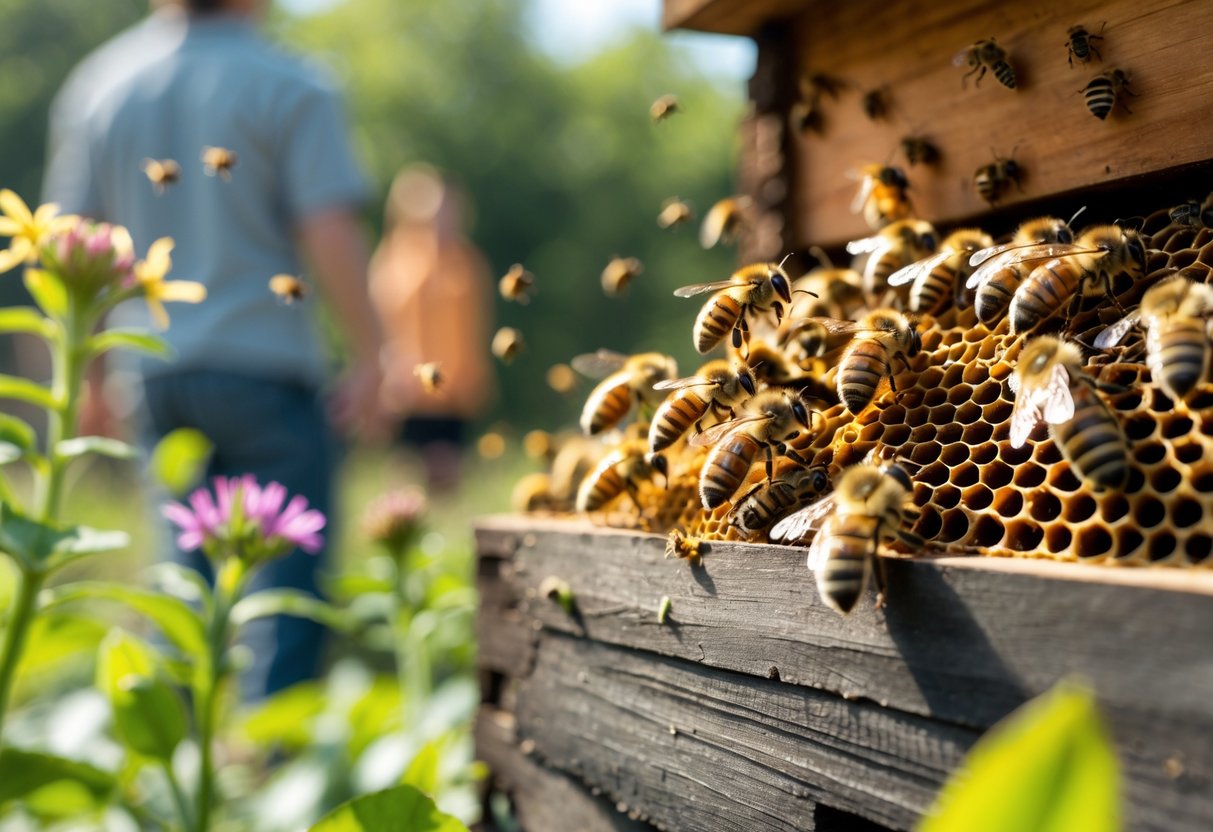
Bees react strongly to certain things in their environment. Sounds, colors, how you move, and even nearby pests can all set them off.
Knowing about these triggers can really help you avoid trouble and dodge those stings.
Loud Noises
Bees pick up on vibrations and loud sounds. Construction, lawnmowers, or even shouting can bother them.
These noises might signal danger, so the bees get defensive.
If you get close to a hive in a noisy spot, expect the bees to be a bit more on edge. It’s smart to stay quiet and calm around bee colonies.
That way, the bees stay relaxed and you’re less likely to get stung.
Dark Colors and Visual Cues
Bees see colors differently than we do, but they generally react more to dark colors—black, navy, brown. Those shades remind them of predators like bears.
Wearing light or bright colors, like white or yellow, is a safer bet around bees. Try to skip patterns or floral prints that could confuse or annoy them.
What you wear really does matter, so it’s worth thinking about if you’re going to be near bees.
Sudden Movements
Quick or jerky movements can freak bees out. When you move fast near a hive or a bee, they might see it as a threat.
If you need to walk past bees, go slow and steady. Don’t wave your arms or swat at them.
Staying calm and moving gently really lowers your chances of getting stung.
Presence of Wasps and Other Predators
Wasps and hornets love to hunt bees or even raid their hives. When bees notice these predators hanging around, they get a lot more aggressive.
You’ll probably see bees on edge if wasps are lurking near a hive or buzzing around flowers. Bees ramp up their defenses because they’re trying to keep themselves and the colony safe.
Honestly, it’s a good idea to steer clear of those areas if you want to avoid bee stings.
For more on bee aggression and what causes it, you can visit Bee Aggression: Causes, Effects, and Prevention Strategies.


