
If you’re wondering whether you should cuddle your bird, well, it mostly depends on your bird’s personality and comfort. A lot of birds actually enjoy cuddling and close contact, especially if they’ve been socialized from a young age. Still, you have to pay attention to how your bird reacts, so you don’t accidentally cause stress or discomfort.
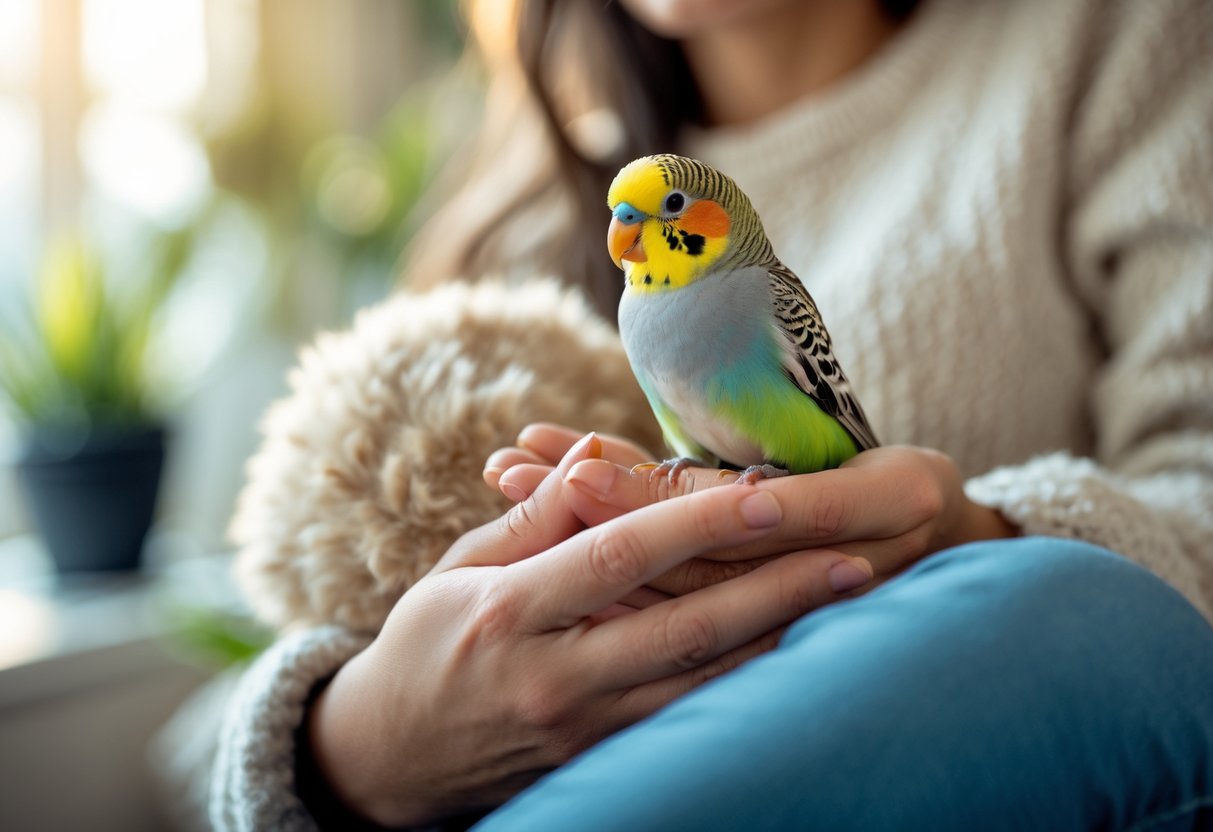
Birds show affection in ways that aren’t always obvious to us. Cuddling might look different than you expect.
You might see your bird nuzzling your neck, preening your hair, or gently nibbling as hints they want to be close. Picking up on these little behaviors can help you figure out when your bird is ready for some gentle bonding.
Every bird’s unique. What works for one might not work for another.
With patience and respect for their moods, you can build a strong bond that includes fun, snuggles, and trust. Learning to read your bird’s signals is the real secret to a happy relationship with your feathered buddy.
Is It Safe and Healthy To Cuddle Your Bird?
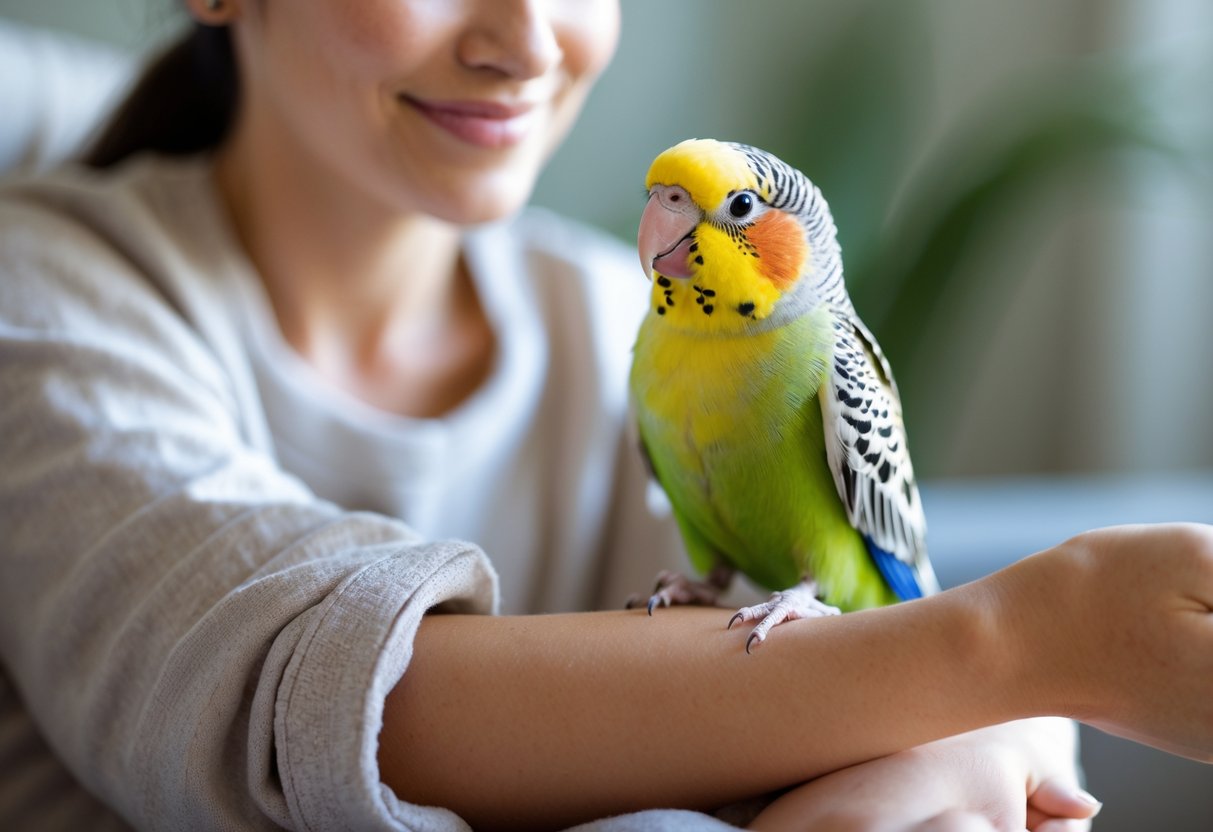
Cuddling your bird can feel really rewarding, but you should keep a few things in mind. Know the benefits, respect your bird’s comfort zone, and watch for any signs of unhealthy behavior.
That way, you’ll keep both you and your bird safe and happy.
Pros and Cons of Cuddling Birds
Cuddling can help you build a strong bond with your parrot, cockatiel, or cockatoo. It can make your bird feel safe and loved, which often reduces stress and builds trust.
Many birds show affection by nestling against you or enjoying a gentle head scratch. But cuddling isn’t always perfect.
Sometimes, it makes your bird too attached to you, which can be a problem if others want to interact. If you spend too much time cuddling, your bird might start depending on constant attention.
Too much or rough stroking can also mess up their feathers.
Setting Boundaries and Recognizing Bird Behavior
Your bird will show you when it wants to be cuddled and when it doesn’t. Look for relaxed body language—soft eyes, leaning into your hand, that sort of thing.
If your bird pulls back, fluffs up, or clicks its beak, that’s your cue to stop. Set some limits about when and how you cuddle.
Maybe only cuddle during calm times or in a spot where your bird feels secure. This way, you avoid stressing your bird or pushing it when it’s not in the mood.
If your bird isn’t used to being touched, you can teach it to enjoy gentle stroking. Try using treats and slow, careful movements.
That way, cuddling becomes something positive for both of you.
Risks of Mating Behavior and Overbonding
Cuddling can sometimes send the wrong signals, especially during breeding season. If you pet your bird anywhere besides the head, it might trigger mating behaviors.
Your bird might get overly excited or even frustrated, which can be tough to deal with. Overbonding with just one person can also make your bird jealous or aggressive toward others.
That can make things awkward for family or friends who want to spend time with your pet. If your bird’s behavior changes during breeding times, just stop cuddling.
Keep an eye on body language and back off if your bird seems too excited or starts demanding attention.
How To Cuddle Your Bird Responsibly

Cuddling your bird can be a great way to bond—as long as you’re careful. Knowing where to touch, how to read your bird’s mood, and understanding your bird’s species will help you avoid stress or unwanted behavior.
Where and How To Touch Your Bird
Start by petting the top of your bird’s head. Most parrots, cockatiels, and cockatoos like this spot.
Avoid touching the back, wings, or tail unless your bird’s super comfortable with you. Use gentle, slow strokes and always wash your hands first.
Too much stroking can damage feathers or strip away protective oils. If your bird leans into your touch, you can try scratching under the chin or around the neck.
Never force contact—if your bird pulls away, stop. Keep petting sessions short and watch for signs your bird wants a break.
You want your touch to feel good for them, not overwhelming.
Reading Your Bird’s Mood and Comfort Level
Birds make it pretty clear when they’re happy or stressed. If your bird lowers its head, closes its eyes, or leans toward you, it’s probably enjoying the attention.
But if your bird fluffs up, turns away, or makes upset noises, that’s your sign to stop. These signals mean your bird feels uncomfortable or annoyed.
Try to cuddle only when your bird is calm and relaxed. Avoid petting during breeding season or when your bird’s excited, since it might misunderstand your touch and become aggressive.
Species Differences and Unique Preferences
Parrots, cockatiels, and cockatoos all have their own ways of enjoying cuddles.
Cockatiels usually like gentle chin scratches. Sometimes, they’ll lean in for soft pats on the head. They’re pretty social and often seem more tolerant than other birds.
Cockatoos absolutely crave attention. But honestly, they can get a bit intense when it comes to cuddling. They might try to snuggle up in your neck or against your chest. Just keep an eye out—if they get too excited, you could end up with a nip.
Parrots? Well, it depends a lot on the species and even more on the individual bird. Some birds love long petting sessions, while others only want a quick touch. It really pays off to watch how your bird reacts and tweak your cuddling style to match what they seem to enjoy.
For more detailed tips on safely petting and cuddling parrots, see here.


