
Ever spotted a grey and yellow bird in England and wondered what it was? You’re definitely not the only one. These birds stand out thanks to their unusual color mix—soft grey with bursts of bright yellow.
The Grey Wagtail is probably the most common grey and yellow bird you’ll see in England, with slate-grey upperparts and a vivid yellow under-tail.
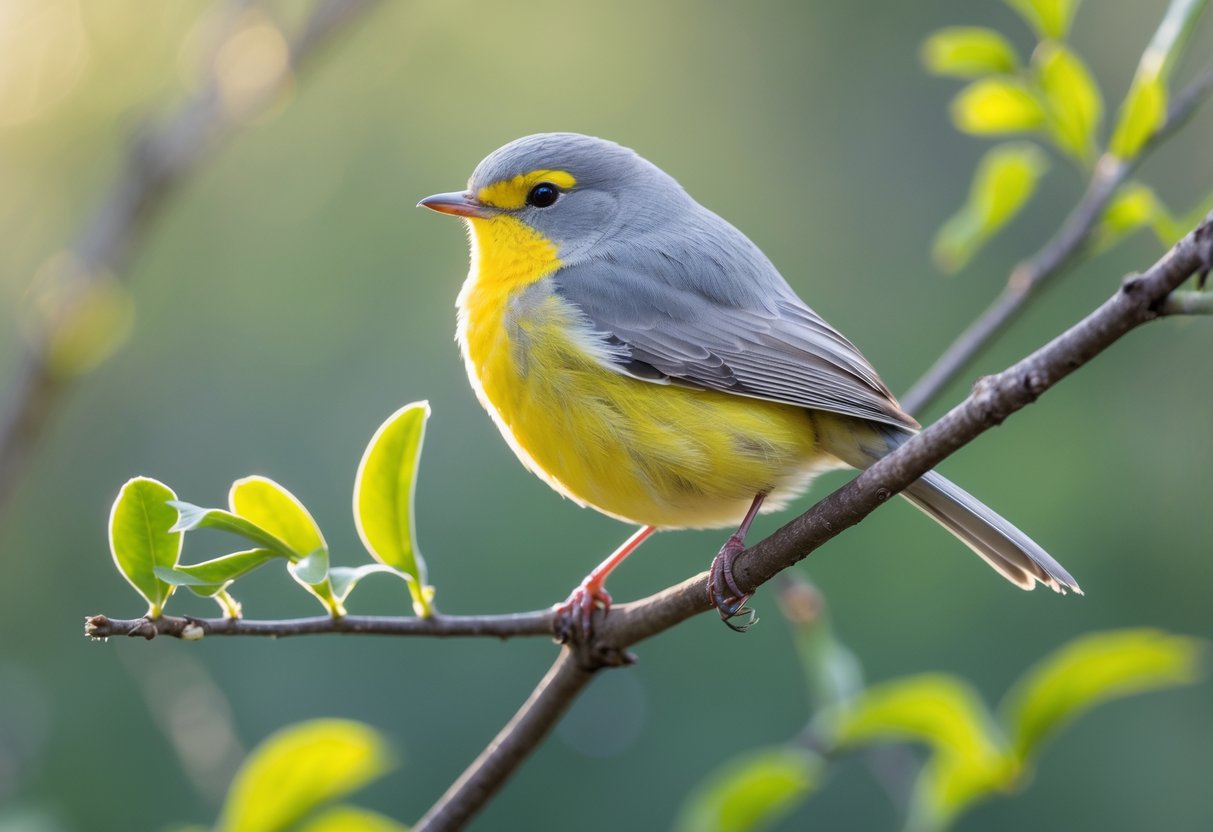
The Grey Wagtail really stands out with its long tail and that splash of yellow lighting up riversides and gardens. Males sometimes show off a striking black throat during breeding season, but females don’t have this feature.
Noticing these little details can make birdwatching a lot more fun.
Other birds in England have grey and yellow markings too, but the Grey Wagtail is usually the easiest to spot, especially near water.
Identifying the Grey and Yellow Bird in England

If you’re searching for a grey and yellow bird in England, you’ll want to look for a few key colors and shapes. These birds usually have a yellow underside, but the shades of grey and green on their back and tail can help you tell them apart.
Paying attention to where they hang out and how they act gives you even more clues.
Key Features of the Grey Wagtail
The Grey Wagtail has a slim body and a tail that’s longer than most wagtails. You’ll notice it waving that tail up and down as it moves.
Its most eye-catching feature is the bright yellow belly and under-tail, which really pops against the mostly grey upperparts.
You can spot a soft grey back that stretches across its wings.
It’s got a white throat and a sharp, slender beak—perfect for catching insects.
During breeding season, males show off a black throat patch.
Females don’t have this, so that’s a quick way to tell them apart.
You’ll often see these birds darting near water, grabbing insects or taking a quick drink.
Comparing Grey Wagtail vs Yellow Wagtail
Both birds have yellow underparts, but the Grey Wagtail has mostly grey on its back and wings.
The Yellow Wagtail is a bit different, with olive-green upperparts.
Yellow Wagtails have yellow that covers more of their body, while Grey Wagtails keep the yellow mostly underneath.
The Grey Wagtail’s tail is longer and it looks a bit sleeker overall.
Yellow Wagtails have a shorter tail and don’t wag it as much.
Grey Wagtails usually stay close to streams and rivers, while Yellow Wagtails like open fields and grasslands.
Males get brighter during breeding season.
The male Yellow Wagtail is especially vivid compared to the female.
Grey Upperparts and Yellow-Green Rump
The grey upperparts really help you spot a Grey Wagtail.
Its back and wings are a soft grey that blends into riverside rocks and trees.
Look for the yellow-green rump—it sometimes peeks out when the bird flicks its tail or flies.
This little splash of color makes it stand out from similar birds.
Yellow Wagtails have a rump that’s more olive-green, matching the rest of their back.
Common Habitats and Where to Spot Them
You’ll usually find the Grey Wagtail near clean rivers, streams, and lakes.
It likes flowing water, where it hunts insects on the surface or along the banks.
Watch for it darting close to water or standing on stones.
Yellow Wagtails, on the other hand, stick to meadows, farmlands, and wet grasslands—places with lots of open ground.
If you want to find a Grey Wagtail, check out northern rivers and upland streams.
For Yellow Wagtails, try farmland and wet fields in southern England.
Both birds show up mostly from spring through autumn.
Understanding Grey and Yellow Wagtails in Detail

Grey and Yellow Wagtails have their own habits and needs.
Where they go, how they raise their young, and their status in England can all be a bit different.
Learning these details makes it easier to spot them and appreciate their place in the environment.
Migration and Seasonal Patterns
The Yellow Wagtail visits England in summer.
You’ll usually see it pop up in spring, around April, and it sticks around until September.
After that, it heads off to warmer places—mostly Africa—for the winter.
Its yellow color is brightest during breeding season.
The Grey Wagtail doesn’t travel as far.
You might spot it all year in some areas, especially near fast-flowing rivers and streams.
It tends to move to lower ground in winter, but it doesn’t migrate as far as the Yellow Wagtail.
Both birds’ arrival and departure depend on the weather and whether there’s enough food, mostly insects.
If you want more details, check out this detailed overview of their migration.
Breeding and Nesting Behaviors
Both wagtails have their own way of raising young.
The Yellow Wagtail likes open wet grasslands or marshy fields, building nests on or just above the ground.
Males look brighter in spring and attract females with their songs and displays.
The Grey Wagtail chooses different spots, usually close to water—like ledges near streams or under bridges.
They build nests with moss and grass.
You’ll spot adults with their long tails and bright yellow under-tails near these watery places.
Both species lay about 4 to 6 eggs each season.
The parents take turns keeping the eggs warm and feeding the chicks.
Watching young wagtails learn to fly is pretty fascinating and gives you a glimpse into how they survive.
Conservation Status in England
Yellow Wagtails just aren’t as common in England anymore. Their numbers keep dropping, mostly because people have drained wet grasslands and changed up how they farm.
If you want to help these birds, you’ll need to protect their breeding spots. That’s really the key to giving them a fighting chance.
Grey Wagtails seem to have handled things better. They’ve actually spread out into more areas, probably because they love clean rivers and streams.
Efforts to keep waterways healthy have helped them out a lot.
Thinking about getting involved? You could provide safe habitats or join a local bird conservation group. There’s always more to learn about why these birds matter, so maybe take a look at this conservation guide for wagtails.


