
Most people imagine seahorses as loyal partners that stick together forever. The reality’s a bit more complicated. Some seahorse species do form strong pair bonds that can last through several breeding seasons, but others switch partners or only stay together for one season. Seahorses can be monogamous, but “mate for life” really only fits certain species and situations.
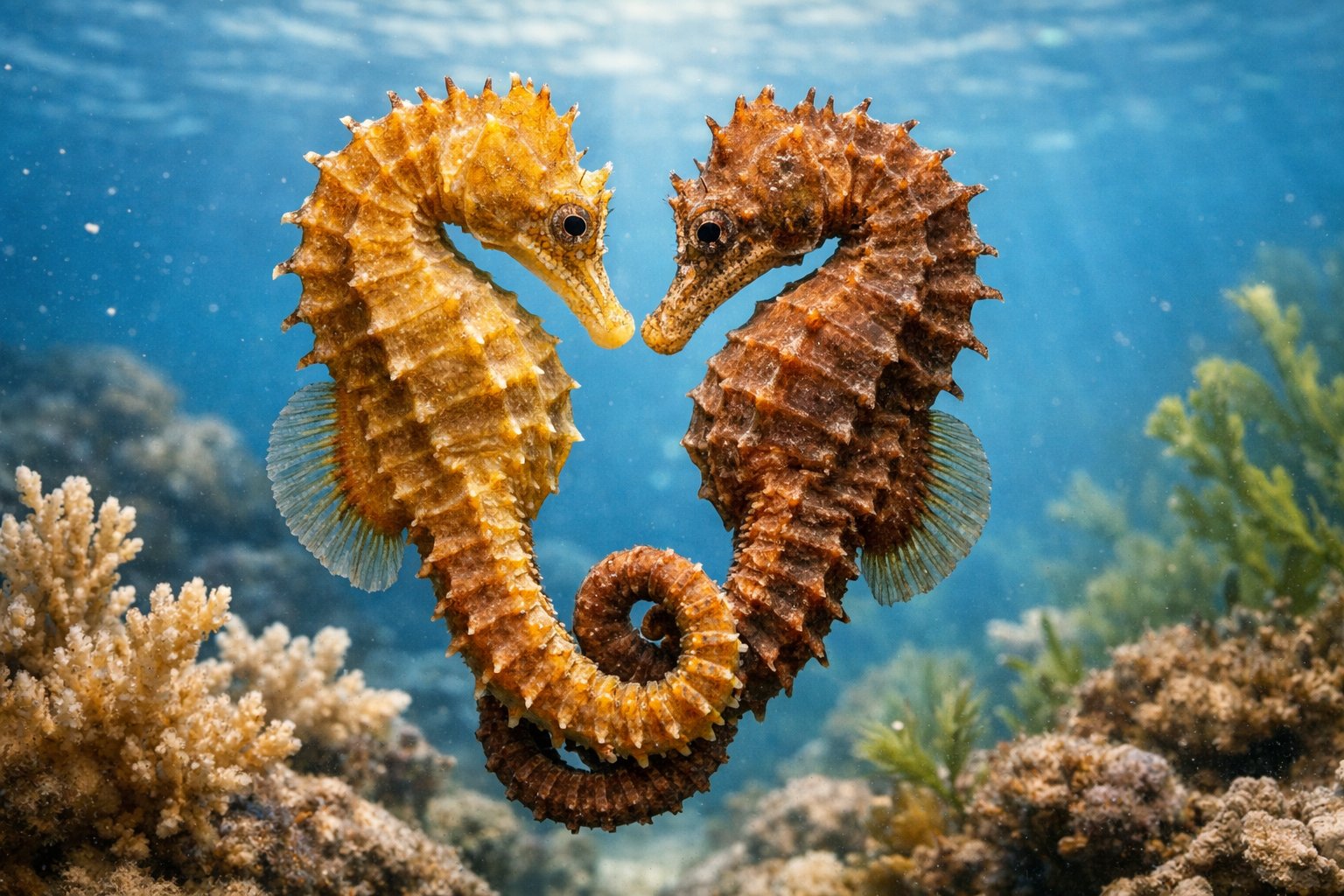
Different Hippocampus species have their own ways of courting, pairing, and sticking close.
Environmental stress or losing a mate can shake up those bonds pretty fast.
Keep reading to see how daily dances, male pregnancy, and habitat changes affect whether a seahorse stays loyal or moves on.
Do Seahorses Really Mate for Life?

Seahorse mating looks different depending on the species, where they live, and the time of year.
Some species stick with the same partner during breeding, but others swap mates between cycles.
When you see claims about lifelong bonds, it’s worth checking which species and habitat people are talking about.
Monogamy Versus Mating for Life
Monogamy for seahorses usually means a pair stays together for one breeding season.
You’ll see daily courtship dances and the same two seahorses producing several broods together.
True lifelong mating—one partner until death—is way less common and honestly, pretty tough to prove.
Researchers like Amanda Vincent and organizations such as Project Seahorse have tracked social monogamy more often than genetic monogamy.
Social monogamy is about behavior and contact, while genetic monogamy requires DNA tests showing all babies come from that pair.
Seahorse Pair Bonds in the Wild
Out in the wild, pair bonds help seahorses line up their daily routines and breeding times.
You’ll spot pairs doing a greeting dance each morning and hanging out in the same small patch of seagrass.
These little rituals make sure the eggs transfer smoothly into the male’s brood pouch.
If one partner disappears or dies, the other usually finds a new mate pretty quickly.
Field studies show some pairs last through several breeding cycles, but how long they stay together depends on the local environment and survival rates.
Lined seahorses and other Hippocampus species show a mix of these patterns.
Species Differences in Long-Term Mating
Not all Hippocampus species act the same way.
Thorny seahorses (Hippocampus histrix) and some lined seahorses form strong seasonal pair bonds.
Other species switch partners between broods or after separation.
If you compare species, things like body size, how crowded the area is, and how complex their courtship gets all play a role.
In dense populations, partner changes happen more often.
In places where mates are scarce, pairs might stick together mainly because they don’t have many options.
It’s smart to look for research on the specific species before making any big claims about all seahorses.
Environmental Impact on Pair Bonds
Habitat quality really affects how long pairs stay together.
Seagrass beds and sheltered spots make it easier for seahorses to form stable bonds—they get food and places to grab onto.
When seagrass disappears or fishing pressure increases, partner turnover goes up and breeding gets disrupted.
Human threats like habitat loss and the trade in Hippocampus species make it harder for seahorses to find and keep mates.
Groups like Project Seahorse work to protect these habitats so that pair bonds can last where they naturally would.
How Seahorses Form and Maintain Pair Bonds

Seahorses often stick with the same partner through a breeding season.
They perform daily rituals to keep in sync and use special nesting spots to raise their young.
Courtship Rituals and Daily Greetings
Seahorse pairs greet each other every morning with a short dance.
They rise up, change color, and twist their tails together while moving in sync.
This little ritual only lasts a few minutes, but it keeps partners in tune.
You can spot true pairs by watching for these dances in seagrass beds or on reef holdfasts.
Researchers noticed White’s seahorses (Hippocampus whitei) keep up these daily greetings to avoid mating mistakes and to coordinate egg transfers.
Groups like Project Seahorse have shown that regular greetings help prevent confusion in crowded habitats.
These dances also show that both seahorses are healthy and ready to breed.
If one skips a few greetings, it might be injured, stressed, or missing—so the dance acts as a daily check-in.
Unique Mating Habits and Male Pregnancy
Seahorse mating flips the usual roles: females deposit eggs into the male’s brood pouch.
The male fertilizes and carries the eggs until they hatch, giving them oxygen and some nutrients.
This pouch-based pregnancy can last anywhere from about 10 days up to six weeks, depending on the species and water temperature.
A single brood might be just a few dozen or up to several thousand young in the bigger species, so timing and partner coordination really matter.
Pairs usually time their mating to the male’s readiness and local conditions in their habitat.
Repeated, exclusive matings between the same two individuals help them sync their cycles and produce as many broods as possible in a season.
Consequences of Mate Loss or Separation
When one partner vanishes, the remaining seahorse often shows stress-like behaviors.
You might notice them returning to the same spot, almost as if they’re still expecting their mate.
They might eat less or just seem off for days, sometimes even weeks.
Remating doesn’t always happen right away; it can take a while for them to pair up again.
Separation really messes with breeding efficiency.
Looking for a new mate eats up time and energy, and in patchy seagrass beds where seahorses are spread out, that delay means fewer broods for the season.
Conservation groups, like Project Seahorse, keep warning that habitat loss and fishing only make these separations more common.
When people disrupt seagrass and reef areas, they break up pairs and put local populations at risk—so, honestly, protecting those habitats just makes sense if we care about keeping seahorses together.


