
You might’ve heard wild claims that seahorses can switch sexes. But they don’t actually change their biological sex—male and female seahorses stay the same for life. The twist? Males take on the surprising job of carrying the eggs. Clearing up this mix-up matters because a lot of people confuse changing sex with swapping reproductive roles.
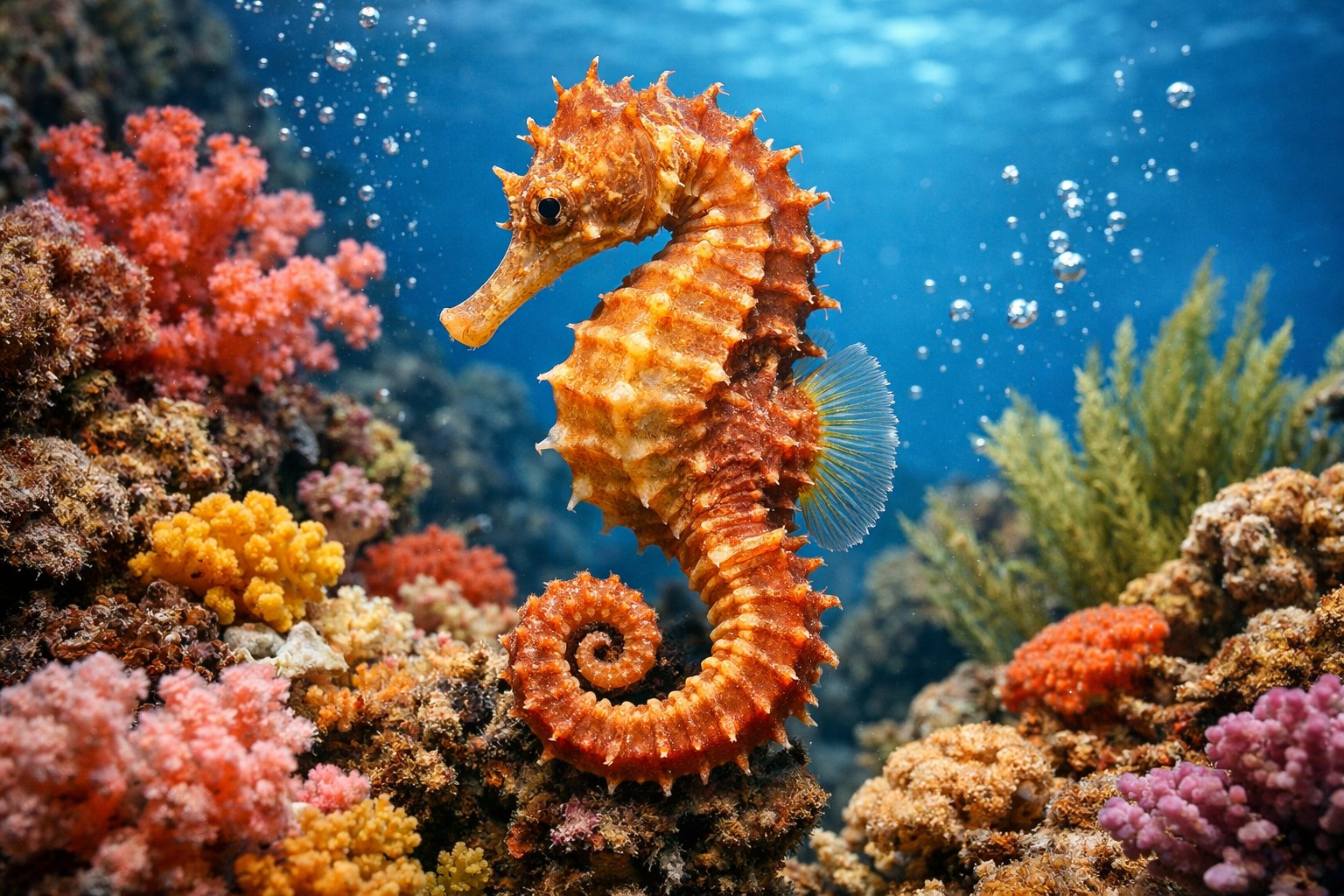
Let’s get into why seahorse biology makes male pregnancy possible, and why that role swap isn’t the same as changing gender. I’ll break down how their mating and pouch work, and why people sometimes mistake this role reversal for an actual sex change.
Can a Seahorse Change Its Gender?

Seahorses start out male or female from early on and stick with it. You’ll see how their mating roles work, why scientists say they don’t change sex, and why some of those “gender change” claims just don’t add up.
Gender Roles Versus Gender Change
Male and female seahorses take on different jobs when it comes to reproduction. Females make the eggs.
Males receive and carry fertilized eggs in a brood pouch until the young hatch. That role swap—female gives eggs, male carries them—is just a difference in who does what, not a change in biological sex.
Every seahorse keeps its own reproductive anatomy. Males have a pouch and internal bits for carrying embryos.
Females have ovaries that make eggs. Those organs don’t turn into the other sex’s parts at any point in their lives.
Sequential Hermaphroditism in Seahorses
Sequential hermaphroditism means an animal changes sex during its life. Plenty of reef fish do that, but seahorses just don’t.
Researchers have looked for it and haven’t found any real evidence of sex change in Hippocampus species. If you see claims about seahorses switching sex, check the source.
Peer-reviewed studies and fieldwork haven’t documented true sex change in seahorses. You’ll see clear statements about this in reputable sources, like the Discover Magazine article explaining male pregnancy (https://www.discovermagazine.com/the-mystery-of-male-pregnancy-and-birth-in-seahorses-42002).
Myths and Misconceptions
A lot of sources mix up role reversal with sex change. You might run into articles saying seahorses “change gender,” but most of the time they’re confusing behavior with anatomy.
Role reversal—male pregnancy—seems wild and it’s easy to misinterpret. Some claims come from lumping all fish together.
While some fish change sex, seahorses just don’t follow that pattern. If you want a reliable answer, look for resources that make it clear: seahorses stay the same sex their whole lives (https://iere.org/why-are-male-seahorses-male-and-not-female/).
The Unique Reproductive System of Seahorses

Seahorse reproduction flips the usual script. Males carry and nourish embryos inside a special pouch.
Pairs often perform long, synchronized courtship dances. I’ll show you how the brood pouch works, how eggs move from female to male, and why both parents end up sharing the work.
Male Pregnancy and Brood Pouch
Male seahorses grow a brood pouch on their abdomen. After the female transfers her eggs, the pouch seals up and creates a controlled environment for the embryos.
The lining grows blood vessels to deliver oxygen and remove waste. Males can tweak the pouch’s fluids and proteins to help the embryos survive.
Development time depends on the species and water temperature, but usually takes two to six weeks. This setup takes the load off the female, energy-wise.
When it’s time, the male contracts his pouch and releases tiny, fully formed seahorses into the water.
Courtship, Mating, and Egg Transfer
Courtship can last for days. It includes color changes, tail holding, and synchronized swimming.
These rituals help the pair bond and time their mating to when the male’s ready. During mating, the female deposits eggs straight into the male’s pouch using an ovipositor.
The male fertilizes the eggs inside his pouch. Depending on species and how healthy she is, the female can produce a lot of eggs pretty quickly after mating.
Timing matters. Both partners line up their daily routines and hormone cycles to give the eggs the best shot at survival.
Some species form monogamous pairs that court every morning. Others? They might mate with multiple partners.
Why Seahorses Share Reproductive Roles
Role-sharing really helps seahorses thrive, especially when things get crowded or dangerous out there. When males take on brooding, females can start making more eggs right away and mate again sooner.
This little switch actually bumps up the number of babies a pair can have during a season. Male pregnancy changes the whole dating game, too.
Now, females might find themselves competing for the best males—the ones with healthy pouches. Males aren’t just sitting around either; they pick mates, usually favoring bigger or healthier females.
When they share care and courtship, seahorses build a strong connection as a pair. That teamwork helps them nail the timing for egg transfer and gives their embryos a better shot at survival.
It’s a weird system, honestly, but it works for them.


