
Seahorses aren’t like any other fish out there. They look like tiny horses, swim upright, and—believe it or not—the males actually carry and give birth to the babies.
That male pregnancy, plus their upright armored bodies, really sets seahorses apart from the rest of the ocean’s creatures.
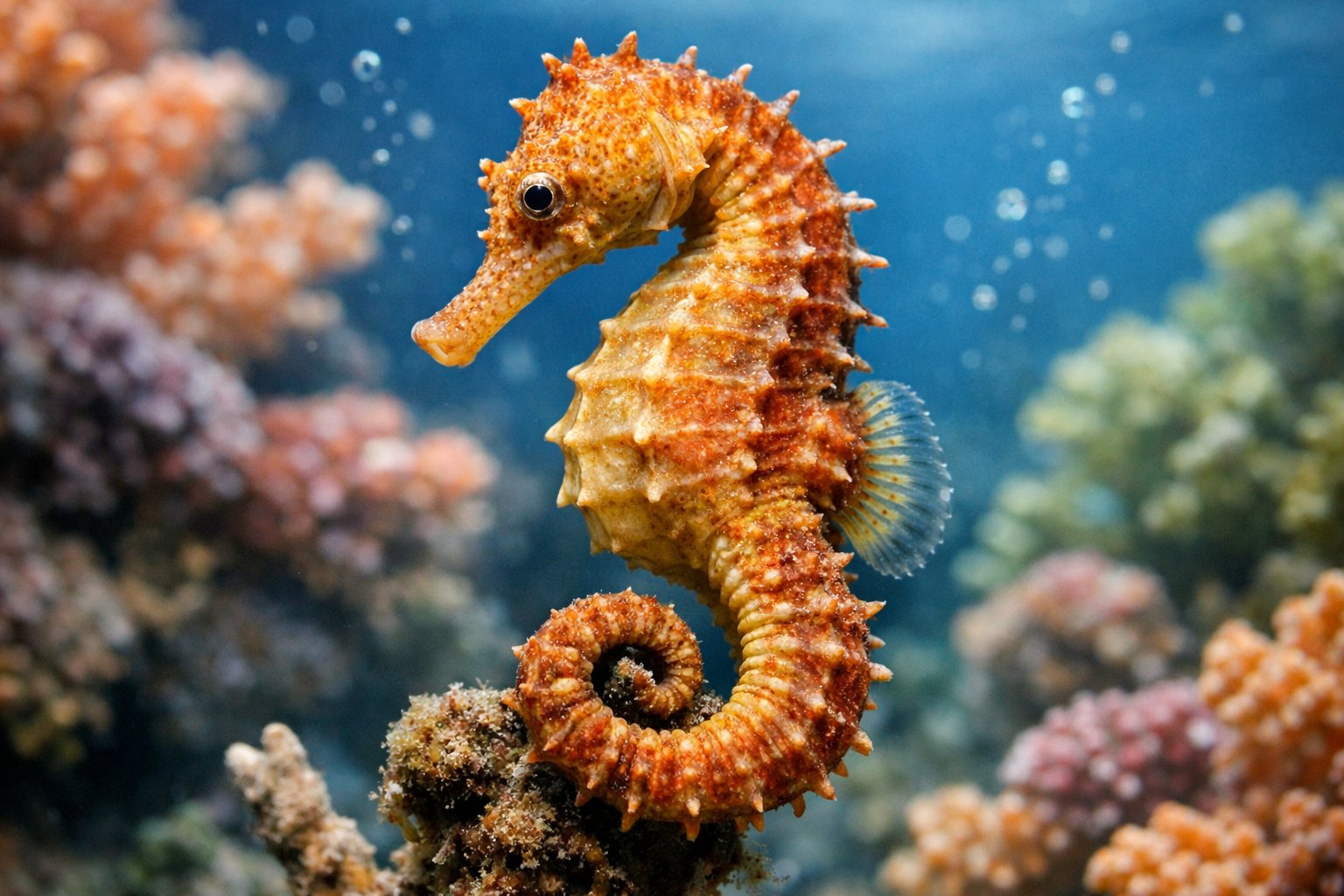
It’s wild how they feed, hide, and move so slowly, yet still manage to survive. You’ll find their courtship dances odd, and their prehensile tails work like anchors.
Ever wonder what life looks like through a seahorse’s eyes? Imagine their camouflage, tiny snout, and fragile world. Their survival actually matters a lot to ocean health.
Extraordinary Seahorse Traits and Behaviors

Seahorses stand out for their odd bodies, unusual movements, clever hiding, and unique ways of eating. Each trait connects to how they live in seagrass, on reefs, or in shallow water.
Unusual Anatomy and Appearance
Seahorses (genus Hippocampus) just don’t look like most fish. Their bodies have bony plates instead of scales.
These plates form a kind of armor that protects them but keeps their bodies stiff. Their heads sit at a right angle to their bodies and look almost like a horse’s.
They use prehensile tails to grab onto seagrass and keep themselves steady in the water. Their snouts are long and tubular, working like a straw to suck up tiny prey.
Their eyes move independently, so a seahorse can watch for both predators and prey at the same time. Some have a swim bladder to help control how they float, but seahorses still rank among the slowest fish.
Amazing Swimming and Mobility
Seahorses swim upright, using a single dorsal fin that flutters like crazy. That fin can beat hundreds of times per minute for quick bursts.
Small pectoral fins on their heads help steer and keep them balanced. Because their bodies are so stiff, seahorses can’t chase down fast prey.
They rely on careful positioning and quick little lunges instead. You’ll often see them anchored by their tails, letting currents flow past.
Their slow, deliberate moves help them ambush prey and save energy in places like seagrass beds.
Masters of Camouflage
Seahorses pull off some impressive camouflage tricks. They change color and even grow skin filaments to look like algae or coral.
This helps them avoid predators and sneak up on prey. You’ll spot them tucked into Posidonia or wrapped around coral, almost invisible.
Some species show off bright colors, while others stick to browns and greens. Camouflage even plays a part in their courtship—pairs flash matching colors when they dance together.
Seahorse Feeding Habits
Seahorses act as patient ambush predators, feeding on tiny plankton and micro-crustaceans like copepods and brine shrimp. They don’t chew; instead, they suck prey in through their snouts by snapping their mouths open.
They eat almost constantly because each meal is so small. Their hunting style takes patience and stealth, not speed.
Researchers keep an eye on their feeding habits to understand how fishing and habitat loss impact these delicate creatures.
Seahorse Reproduction, Habitat, and Conservation

Seahorses show some wild parenting, live in all sorts of coastal places, and face real threats from humans. Let’s check out how males carry eggs, where different species hang out, and what puts them at risk.
Male Pregnancy and Courtship Dances
Male seahorses carry fertilized eggs in a pouch on their tails. The female uses an ovipositor to place her eggs inside.
The male fertilizes the eggs and keeps them safe until they hatch. He manages the pouch’s chemistry and helps the embryos develop.
When the babies are ready, he pushes out live, tiny seahorses that already look like adults. Courtship gets pretty elaborate—daily dances, color changes, and lots of tail-holding.
Pairs sometimes swim together in sync and rise up in the water. Some species stick with one partner for a season, which helps time the broods just right.
You’ll see similar behaviors in their relatives, like pipefishes and seadragons.
Seahorse Species and Unique Habitats
You’ll find about 45–50 Hippocampus species in temperate and tropical waters all over the world. They come in all sizes, from the tiny Hippocampus denise (under 2 cm!) to big-bellied and long-snouted types.
The short-snouted and Hippocampus hippocampus pop up in lots of regional guides. Seahorses prefer sheltered spots—seagrass beds, coral reefs, mangroves, and estuaries.
They cling to plants or coral with their tails and wait for prey. Some specialize in certain habitats; pygmy seahorses stick to specific corals, while dwarf seahorses hide in seagrass.
Where they live shapes their camouflage, diet, and the threats they face.
Threats and Conservation Efforts
Most seahorse populations are dropping because of people. Overfishing and bycatch scoop up a lot of seahorses without meaning to.
Coastal development chips away at their habitat, and seagrass beds keep disappearing. The trade for aquariums and traditional medicine piles on even more pressure.
Groups use a mix of tools to help out, like CITES trade rules and setting up marine protected areas. Fishery regulations, planting seagrass and mangroves, and encouraging sustainable aquarium breeding all play a part.
If you want to help, skip products made from wild seahorses. Support organizations that protect their habitats, and always pick aquarium animals that come from responsible sources.
Curious about the details or need a refresher on seahorse habitats and threats? Check out the Britannica overview of seahorse biology and threats.


