
Seahorses really flip the script—males carry the babies. Most seahorse pregnancies last somewhere between two and four weeks, although the exact time depends on the species and water temperature. That’s a pretty quick turnaround, so those tiny seahorses go from eggs to free-swimming fry before you know it.
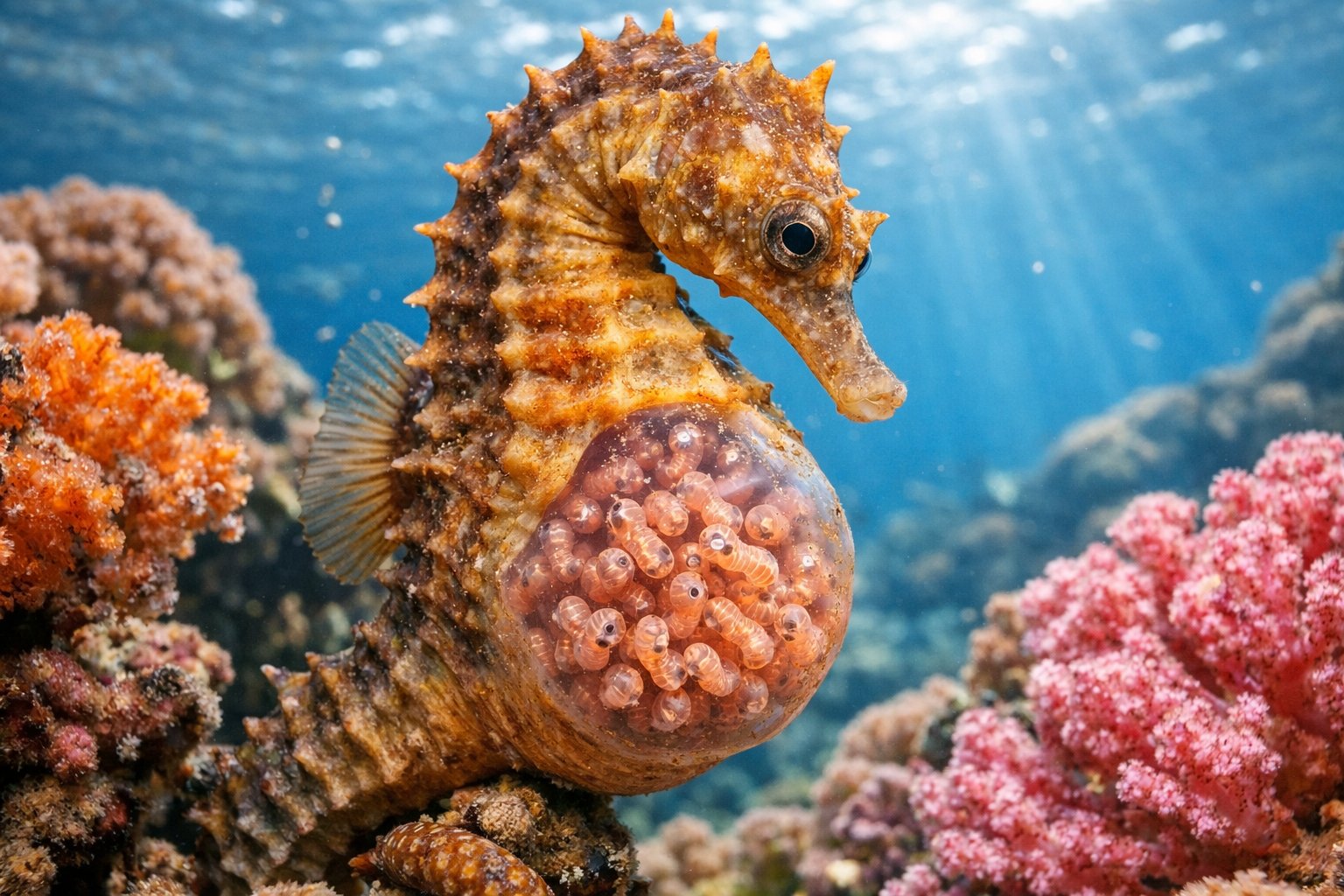
Let’s look at how the male’s brood pouch actually protects and nurtures the eggs. There’s a lot that affects how long pregnancy lasts, and birth in the wild is honestly something to see. This guide gives you the facts and a few surprises so you get why seahorse pregnancy stands out.
How Long Is A Seahorse Pregnant?

Male seahorses handle pregnancy, and it’s short—just days, not months. The timeline changes with species and water conditions.
Typical Seahorse Gestation Period
Most seahorse pregnancies last 2 to 4 weeks. After the female puts eggs in the male’s brood pouch, he fertilizes them and keeps them safe.
The male provides oxygen and nutrients until the babies are ready. Gestation usually runs 14–28 days.
If the water is warm, development goes faster and stays closer to two weeks. Colder water slows things down, so the process can stretch to four weeks.
When you care for seahorses, keeping the water temperature steady really helps the male during brooding.
Gestation by Species
Each seahorse species has its own schedule. The dwarf seahorse (Hippocampus zosterae) usually carries young for about 10–14 days.
Larger species, like some big-bellied seahorses, may brood for nearly 3–4 weeks. Species size and metabolism play a big role in timing.
Dwarf species reproduce faster and more often. Bigger seahorses carry larger broods and take longer.
If you’re reading care guides, always check for notes about your specific species.
Factors That Influence Pregnancy Length
Temperature makes the biggest difference. Higher temperatures speed up embryonic growth and shorten gestation.
Cooler water slows things down and makes the pouch period last longer. The male’s health and how many eggs he carries also matter.
If the male is stressed or not eating well, pregnancy might be delayed or even fail. Good diet, stable salinity, and clean water help support normal gestation.
For more details on seahorse brooding and species differences, check out Discover Wildlife and Smithsonian Ocean.
The Seahorse Pregnancy Process

Here’s how it goes: seahorses find mates, the female moves eggs into the male’s pouch, embryos grow inside, and then the male gives birth. The whole thing relies on some pretty precise behaviors and a specialized brood pouch.
Seahorse Courtship Rituals
Courtship can last a few days and gets both partners in sync. You’ll notice color changes, tail holding, and a daily “dance” where the pair rises and falls together.
This dance strengthens their bond and helps time the egg transfer. Some seahorses form short-term pair bonds or mate with the same partner through a season.
Males and females often mirror each other’s movements and sometimes even change their skin texture. These signals help reduce stress and make sure the female releases eggs when the male’s ready.
Courtship also keeps rivals away. By holding territory and showing off, a male makes it more likely he’ll get eggs from that female, not a competitor.
Egg Transfer and Brood Pouch Function
The female uses her ovipositor—a sort of tube—to put eggs right into the male’s brood pouch. You’ll see the pair line up so the eggs pass safely into the pouch.
The brood pouch is muscular and full of blood vessels. It gives oxygen, keeps salt levels right, and protects the embryos.
The pouch closes up to keep eggs safe from predators and rough water. Fertilization happens inside the pouch after the transfer.
The male controls the pouch’s environment by changing blood flow and fluid. This kind of male care is rare in the animal world and is a big deal for the Syngnathidae family.
Development in the Brood Pouch
Embryos either stick to the pouch wall or float in pouch fluid as they grow. Growth speed depends on the species and water temperature—warmer water usually means faster development.
The male supplies oxygen and removes waste through the pouch lining. He can even change salt levels to help embryos adjust.
As embryos develop, they form fins, tails, and that classic horse-like head. Gestation usually lasts about 10 to 28 days, depending on species and environment.
During this time, the male’s pouch swells and sometimes his color changes. You might notice repeated breeding cycles, where the female gets another batch of eggs ready while the male is still brooding.
Seahorse Birth and Newborn Fry
When it’s time for birth, the male actually pushes out the fully formed fry by contracting his pouch muscles. Sometimes you’ll see dozens, maybe even hundreds, of tiny seahorses shooting out in quick bursts—though it really depends on the species and how many babies he’s carrying.
The newborns, called fry, are on their own from the very start. They’re tiny—just a few millimeters to maybe a couple centimeters long—and they have to scramble for food and shelter right away.
Predators pick off most of the fry, so just a handful make it to adulthood. It’s a tough start, honestly.
After the birth, the male’s pouch goes back to normal pretty fast. He’s usually ready to mate again soon after.
This quick turnaround means seahorse pairs can have lots of broods in a single season. It’s their way of giving the next generation a fighting chance, even if most won’t make it.


