
Watch a male lion stand tall, lift his tail, and spray a strong stream of urine onto bushes or rocks. He does this to mark his ground and make sure everyone knows it’s his turf.
A mature male can shoot urine several meters, aiming it just right to leave a clear scent that lets other lions know who’s in charge.

Notice his posture and the spots he picks. Urination isn’t just about getting rid of waste—it sends out chemical signals that shape territory and social rank.
Let’s dig into how he does it, why it matters, and what these marks mean for other lions.
How a Male Lion Urinates
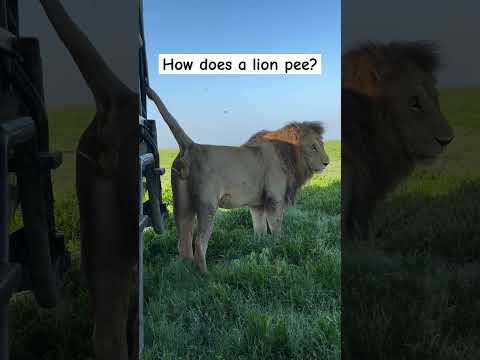
Male lions don’t just use urine to get rid of waste—they also send a strong scent signal. You’ll see a particular body stance, a focused stream that sometimes goes several meters, and scent glands that add a personal chemical note to the mark.
Urination Posture and Mechanism
A male lion stands when he urinates. He lifts his tail and leans forward or to one side, making sure the stream lands on grass, a rock, or a tree trunk.
This keeps urine off his fur and puts the scent where others can find it.
Muscles do the work. The bladder holds the urine, and then the abdominal and pelvic muscles squeeze, pushing it through the urethra.
You’ll notice the lion pauses, shifts his hind legs, and aims before releasing. He wants that scent right where he wants it.
Young males and females have the same basic process, but adult males have stronger muscle control and bigger bladders. Their marks last longer and cover more area.
Distance and Pressure of Urine Stream
Male lions can spray urine with surprising force. People have watched adult males hit distances of about 10–15 feet (3–4.5 meters), though it depends on the lion’s size, health, and how hydrated he is.
When a dominant male marks, the pressure helps coat vertical surfaces and spreads the scent farther.
The force comes down to bladder contraction strength and how wide the urethra is. A narrower urethra boosts exit speed, and strong muscles add momentum.
Wind and terrain can make a difference, too. A high, forceful spray works best in open savanna.
If a lion’s dehydrated, sick, or getting old, you’ll see less volume and pressure. Distance and force can give you clues about his health and maybe even his rank.
Role of Scent Glands in Urination
Scent glands give urine marks a unique chemical twist. Male lions have glands on their face and paws, but their urine itself carries hormones and other smelly compounds that make each lion’s mark different.
If you could sniff a mark (not recommended!), you’d pick up info about sex, reproductive state, and dominance.
While marking, a male often rubs his chin or flank on the spot. That leaves extra scent from his glands, layering messages on top of the urine.
Other lions use their vomeronasal system to pick up and decode all these cues.
Rubbing and spraying together make the message stronger and longer-lasting. You’ll see males combine spraying with cheek rubbing or pawing the ground to make sure both their gland and urine scents stick around.
Unique Aspects of Male Lion Urination
Male lions mostly use urination for territory and social signaling, not just elimination. You’ll notice males mark boundaries more often, especially dominant ones defending pride borders.
The mix of a high-pressure spray and gland rubs draws a clear line.
Males mark in mating contexts, too. A marked area tells others a male is around and ready to defend mates.
Females and rival males read these marks to decide if they should approach or stay away.
Sometimes, males mark along trails, not just at the edges. This sends scent through the routes the pride uses.
If you follow lion behavior, you’ll see urine marking patterns often line up with patrol paths and hunting corridors.
Urination as Communication and Marking Behavior

Male lions use urine and other scents to claim space, warn rivals, and share their identity. Here’s how scent marks work, how males leave them, and how lions pick up the messages.
Purpose of Scent Marking in Male Lions
Urine marking tells other lions who owns a territory and whether a male is ready to defend or mate. Males often mark near pride boundaries, waterholes, and travel routes where others might pass.
This lowers the chance of a direct fight by giving a clear warning.
Scent marks carry identity, too. Chemicals in urine reveal the lion’s sex, social group, and sometimes reproductive state.
Think of a urine mark as a name tag and status update that other lions read with their noses.
Marking also helps males advertise to females. A strong, fresh mark near the pride’s core can show dominance and fitness.
That makes it easier for males to attract mates and protect their pride without fighting all the time.
Mechanisms of Territorial Marking
Male lions leave urine in a pretty deliberate way. They lift a hind leg and spray, putting a visible and smelly mark on grass, shrubs, or the ground.
They also rub their face and muzzle on objects and scrape the soil with their hind paws, spreading gland scents and mixing things up.
You’ll often see males focus marks along territory edges and near spots where their range overlaps with other prides. They patrol on foot, pause, sniff, then spray or rub.
Males do most of the urine spraying, but females sometimes scent-mark too.
Marks differ in placement and frequency. Fresh, high-volume sprays stand out and last longer.
Mixing urine with scat or gland rubbing makes the message more complex and gives a richer sense of identity and ownership.
Flehmen Response and Olfactory Processing
When a lion catches a scent, you might spot a quick and almost funny face twist called the flehmen response.
The lion curls its lips, takes a deep breath, and pulls those chemicals right toward the vomeronasal organ (VNO). This organ specializes in picking up social and reproductive cues—stuff that regular smell just doesn’t catch.
The VNO picks up on semiochemicals that most noses would miss. With this, lions can figure out if they’re dealing with a male or female, a familiar resident, or a total stranger. Sometimes, they can even tell if another lion is ready to mate.
You’ll often see males show flehmen after they sniff fresh urine. They’re trying to decide what to do next—should they patrol, mark their own scent, or maybe steer clear to avoid trouble?
Flehmen doesn’t last long, but it packs a punch. It sort of explains why lions care so much about urine marking. Those marks aren’t just random smells—they’re like secret messages, and the VNO acts as the decoder, guiding decisions about territory and mating.


