
You might find it hard to believe, but a male seahorse can give birth to hundreds—or even thousands—of babies at once. A single male hippocampus might release anywhere from just a few dozen up to about 2,000 tiny young in one birth, depending on the species.
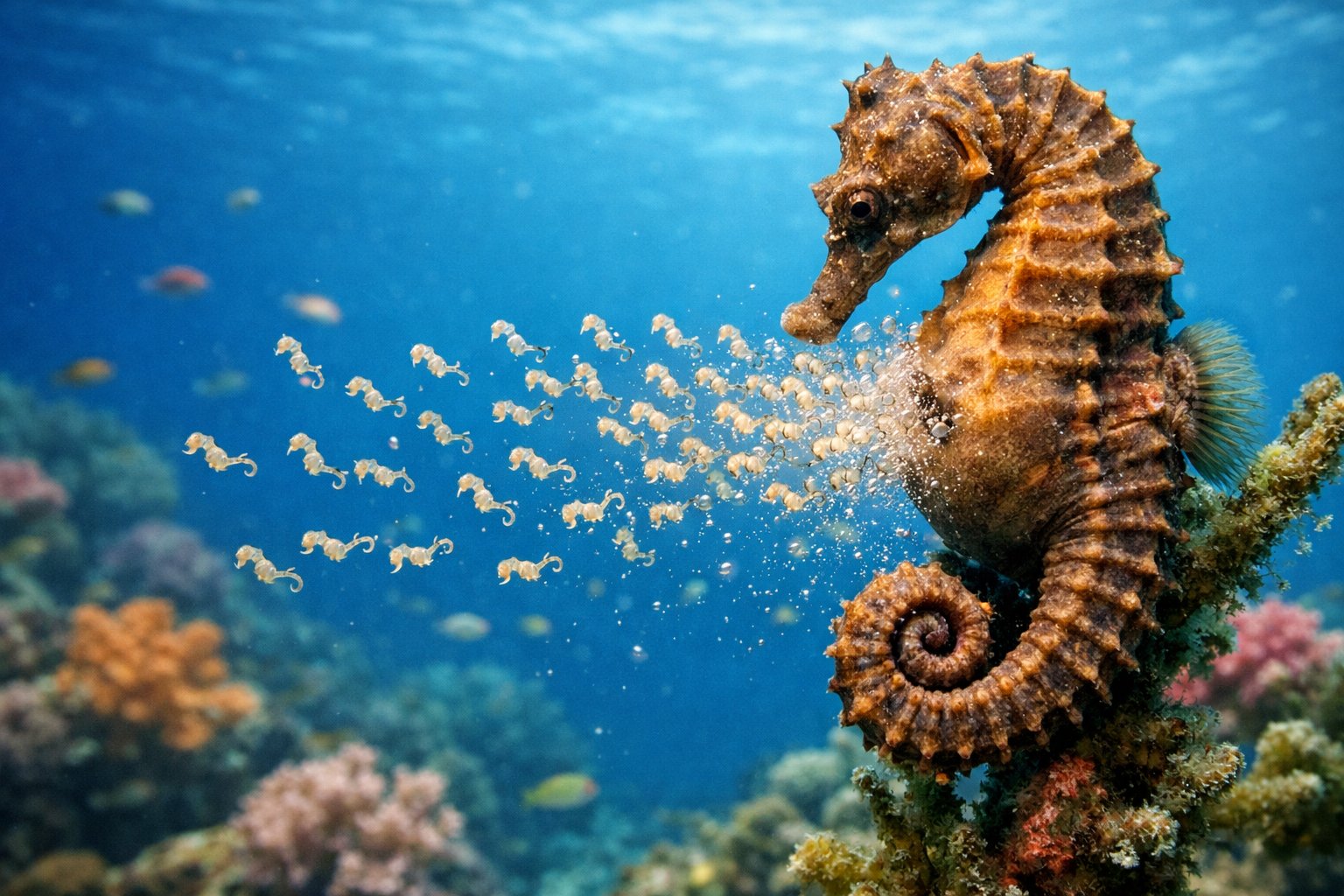
If you’re curious about how this happens, you’re in for a wild ride. Let’s look at the unique pouch the male carries, how eggs move from female to male, and why so many babies are born only to face such tough odds.
Keep reading if you want to explore how seahorses reproduce and what those massive broods mean for their survival.
How Many Babies Do Seahorses Have at Once?

Male seahorses can release anywhere from a few dozen to over a thousand tiny fry in a single birth. The brood size depends on the species, the size of the male’s pouch, and other things like water temperature and health.
Brood Sizes by Seahorse Species
Different species of seahorses have very different numbers of babies. Some of the smaller types, like pygmy seahorses, might produce fewer than 50 fry at a time.
Bigger species, like the Pacific seahorse (Hippocampus ingens), often release several hundred to over a thousand young in one go.
You’ll usually see these ranges:
- Pygmy species: about 5–100 babies.
- Medium species: about 50–500 babies.
- Large species (like Pacific seahorse): about 500–2,000 babies.
Researchers and aquarium keepers have recorded these numbers across species. The exact count really depends on the species, the individual, and what’s going on in the environment.
Factors Affecting Baby Seahorse Numbers
A few main things change how many seahorses are born at once. The male’s brood pouch size limits how many eggs he can carry.
Bigger males usually carry more eggs. Female egg production matters too—a larger, healthier female can transfer more eggs.
Water conditions—like temperature, salinity, and turbulence—also play a role in embryo development and survival. Young or stressed parents tend to have smaller broods.
Human impacts like habitat loss and poor water quality can cut down both egg numbers and the survival of newborns.
Famous Examples: Pygmy and Pacific Seahorses
Denise’s pygmy seahorse (Hippocampus denise) and Satomi’s pygmy seahorse (Hippocampus satomiae) are great examples of how brood size connects to body size.
These pygmies are tiny and usually produce very small broods, often under 50 fry. Their babies are so small, you’ll probably miss them after birth.
The Pacific seahorse is a totally different story. It’s one of the largest species and can release hundreds to over a thousand babies in a single birth.
If you ever get a chance to see wild or captive Pacific seahorses, you’ll notice they have way more babies than the pygmy species. For more details on typical counts by species, check out how many babies seahorses have at one time.
The Extraordinary Seahorse Reproduction Process

Let’s talk about how seahorses pair up, how females transfer eggs, how males carry and give birth, and what the tiny seahorses do right after they’re released. The whole process involves a brood pouch, a special way of moving eggs, and a short pregnancy that changes depending on the species.
Courtship and Egg Transfer
Seahorses often perform daily courtship dances to get in sync. You might catch partners mirroring each other, changing color, and even locking tails.
These rituals help strengthen their bond and get the female ready to transfer her eggs.
The female uses an ovipositor—a tube-like organ—to place eggs straight into the male’s brood pouch. Other species in the Syngnathidae family, like pipefish and seadragons, do something similar.
How many eggs get moved depends on the species and the female’s size. It can range from just a few dozen to hundreds or even thousands.
Once the eggs are inside the pouch, the male fertilizes them. Timing really matters—courtship can last hours or even days, and some species stick with the same partner through a whole breeding season.
That increases the odds that the male will carry a full, healthy brood.
The Male Pregnancy and Brood Pouch
Male seahorses carry embryos inside a brood pouch on their belly. The pouch acts a bit like a uterus—it protects the eggs, regulates salt, and supplies oxygen and nutrients.
You could think of it as a tiny, controlled nursery that helps prevent embryo loss.
Pregnancy length changes by species and water temperature, but usually lasts about 2 to 4 weeks. Larger males can carry more embryos because their pouches are bigger.
Inside the pouch, the male uses tissues and blood vessels to exchange gases and remove waste for the developing young.
This kind of male pregnancy is pretty much unheard of in most animals, but it’s common in the Syngnathidae family. Pipefish and seadragons have their own versions of male brooding, though the pouch and care levels aren’t the same.
If you ever spot a pregnant male seahorse, you’re seeing some serious parental investment from dad.
Birth and Early Survival Challenges
When labor kicks in, the male seahorse contracts his pouch muscles to push the babies out. Birth might take a few minutes or even hours, depending on how many there are.
You’ll probably see the male straining and then releasing dozens—or thousands—of tiny seahorses, each one already looking like a miniature adult.
Life’s tough for newborns. They don’t get any more care and have to find food and shelter fast.
Predators, currents, and habitat loss make survival rates pretty low. Species that produce thousands of young expect only a few to reach adulthood.
Environmental stress, bad water quality, or not enough food can shrink both brood size and baby survival. Protecting seagrass beds and reefs definitely helps more young make it.
If you’re interested in seahorse reproduction, tracking brood sizes and juvenile habitats gives you important clues about population health.
What Do Baby Seahorses Eat
Newborn seahorses go after tiny plankton and small crustaceans right from the start.
In the wild, they’ll snack on copepods, shrimp larvae, and whatever microscopic critters they can slurp up through their snouts.
They don’t have teeth, so they just suck in their food and swallow it whole.
Because they’re so little, baby seahorses need to eat often—sometimes several times a day—to keep growing.
If food runs low or strong currents sweep them away from good feeding spots, their chances of making it drop fast.
In captivity, caretakers usually offer live, tiny prey like newly hatched brine shrimp to mimic what they’d eat in the wild.
As they get bigger, they start eating larger plankton and more substantial crustaceans.
Learning what baby seahorses eat and where they feed really shows how important it is to protect their habitats.


