
Squirrels keep stealing your Bird Buddy’s seed and scaring off the birds you actually want to watch. You can protect your feeder with a few easy fixes that block squirrels from climbing poles or leaping from nearby trees.
Try a properly placed baffle, move the feeder at least 10 feet from jump-off points, and go for squirrel-resistant feeder designs—these usually stop most raids.

This post covers some proven ways to install baffles, pick the right feeder, and set up your yard so birds get the food—not squirrels.
You’ll see some easy steps you can try today to make your Bird Buddy a lot friendlier for birds and a lot tougher for squirrels.
Proven Strategies to Squirrel-Proof Your Bird Buddy
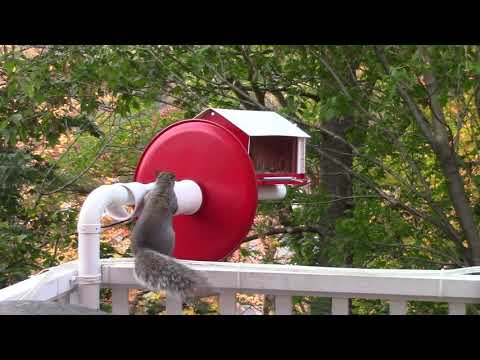
Try using placement, barriers, feeder type, and seed choices together to block squirrels.
Small changes—like distance from launch points, a good squirrel baffle, a weight-activated feeder, and swapping out the seed—make a surprisingly big difference.
Optimal Feeder Placement and Mounting Tips
Put your Bird Buddy at least 10 feet away from tree trunks, fences, or roof edges so squirrels can’t just jump from a launch point.
Mount the feeder on a smooth metal pole instead of a wooden post, and keep the pole 4–6 feet high so it’s harder for squirrels to reach from the ground.
If you can, follow the 5-7-9 spacing rule: 5 feet above the ground, 7 feet out from the closest launching surface, and 9 feet from the nearest branch or ledge.
Use a telescoping pole or a long arm bracket to push the feeder farther away from structures.
Keep shrubs nearby trimmed so squirrels don’t get sneaky hidden paths.
Add a short PVC section or a rotating pole sleeve to the mounting pole.
Squirrels just can’t grip smooth, round surfaces, and a spinning sleeve will make them fall off almost every time.
Choosing the Right Squirrel Baffle
Pick a baffle that blocks both climbing and dropping-in access.
For pole mounting, try a wide cone or torpedo baffle that flares out at least 12 inches past the feeder’s diameter.
That way, squirrels won’t be able to climb past it on the pole.
If you hang your feeder, use a dome-shaped baffle hung 18–24 inches above the feeder so squirrels can’t drop down over it.
Metal baffles usually last longer than plastic and don’t get chewed up as easily.
For poles, a large skirt-style or “wrap-around” baffle that circles the pole works well.
Install the baffle so there’s no gap between the baffle and the feeder or pole.
Try reaching the feeder from above and below—if you can, a squirrel probably can too, so raise or replace the baffle.
Selecting Squirrel-Proof Feeders
Buy a weight-activated feeder that closes its ports when a squirrel hops on.
These feeders let small birds feed but lock up for heavier animals.
Look for models with adjustable weight settings so you can tweak sensitivity.
Consider a caged feeder or one with a tight metal cage around the seed.
That keeps squirrels out but lets small birds in.
Check the cage spacing to match the birds you want to attract.
Go for feeders with smooth perches and no big ledges for squirrels to sit on.
For mixed-seed feeding, use tube feeders with small ports or hopper feeders with tough metal lids.
Read product reviews for durability—cheap plastic won’t last long if squirrels start chewing.
Combining a squirrel-proof feeder with a baffle gives you your best shot at keeping them away.
Smart Seed Selection and Natural Deterrents
Use seed that squirrels don’t love, like safflower or seeds without big nuts.
Many squirrels avoid white proso millet, so that can help cut down on ground spillage.
Don’t offer peanuts or large sunflower hearts where squirrels can grab them.
Try a safe spicy deterrent: a light coating of cayenne-based oil on seed often keeps squirrels away, but birds don’t mind.
You’ll need to reapply after rain.
Put a ground tray or seed catcher under the feeder to collect dropped seed and remove spillage daily so you don’t attract foraging squirrels.
Plant thorny or prickly shrubs near feeder posts to make it harder for squirrels to get close.
Motion-activated sprayers or lights can also scare off stubborn squirrels without bothering the birds.
Maintaining a Squirrel-Resistant Backyard Feeding Area

Keep seed off the ground, clean feeders often, and give squirrels a separate spot to eat.
These simple changes—seed catchers, weekly cleaning, and a distant squirrel tray—really cut down on raids and help keep birds safe.
Establishing a Clean Feeding Area
Pick up fallen seed and hulls regularly.
Use a seed catcher or tray under each feeder, and rake or sweep the area every few days.
This gets rid of the easy food that brings in squirrels and ground-feeding birds.
Clean feeders on a schedule.
Empty and scrub feeders with hot, soapy water at least once a month.
Wipe perches, vents, and lids so you get rid of oily residues that attract mammals.
Control spillage by picking the right feeder.
Use tube feeders with small ports or feeders that redirect seed into a tray.
Put feeders over hard surfaces like paving or gravel so you can easily collect spilled seed.
Limit other food sources nearby.
Move compost bins, open trash, and pet food away from the feeding area.
If you plant nut trees, keep them farther than 10 feet from feeders to reduce jump points for squirrels.
Creating a Dedicated Squirrel Feeding Station
Try setting up the squirrel station at least 30 feet away from your bird feeders, if you’ve got the space. That distance usually follows the 5-7-9 rule and really helps keep squirrels from darting back and forth.
Give them what they love—corn cobs, unsalted peanuts in the shell, or maybe a simple platform feeder. Place these treats on a low, sturdy post or tray, and don’t forget to add a baffle so squirrels can snack safely without heading for the bird feeders.
Keep the setup straightforward and stick to a predictable routine. If you refill it on the same day each week, squirrels will start to expect it and (hopefully) leave other food alone.
Make sure you clean the station often to prevent mold and pests from showing up.
Watch how things go and tweak the setup if you need to. If you catch squirrels sneaking over to the bird feeders anyway, try moving their station even farther or planting thorny shrubs as a visual barrier. Sometimes, just a small adjustment does the trick.


