
You can actually keep squirrels from ruining your bird-feeding setup with a few clever tricks. Try a weight-activated or caged feeder, pick seeds squirrels usually hate, and toss on a baffle or slippery pole to block their climbs.
Mixing these steps makes it tough for most squirrels to steal your birdseed, but birds can still eat in peace.

If you want some easy wins, swap to safflower or nyjer, add a bit of cayenne to seed mixes, or set up a squirrel feeding spot away from your bird area.
When things get tricky, bring in weight-sensitive feeders or build a simple DIY baffle and pole guard to stop squirrels from jumping or climbing.
You’ll find straightforward, hands-on tips ahead about feeder types, food choices, placement, and easy homemade fixes that don’t harm animals.
Key Strategies for Squirrel-Proofing Bird Feeders

Mix gear, smart placement, and seed choices to keep squirrels out and let birds eat. Focus on feeders with solid mechanics, sturdy baffles, the right mounting height and distance, and seeds squirrels dislike.
Choosing a Squirrel-Proof Feeder or Weight-Activated Feeder
Go for a feeder made of metal or tough polycarbonate that squirrels can’t chew through. Weight-activated feeders are great—when a heavy animal lands, the ports close or perches drop.
Check for adjustable tension so you can set the trigger weight for songbirds but not squirrels. Skip thin plastic models and cheap springs. Test the mechanism before buying; make sure the ports close all the way.
If you’re dealing with small red squirrels, add a baffle, since some of them can still sneak past weaker systems.
Installing a Squirrel Baffle for Enhanced Protection
Mount a torpedo or dome baffle on the feeder pole or above a hanging feeder. Place the baffle so its top edge sits at least 4–6 inches below the feeder base if it’s on a pole.
Pick a smooth, wide baffle that squirrels can’t grip. Metal baffles last longer, but thick-walled PVC can work in a pinch.
Tighten all fasteners and leave no gaps for a squirrel to squeeze through. For a hanging feeder, put a dome baffle above the hanger and keep nearby branches at least 9 feet away so squirrels can’t leap across.
Optimal Bird Feeder Placement and the 5-7-9 Rule
Set feeders at least 5 feet off the ground to block vertical leaps. Keep feeders 7 feet from fences, decks, or tree trunks so squirrels can’t jump sideways.
Make sure branches or roofs are 9 feet overhead to stop them from dropping down onto the feeder. If you can’t hit all those numbers, use baffles and weight-activated feeders together.
Mount feeders on smooth metal poles stuck in the lawn, not near anything squirrels can use as a launchpad. Measure and adjust until squirrels can’t get a straight shot at the feeder.
Selecting Safflower Seed and Other Squirrel-Resistant Foods
Try safflower seeds—most squirrels hate the bitter taste, but cardinals and chickadees love them. Use straight safflower or mixes where it’s the main ingredient.
Skip mixes full of sunflower and peanuts, since those attract squirrels fast. Pair safflower with nyjer seed in tube feeders for finches.
You can also try safflower-treated blends or suet cages birds can reach but squirrels can’t. If squirrels still show up, set up a separate squirrel feeding station far from your bird feeders to distract them.
Creative and DIY Solutions for Persistent Squirrels
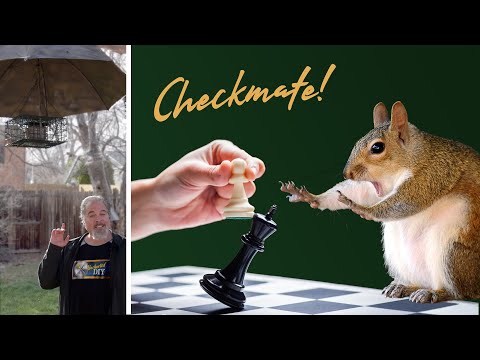
You can block squirrels by tweaking the feeder design, adding barriers to the pole, or giving squirrels their own food spot. Focus on simple builds, strong materials, and placements that cut off easy jumps or climbs.
Making a DIY Squirrel-Proof Bird Feeder
Build a feeder with a metal cage that lets small birds in but keeps squirrels out. Use 1/2-inch galvanized wire mesh around a tube feeder.
Leave 1–1.5 inch gaps so chickadees and finches fit but bigger animals don’t. Attach the cage with stainless steel zip ties and cover sharp edges with tape.
For a weight-activated setup, mount the seed port inside a sliding door that shuts when something heavy lands. Use a spring, a short dowel, and a counterweight for about 8–12 ounces so birds won’t trigger it.
Weatherproof any wood parts with outdoor paint and sealant. Place the feeder at least 10 feet from tree branches and 5–6 feet above ground to block most squirrel leaps.
Check the mesh often for bends and swap out rusty parts to keep things working.
Upgrading Your Bird Feeder Pole to Prevent Climbing
Swap out a plain pole for a smooth metal or PVC pole that squirrels can’t grip. Use a pole that’s 1.5–2 inches thick—thinner ones just help squirrels climb.
Add a cylindrical or cone baffle at least 18 inches wide under the feeder. Mount the baffle 2–3 feet below the feeder so squirrels can’t just hop over it.
If raccoons visit too, add a second baffle closer to the ground. Slide the baffle onto the pole; for PVC, glue on a metal sleeve for extra slipperiness.
Anchor the pole in concrete or a heavy ground anchor so it doesn’t wobble, since squirrels use the movement for traction. If your pole sits near a fence or brush, trim back a 10-foot radius so squirrels can’t launch from there.
If baffles aren’t enough, try oil-based spray or furniture wax on the pole and reapply every season.
Using Decoy Feeders and Alternative Deterrents
Try setting up a cheap feeder about 20–30 feet away from your main bird feeder. Stock it with corn or peanuts to lure the squirrels away.
Pick a metal mesh tray feeder for this decoy. That way, birds can still enjoy their main feeder without much interference.
Splitting up the feeding spots really cuts down on chewing and those relentless squirrel raids.
If you want, you can use safe taste deterrents—maybe mix in about a tablespoon of cayenne pepper per cup of seed. Squirrels hate it, but birds don’t seem to mind.
Skip sticky adhesives; they can trap or harm wildlife. That’s just not worth it.
Some folks have luck with motion-activated sprinklers or ultrasonic devices. Try one out in a small area first, just to make sure it doesn’t bother the birds.
Honestly, combining a decoy feeder, a pole baffle, and maybe a caged DIY feeder gives you the best shot at protecting your backyard bird setup—without hurting the squirrels.


