
You’ll want to feed seahorses several times a day since they digest food quickly and need steady energy.
Most adult seahorses do best with about 2–3 small meals daily, while juveniles often need 3–4 feedings.
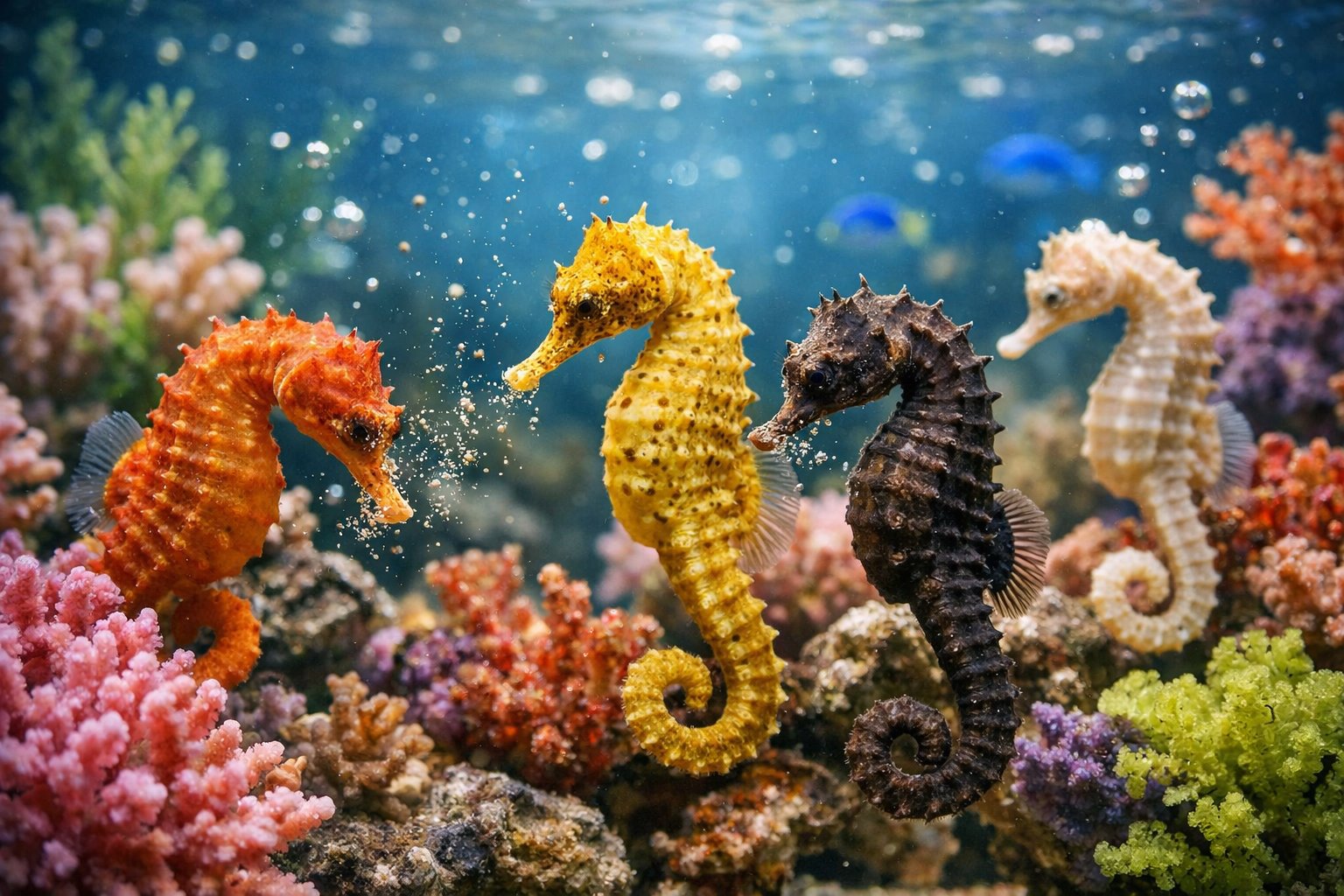
This post covers why frequent small meals matter, how to tell if your seahorse is eating enough, and which foods actually work best. You’ll be able to set up a feeding plan that fits your tank and spend less time second-guessing things.
How Often Should You Feed Seahorses?

Feed seahorses multiple times a day, but adjust for age, species, and tank conditions.
Offer small, targeted portions so they eat within a few minutes. That way, you can see what’s left and know if they’re getting enough.
Feeding Frequency for Adult Seahorses
Most adults eat once or twice daily, but a lot of keepers prefer two or even three feedings, depending on how hungry or active their seahorses seem.
Feed adult Hippocampus erectus or similar-sized species thawed frozen Mysis shrimp. If you can, enrich it with vitamins or HUFA supplements.
Offer only what each seahorse can finish in about 2–5 minutes. If food sits around for more than 30 minutes, scoop it out and cut back next time.
Check their body shape and belly. If a seahorse looks thin, try adding a small extra meal or bumping up the portion for a few days.
Keep water flow and quality steady. Adults in poor water conditions usually eat less and don’t digest as well.
Shoot for regularity: feeding at the same times and with similar portions helps a lot.
Feeding Frequency for Juvenile Seahorses
Juveniles need more frequent meals since their metabolisms run fast and they don’t have a true stomach.
Feed young seahorses 3–4 times per day with small portions of live or enriched frozen prey like Mysis or copepods.
Use a pipette or feeding station so each juvenile gets its share. That also helps prevent leftover food from messing up the water.
Watch how they eat. Healthy juveniles snap at prey quickly and keep at it.
If growth slows or bellies look flat, try feeding more often or add live enrichment like tiny amphipods.
Keep juveniles in a stable, well-filtered tank. Once they’re robust and a good size, you can skip feeding for one short day a week.
Factors That Influence Feeding Schedules
Feeding needs shift with species, size, water temperature, and health.
Smaller species and young seahorses eat more often. Warm tanks speed up metabolism, so you might need to feed extra; cooler tanks slow things down and need fewer meals.
Watch individual appetites instead of sticking to one strict schedule.
Tankmates and aquaculture methods make a difference too. If you keep seahorses with other fish, target-feed to avoid competition.
Captive-bred seahorses usually take to frozen, enriched Mysis quickly. Wild-caught ones might need live foods or a slower transition.
Keep an eye on uneaten food, body shape, and breeding behavior to tweak your feeding plan. If you want more detailed feeding techniques, check out recommendations from commercial breeders.
What and How to Feed Your Seahorses

Feed small, frequent meals of nutrient-rich prey.
Use target feeding and a low-flow feeding station so food actually reaches your seahorses instead of drifting away.
Best Foods for Seahorse Nutrition
Mostly stick with mysis shrimp. Frozen mysis shrimp (look for commercial brands labeled “enriched frozen mysis”) gives the high protein and fat adults need.
Offer 6–15 mysis per adult per meal, depending on their size and species.
Use brine shrimp (Artemia) as a supplement, not a main food. Newly hatched brine shrimp work for fry, but they don’t have enough nutrients for adults unless you enrich them first.
Commercial enriched brine shrimp boost nutrition for juveniles and smaller species.
Mix in live copepods and amphipods for variety and gut health. Captive-bred seahorses usually take live copepods well, especially smaller ones.
Rotate foods so your seahorses don’t get stuck on just one thing.
Live vs. Frozen Feeding Options
Live mysis shrimp and live copepods spark natural hunting instincts, so seahorses eat them fast.
Live food works best if your seahorses are picky or just settling in. Keep live cultures clean so you don’t introduce pests.
Frozen foods are super convenient and safe if you thaw and drain them first. Thaw frozen mysis in tank water and feed right away.
Don’t refreeze thawed food. Use frozen options like Pacific plankton mixes made for seahorses if you can’t get live food.
For frozen brine shrimp or other frozen feeds, always enrich by soaking them in liquid supplements for 15–30 minutes before feeding. This helps restore lost vitamins and fatty acids.
Diet Diversification and Supplementation
Rotate foods throughout the week: mostly mysis, copepods or amphipods a few times, and enriched brine shrimp for fry or the occasional treat.
This helps cover nutrient gaps and keeps feeding interesting.
Add vitamin and HUFA supplements to frozen feeds. Place thawed food in a cup with the supplement, soak briefly, then target-feed.
Don’t go overboard—follow supplement instructions to avoid fouling the water.
Watch their body shape and waste. A slightly rounded belly means they’re eating well.
Thin or sunken bellies? Try increasing frequency or portion size. If their color looks pale or dull, it might be a vitamin issue—try adjusting enrichment.
Tips for Using Feeding Stations
Set up a low-flow feeding station close to the hitching posts. You can use a feed cup, feeding ring, or even a small open container to keep the food in one spot and shield it from currents.
Try placing the station right at seahorse eye level. That way, they don’t have to work too hard to find their food.
When it’s feeding time, use a turkey baster or feeding stick to target feed. Just bring thawed mysis or live prey straight to each seahorse and wait until you see them strike at it.
Spend about 5 to 10 minutes on each meal. After that, take out any leftovers.
Always clean the station after each session. Leftover food can mess with your water quality pretty fast.
If you’ve got a bunch of seahorses, feed them one by one or in small groups. That way, the slow eaters actually get their share.


