
When you think of seahorses, you probably imagine tiny, delicate creatures drifting and hiding out. But if you look closer, their odd shape, quirky courtship dances, and the fact that males brood the young all hint at something more going on. Surprisingly, seahorses show bits of problem solving, learning, and social awareness that make them a lot smarter than you’d guess at first.
Let’s dig into how their hunting tricks, camouflage, and pair bonds work together with their unique bodies to help them survive. It’s hard not to wonder how these habits compare to other animals—or what scientists still don’t know about seahorse intelligence.
Are Sea Horses Intelligent?

Let’s talk about how seahorses think, remember, and recognize each other. Here are some things scientists and keepers have noticed about their learning, social life, and navigation.
Cognitive Abilities and Learning
You can actually train seahorses to take food from your hand or show up at a feeding spot at the same time every day. Captive-bred seahorses pick up feeding routines pretty fast, and their behavior changes when a new seahorse joins the group.
These things point to basic associative learning—they connect a cue (like you or a certain time) with a reward (food). Seahorses use visual cues and body color changes during feeding and courtship.
Their brains and senses are simpler than many fish, so don’t expect wild problem-solving or tool use. Still, their ability to learn and remember routines makes them surprisingly responsive pets and easier to care for in aquariums.
Social Behaviors and Recognition
Seahorses show clear social behaviors, especially in pairs or small groups. Mated pairs greet each other with daily courtship dances, changing color and swimming together in sync.
These routines show social bonds and partner recognition. In tanks, seahorses often recognize the person who feeds them and react differently to strangers.
When you add a new seahorse, the group dynamics shift—sometimes you’ll see new courtship or pairing. Project Seahorse and hobbyist reports say captive-bred seahorses don’t get as picky about mates as wild-caught ones, which changes how they act in groups.
Memory and Spatial Navigation
Seahorses remember spots like feeding stations and favorite holdfasts. Their sharp eyesight helps them spot landmarks and remember places in the tank or in the wild.
This spatial memory helps them find food and shelter, but they don’t use it for long migrations or complicated navigation. They use their tail to grip seagrass or coral and return to the same places again and again.
Their memory focuses on short-range tasks—finding food, recognizing partners, and dodging threats. It’s practical and local, not broad or complex.
Unique Behaviors and Physical Traits of Seahorses
Seahorses have all sorts of tricks that help them hide, hang on, court, and raise their young. Their body shape, skin plates, tail, and weird parenting style all fit together for life in seagrass, coral, and mangroves.
Camouflage and Adaptation
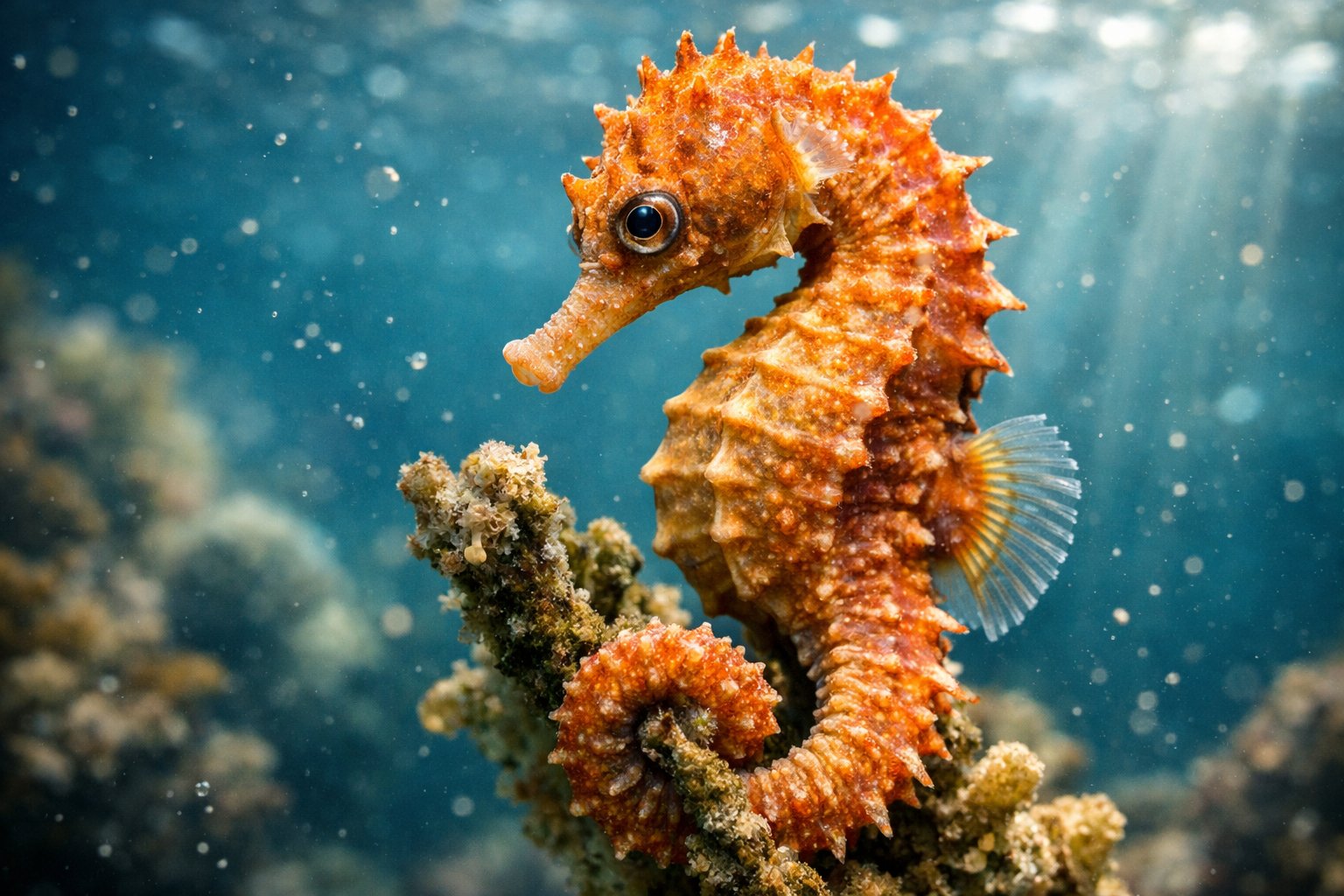
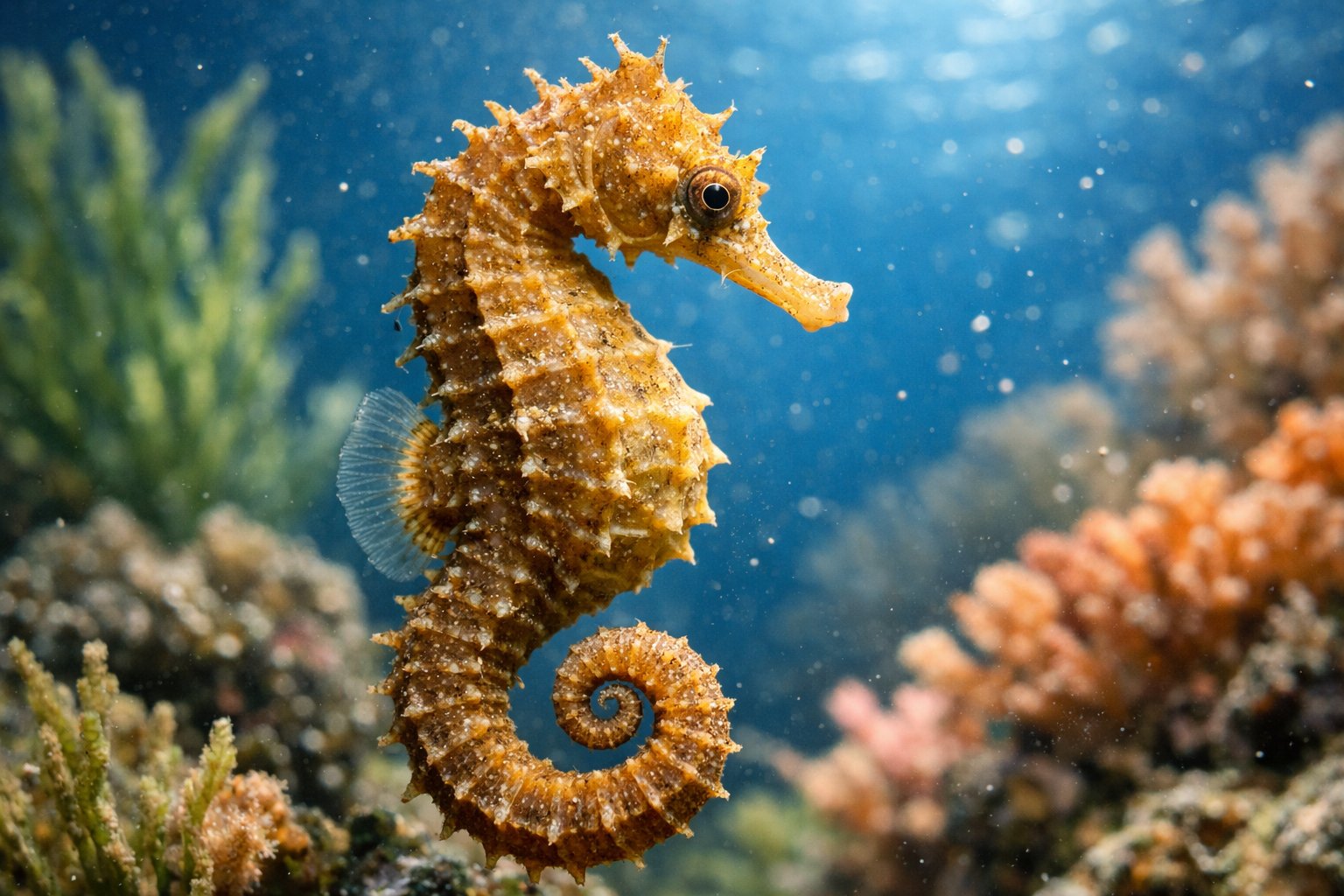
Seahorses count on camouflage way more than speed. They can change color and grow little skin filaments to match seagrass, coral, or algae.
Pygmy seahorses and species like Hippocampus denise blend into gorgonians so well that predators and divers hardly notice them. Camouflage always matches habitat.
Species like Hippocampus hippocampus and H. guttulatus live in temperate seagrass beds and match the browns and greens of the plants. Tropical types hide in coral and sponges.
This disguise really helps with ambush feeding—seahorses just wait for tiny crustaceans and suck them up with a quick snap of their snout. Body shapes vary a lot by species.
Seadragons and some pipefish relatives in the Syngnathidae family use similar colors and filaments to stay hidden. Camouflage means they don’t have to swim much.
That’s good, because seahorses swim slowly and rely on their dorsal and pectoral fins for gentle movement.
Prehensile Tails and Bony Plates
The prehensile tail lets seahorses grip plants and coral tightly. They wrap their tails around seagrass, mangrove roots, or coral and hold on, even in strong currents.
This grip saves energy while they feed and hide. Their bodies are covered in bony plates instead of scales, which gives them a tough, armor-like shell.
Spiny seahorse species have sharper ridges, while dwarf and pygmy species have finer sculpting to blend into tiny habitats. There’s a trade-off, though.
Armor and a strong tail mean less flexibility and speed. Seahorses can’t chase prey.
Instead, they use stealth and precise positioning. The tail, bony plates, small pectoral fins, and a fluttering dorsal fin all work together so they can stay anchored and pick off passing plankton and tiny crustaceans.
Courtship and Social Dynamics
Courtship for seahorses is pretty ritualized and can last a while. You’ll see daily dances where pairs change color, swim side by side, and do tail-holding or little bursts of movement.
These routines help them sync up for mating and strengthen their bond—especially in species that form monogamous pairs. Courtship involves a kind of signal exchange.
During mating, the female uses her ovipositor to place eggs into the male’s brood pouch. Some species stay with the same partner for a season, while others stick together even longer.
Courtship style varies too. Larger temperate seahorses like H. hippocampus have slower, longer dances.
Smaller species such as H. zosterae go for quick, repeated displays. Social structure depends on habitat and risk.
In thick seagrass, tight pair bonds help make sure they don’t miss a chance to mate. In open or risky places, courtship happens fast to avoid attracting predators.
You’ll notice pectoral fin flicks, head nods, and swimming in sync as big parts of these interactions.
Parental Care and Male Pregnancy
Seahorses really stand out in the Syngnathidae family because of their unique approach to parental care—male pregnancy. When the female drops her eggs into the male’s brood pouch, he fertilizes them and starts looking after the developing embryos. He supplies oxygen, salts, and nutrients, making sure they’re safe and cozy.
The brood pouch does a lot. It shields the eggs from hungry predators and keeps their environment steady. Brood size? That’s all over the place. Small species might only carry a few dozen babies, but the bigger ones sometimes have thousands packed inside.
Not all pouches are created equal, though. Some species have simple skin folds, while others have these surprisingly complex, placenta-like tissues that help swap nutrients. When the young are ready, the male contracts his body and, in a pretty dramatic moment, “gives birth” to tiny, fully-formed seahorses.
This whole system really challenges the usual ideas about parental roles, doesn’t it? Males put in a ton of effort caring for the offspring, which can totally change how often they mate and how courtship plays out.
Once the hatchlings are out, they’re on their own. Most don’t survive, so seahorses tend to have a lot of babies—hoping a handful will make it.


