
Boxer dogs are known for their playful and affectionate nature, making them great family pets and loyal companions. These energetic dogs require a significant amount of attention and interaction daily to stay happy and healthy. If you’re considering bringing a Boxer into your home or already have one, understanding their needs is essential for a strong bond.

These dogs thrive on companionship and playtime. Regular exercise, training, and social interactions are crucial. If you provide the attention and activity they crave, you’ll find that your Boxer will become a well-adjusted member of your family, always ready to share joy and laughter.
Taking the time to engage with your Boxer can transform your relationship. With proper care and attention, your loyal companion will bring endless love and fun into your life.
Understanding Boxer Dogs’ Basic Needs

Boxer dogs require special attention in several key areas for their well-being. You need to focus on their exercise needs, proper diet, and grooming routine to keep them happy and healthy.
Physical Exercise Requirements
Boxers are energetic dogs that need regular exercise to stay fit. Aim for 30 minutes to 2 hours of activity each day. This can include walks, runs, or playtime.
Activities like fetch and agility training can help keep them mentally stimulated too.
A tired Boxer is a happy Boxer. Not exercising enough can lead to boredom, which may result in unwanted behaviors. Make sure to provide a mix of indoor and outdoor activities for variety. If you have a busy schedule, consider engaging them in interactive toys or puzzles when you can’t directly play with them.
Diet and Nutrition for Health
Feeding your Boxer high-quality dog food is crucial. Look for food that lists real meat as the first ingredient. This ensures they get the protein needed for their active lifestyle.
Portion control is important to maintain a healthy weight. Boxers are prone to obesity, which can cause health issues.
Mixing dry kibble with wet food can make meals more appealing. Always ensure they have access to fresh water throughout the day.
Remember, treats are great for training, but they should not make up more than 10% of your dog’s daily caloric intake.
Grooming Needs of the Short Coat
One of the advantages of having a Boxer is their short coat. This makes grooming relatively simple.
You only need to brush them twice a week to keep their coat healthy and remove loose hair.
Since Boxers have short hair, they don’t require frequent trips to the groomer. However, regular baths will help keep their skin clean.
Check their ears and teeth regularly, as good hygiene contributes to their overall health. Even with minimal grooming, be sure to keep an eye on their skin for any irritations or issues. Early attention can prevent larger problems from developing.
Importance of Training and Socialization
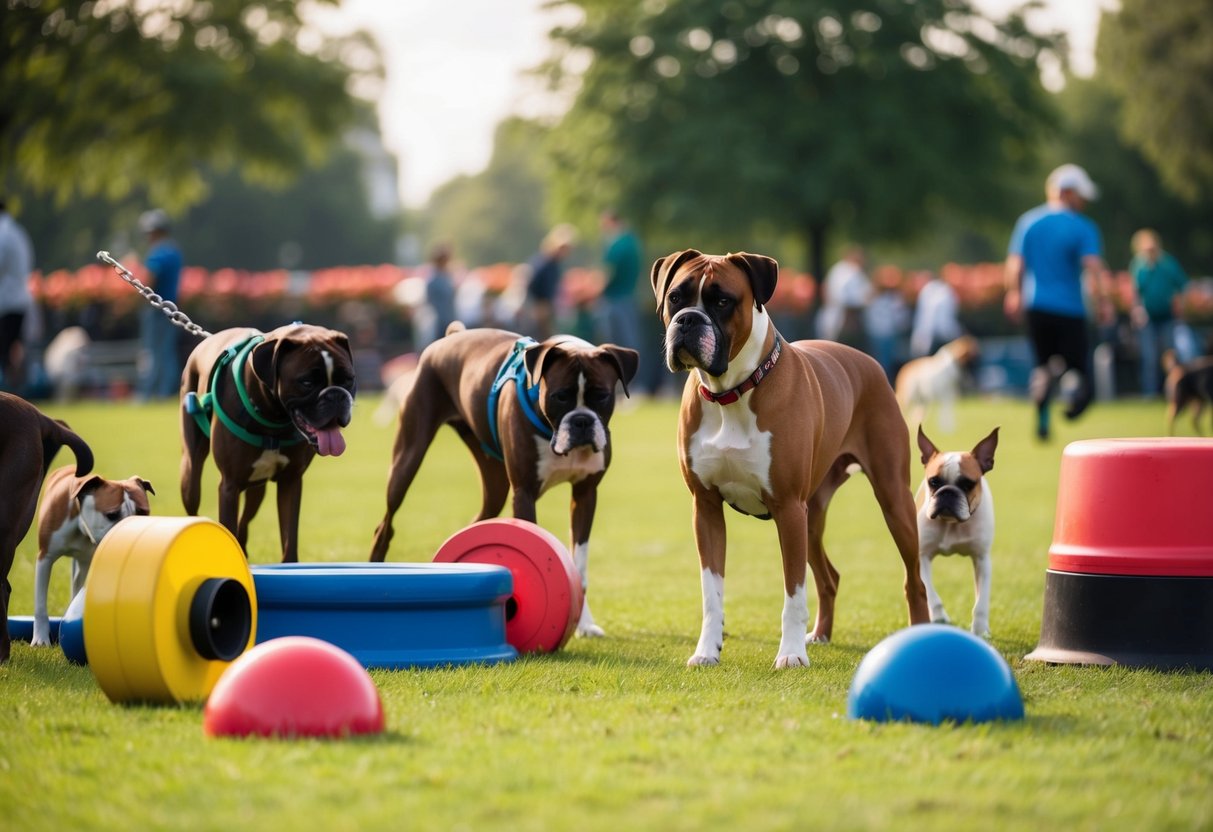
Training and socialization are essential for raising a happy, well-adjusted Boxer. These processes help your dog learn proper behaviors, interact well with people and other pets, and prevent potential issues down the road.
Obedience Training Essentials
Obedience training is a critical part of a Boxer’s upbringing. Start with basic commands like “sit,” “stay,” and “come.”
Use positive reinforcement techniques, such as treats and praise, to reward good behavior. This approach builds trust between you and your dog.
Consistency is vital. Practice commands daily to reinforce learning.
Make training sessions short and fun to keep your Boxer engaged. Remember, a well-trained dog is more likely to follow your cues and behave correctly in various situations.
The Role of Early Socialization
Early socialization is crucial for Boxers. Introduce your puppy to different people, places, and experiences.
This exposure helps them develop confidence and reduces the likelihood of anxiety.
Aim for controlled interactions with other pets and dogs. Monitor these meetings to ensure they have positive experiences.
The goal is to create a well-rounded dog that is comfortable in new settings. Regular socialization helps prevent behavioral issues later on.
Addressing Behavioral Issues
Proper training and socialization can help tackle behavioral issues before they become serious.
If your Boxer shows signs of aggression or fear, intervening early is key.
Identify triggers and work on training techniques to address these behaviors. Use positive reinforcement when your dog reacts appropriately in social settings.
Celebrate their successes with praise. If issues persist, consider seeking help from a professional dog trainer. They can provide tailored strategies to guide you and your Boxer through challenges.
Health and Well-being of Boxers

Boxers are active, loving dogs that need your attention for their health and happiness. They are prone to certain health issues, so being aware of these concerns is vital. Regular care is essential to keep your Boxer feeling great.
Recognizing Common Health Issues
Boxers can face a variety of health problems. You should watch for signs of these common issues:
- Hip Dysplasia: This genetic condition affects the hip joint, causing pain and difficulty in movement.
- Degenerative Myelopathy: A progressive disease that impacts the spinal cord, leading to weakness and balance issues.
- Hypothyroidism: This condition means your dog’s thyroid does not produce enough hormone, which can cause weight gain and lethargy.
- Mast Cell Tumors: A type of cancer that can occur in the skin, requiring prompt veterinary care.
Regular vet checks can help catch these issues early. If you notice any unusual behavior in your Boxer, consult your vet.
Keeping Boxers at a Healthy Weight
Maintaining a healthy weight is crucial for your Boxer’s well-being. Overweight Boxers are at risk for serious health problems.
To help your Boxer stay fit:
- Balanced Diet: Provide high-quality dog food that’s appropriate for their age and activity level.
- Regular Exercise: Engage in daily walks and playtime. Boxers need plenty of activity to burn off energy.
- Watch Treats: Limit treats and table scraps, ensuring they don’t exceed 10% of their daily caloric intake.
Keep an eye on their body condition. You should be able to feel their ribs without excess fat covering. If you’re uncertain, ask your vet for guidance on maintaining a healthy weight.


