
Feeding your Boxer dog the right amount is key to their health and happiness. As a loving owner, you might wonder, Boxers should have two meals a day to keep their energy levels stable and prevent overeating. This simple routine can help maintain a healthy weight and support their active lifestyle.
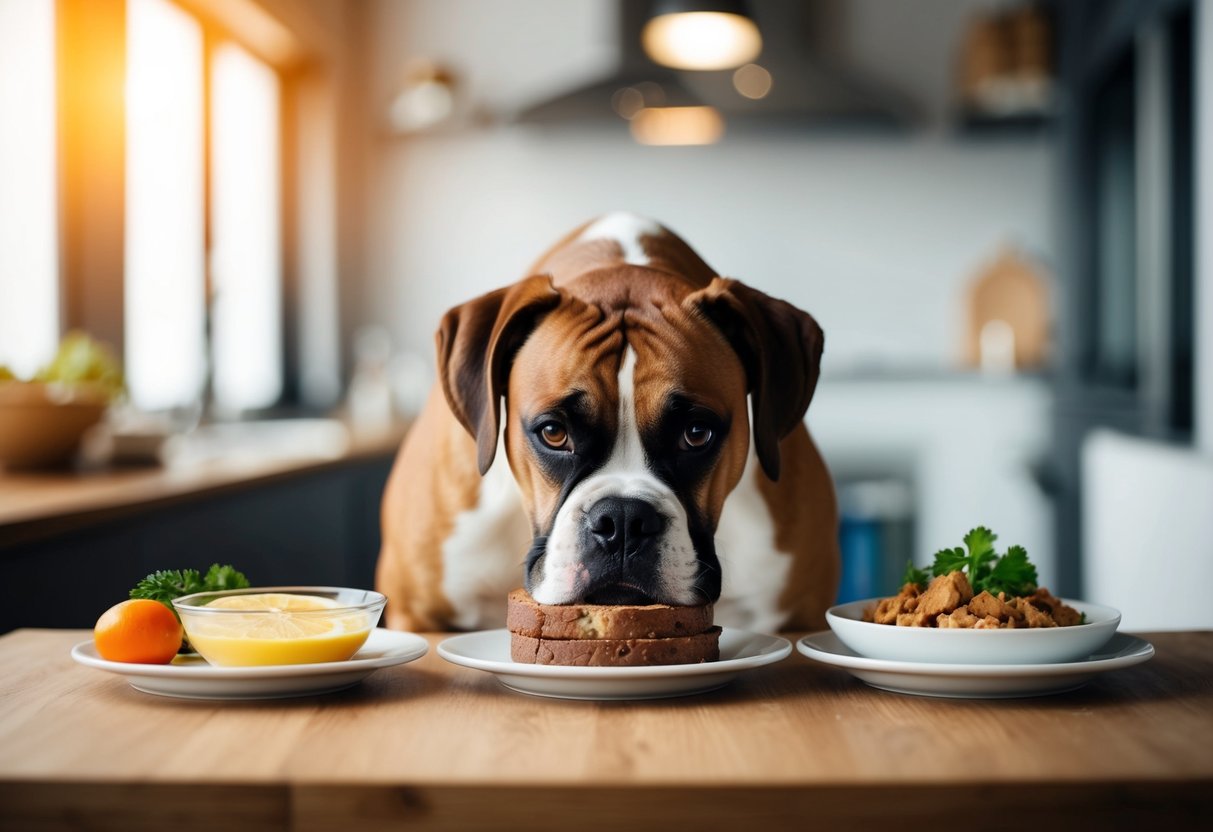
Boxers are energetic and playful, needing a balanced diet to support their growth and activity. Puppies require more frequent feedings, so it’s important to adjust their meal schedule as they grow.
Keeping track of how many meals your Boxer gets will help you establish a healthy and consistent feeding routine.
By knowing how many meals your Boxer dog should have, you can ensure they get the nutrients they need. A proper feeding schedule will also help you create a bond with your pet and set them up for a happy, healthy life. Let’s dive deeper into the best feeding practices for your Boxer!
Understanding Boxer Dogs’ Nutritional Needs

Getting the nutrition right for your Boxer is key to keeping them healthy and happy. This breed has specific dietary requirements due to their active lifestyles and unique body structures.
Focus on essential elements like protein, healthy fats, vitamins, and minerals to ensure their well-being.
Importance of a Balanced Diet
A balanced diet is crucial for your Boxer’s health. A proper mix of proteins, fats, and carbohydrates helps maintain energy levels, especially since Boxers are known for their high energy levels. They need a protein-rich diet, which contributes to muscle development and overall vitality.
Including healthy fats in their meals supports joint and heart health too. Look for dog food with essential fatty acids, like omega-3 and omega-6.
Keep in mind that improper feeding can lead to problems, such as bloating or issues with sensitive stomachs. Regularly consult with your vet to adjust their diet as needed based on their age, size, and activity level.
Specifics of a Boxer’s Diet
When feeding your Boxer, age matters. Boxer puppies require more frequent meals—ideally up to four times a day. This is due to their rapid metabolism and need for more nutrients during growth.
As they transition to adulthood, aim for two meals a day to keep energy balanced and reduce the risk of overeating.
Look for dog food that lists whole meats as the first ingredient. This ensures a rich source of protein. Also, include vitamins and minerals to support their immune system and overall health.
Pay attention to their exercise levels, as this impacts their nutritional needs. After exercise, a nutritious meal will support recovery and keep them fit. A well-rounded diet will help your Boxer thrive!
Deciding on the Right Daily Feeding Frequency

Choosing the right feeding frequency for your Boxer dog is important for their health. This can vary based on their age and stage of life. Here’s what you need to know about feeding puppies and adult Boxers, along with their needs at different life stages.
Feeding Puppies vs. Adult Boxers
When feeding a Boxer puppy, you should aim for 3-4 meals a day. Puppies have smaller stomachs, so smaller, more frequent meals help support their rapid growth. Start with about 1/4 to 1/2 cup of high-quality puppy food per meal.
As your Boxer matures into an adult, you can shift to 1-2 meals a day. This change can help regulate their weight and energy levels.
Adult Boxers typically need 3-4 cups of food daily, depending on their size and activity level. Keep a consistent feeding schedule to maintain their routine.
Boxer Feeding Frequency Throughout Life Stages
Throughout your Boxer’s life, their feeding frequency adjusts based on age and activity.
-
Puppy Stage: Feed 3-4 times daily until around 6 months old.
-
Young Adult Stage: Switch to 2 meals a day as they reach adulthood.
-
Senior Stage: Older Boxers may benefit from a lighter meal frequency, as their metabolism slows down.
Always monitor their weight and adjust their daily feeding amount accordingly. Remember to consult your vet to tailor the best feeding schedule for your dog’s unique needs. A regular routine helps prevent issues like hyperacidity and ensures lasting health.
Choosing the Appropriate Food Type and Portions
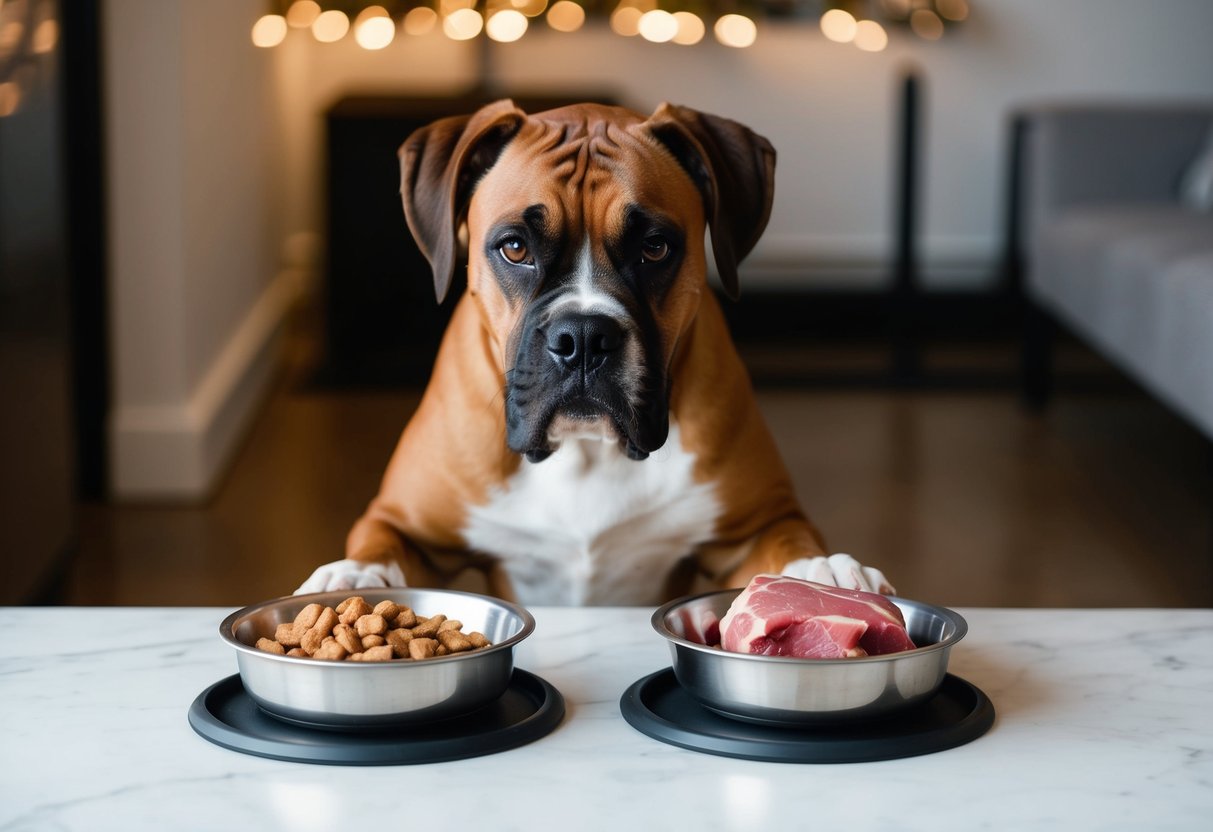
Selecting the right food for your boxer dog involves understanding the differences between food types and ensuring proper portion control. Each option has its benefits, and knowing what works best for your dog is key to keeping them healthy and happy.
Dry Kibble vs. Wet Food
When choosing between dry kibble and wet food, consider your dog’s preferences and needs.
Dry kibble is often more convenient and can help keep your dog’s teeth clean due to its crunchy texture. Look for high-quality kibble that lists protein sources, like chicken or beef, at the top of the ingredient list.
Wet food can be more appealing to picky eaters and provides extra moisture, which is great for hydration. If you opt for wet food, make sure it’s from a reputable brand and check for a balance of protein and fat content. Some dogs may benefit from a mix of both types to enjoy the benefits of each.
Raw Diets and Homemade Food
A raw diet can be an option for some owners who want to feed their dogs a more natural diet. This diet typically includes raw meat, bones, and vegetables. If you choose this route, consult with your veterinarian to ensure you’re meeting all nutritional needs.
Homemade diets allow for more control over ingredients and can be tailored to your dog’s needs. Incorporating protein sources like lean meats, vegetables, and healthy grains, such as rice or oats, can create balanced meals. Keep in mind, homemade diets require careful planning to ensure complete nutrition.
Understanding Feeding Charts and Portion Sizes
Using feeding charts can guide you in deciding how much food to give your boxer. These charts often provide serving sizes based on your dog’s weight and activity level.
For your boxer’s diet, pay attention to portion control to prevent obesity and health issues.
Take note of your dog’s specific needs. If you’re feeding a grain-free diet or focusing on high-protein content, adjust portions accordingly. Regularly assess your dog’s weight and energy levels to make any necessary changes. Always ensure your boxer has access to fresh water, especially if you’re using dry kibble.
Addressing Common Feeding Concerns

Feeding your Boxer correctly is key to their health and happiness. You’ll want to be mindful of the amount of food given to prevent weight gain or health issues. Let’s look at some important points to consider.
Preventing Overfeeding and Underfeeding
To keep your Boxer at a healthy weight, it’s essential to avoid both overfeeding and underfeeding. If your dog has extra weight, it can lead to serious health issues, like joint problems or heart disease.
You should feed your adult Boxer about 4 to 6 cups of high-quality dog food each day, split into two meals. Monitor their weight regularly, adjusting their food amount based on their activity level.
Signs of overfeeding include lethargy and difficulty breathing. On the other hand, underfeeding can lead to weight loss and weakness. Always pay attention to your dog’s body condition score and consult your vet for specific dietary needs.
Special Considerations for Boxers’ Health
Boxers can be prone to certain health conditions, making careful feeding even more important. One serious risk that can occur if they eat too fast is bloating. To help prevent this, consider using a slow feeder bowl.
When selecting food, choose options that are high in protein and low in fillers. Look for dog food that states the specific meat source. Also, remember to check the calorie content, especially if your Boxer is less active.
In addition to their meals, consider their overall lifestyle, including exercise and mental stimulation. By taking these factors into account, you can set your Boxer up for a long, healthy life.


