
Ever wondered how much an opossum actually sleeps? You’re definitely not the only one. These little nocturnal critters spend a surprising chunk of their day just resting and saving up energy for their nighttime adventures.
Opossums usually sleep about 18 to 19 hours a day, mostly during daylight. They curl up in nests or dens, tucked away where it’s quiet.
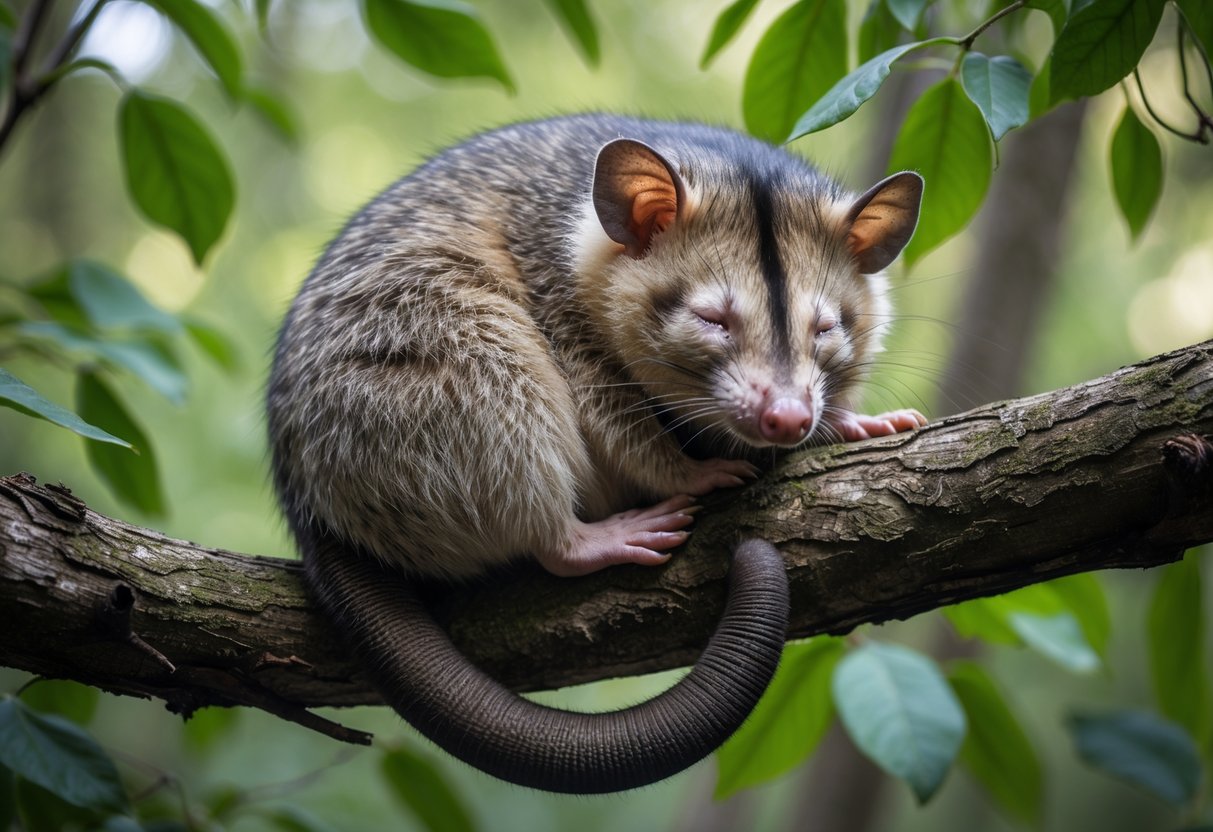
Because opossums come alive at night, they use the daytime to recharge. You’ll often find them hiding in hollow trees or old burrows, staying safe and warm.
Honestly, despite their sleepy reputation, opossums are clever survivors. They’ve got some pretty interesting tricks for keeping themselves safe.
Learning about when and how long opossums sleep gives you a better sense of their habits. If you spot one snoozing in your yard during the day, it’s just doing what comes naturally.
Curious about their favorite sleeping spots? Here’s a good article on opossum sleeping habits if you want more details.
How Many Hours a Day Do Opossums Sleep?

Opossums spend a lot of their day just resting. Their sleep habits fit their nighttime lifestyle, and they’ve got some interesting patterns.
A bunch of things—like weather and safety—can change how much they actually sleep.
Typical Sleep Duration for Opossums
On average, opossums rack up about 18 to 19.4 hours of sleep every day. That’s a lot of napping, honestly.
They rest most of the day, then wake up when the sun goes down to look for food.
Compared to other animals, opossums are definitely on the sleepier side. They even out-snooze a lot of other marsupials and reptiles.
All that sleep helps them save up energy for their nighttime wanderings.
If you catch one sleeping in a quiet corner during the day, don’t worry. That’s just their normal routine.
Sleep Patterns and Cycle
Opossums live on a nocturnal schedule. They wake up around sunset and stay busy through the night.
During the day, they find safe places—like hollow trees, burrows, or piles of leaves—to sleep. They pick spots where they feel hidden from predators.
Most of their sleep is deep, but they’ll have short stretches of lighter sleep. That way, they can stay alert if something seems off.
Factors That Influence Opossum Sleep
A few things can change how much an opossum sleeps. Weather plays a big role—when it gets really cold, they’ll hunker down and sleep even longer somewhere warm.
Safety is another big one. If an opossum feels threatened, it might cut its sleep short or move to a new den.
Mating season shakes things up too. They might sleep less as they look for partners or care for young.
Living in cities changes things a bit. Food sources and human activity can make them tweak their sleep schedule.
Want to dive deeper? Check out How Much Do Animals Sleep? or see real-life examples at the Chattahoochee Nature Center.
Opossum Sleeping Habits and Unique Behaviors

Opossums clock in a lot of sleep during the day—about 18 hours, give or take. They get active at night, which helps them dodge danger and hunt for food.
Their sleeping spots, tails, and defense tricks are honestly pretty fascinating.
Nocturnal Lifestyle Explained
Opossums are true night owls. They come alive after sunset, searching for insects, fruit, or even small animals.
Their eyes work well in the dark, so they can move around safely at night. You probably won’t catch an opossum out during the day—they really try to stay hidden and quiet to avoid predators.
Sleeping Locations and Nesting Habits
During the day, opossums pick safe, quiet spots to sleep. Hollow trees, abandoned burrows, or thick bushes all work for them.
In cities, they sometimes sneak into attics or crawl under buildings if it’s peaceful enough.
Opossums don’t dig their own dens. Instead, they reuse empty nests or holes that other animals left behind.
You might spot them in barns or tucked into rock crevices near food and water. They change sleeping spots often to keep predators guessing.
Prehensile Tails: Myths and Facts
A lot of people think opossums hang upside down by their tails, but that’s not really true. Their tails are prehensile, so they can grip things, but they’re not strong enough to hold up their whole body for very long.
Opossums use their tails to help with climbing or carrying bits of nesting material. It’s kind of like having an extra hand.
But when they’re sleeping or resting, they stay tucked inside nests or safe spots—not dangling from a branch.
Playing Possum: The Difference Between Sleep and Defense
You’ve probably heard someone say “playing possum” and wondered if opossums really sleep like that. Actually, when they feel threatened, opossums flop over, go totally limp, and look pretty lifeless.
They slow their breathing and heart rate, and sometimes there’s even drool. It’s a wild defense move that often freaks out predators.
But when opossums sleep for real, they just curl up somewhere safe and cozy. No drama, just a peaceful nap in a quiet den.


