
Deer usually have one to three fawns at a time. Two is the most common for healthy adults.
If you spot a doe in spring, there’s a good chance she’s tending one or two tiny fawns. Triplets happen sometimes, but honestly, they’re pretty rare.
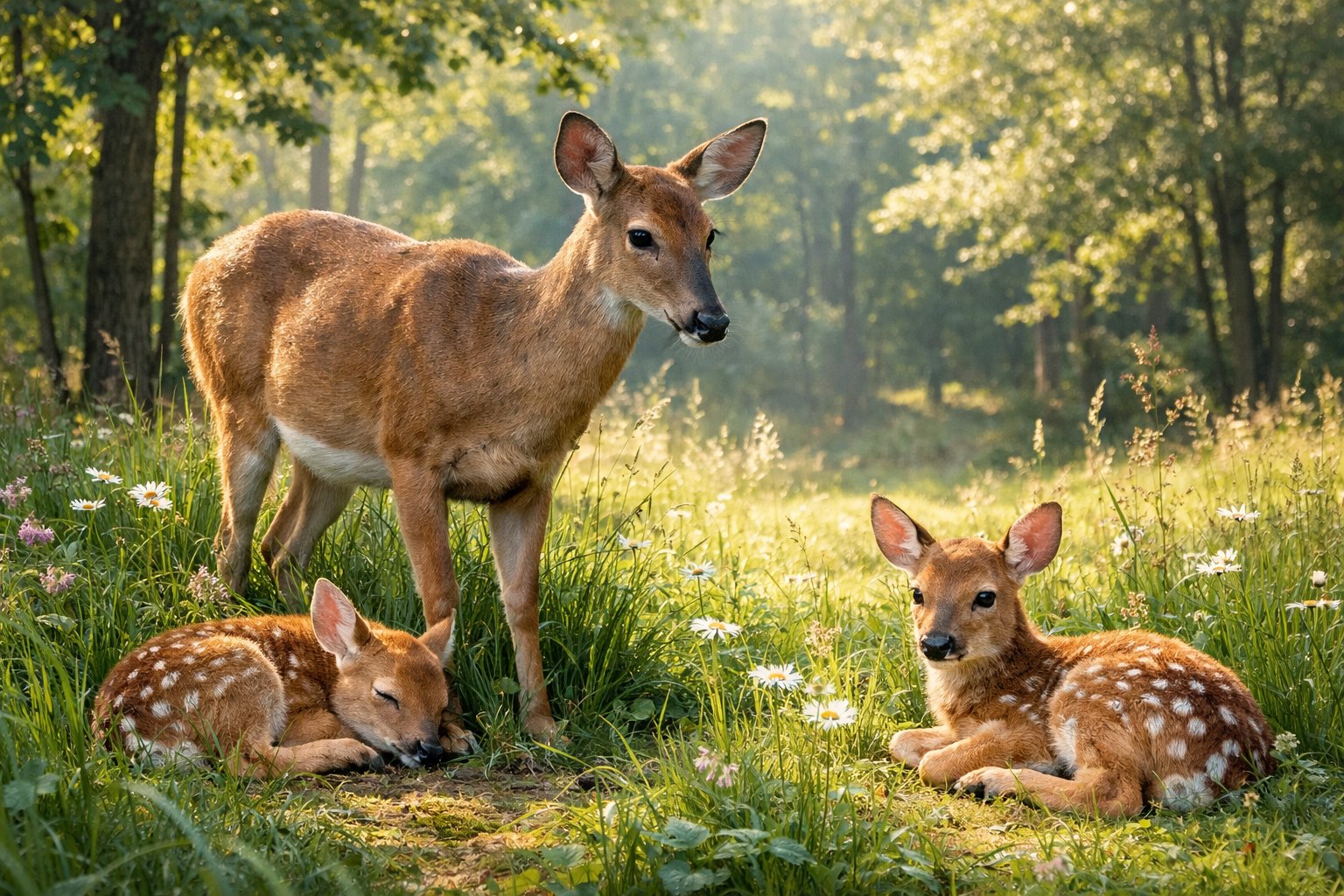
You’ll find out how species, age, and food shape litter size. Ever wondered why white-tailed does tend to have more fawns than mule deer? Keep reading to see what really changes fawn numbers and how those things affect what you might see in your backyard or out for a walk.
How Many Babies Do Deer Have at Once?
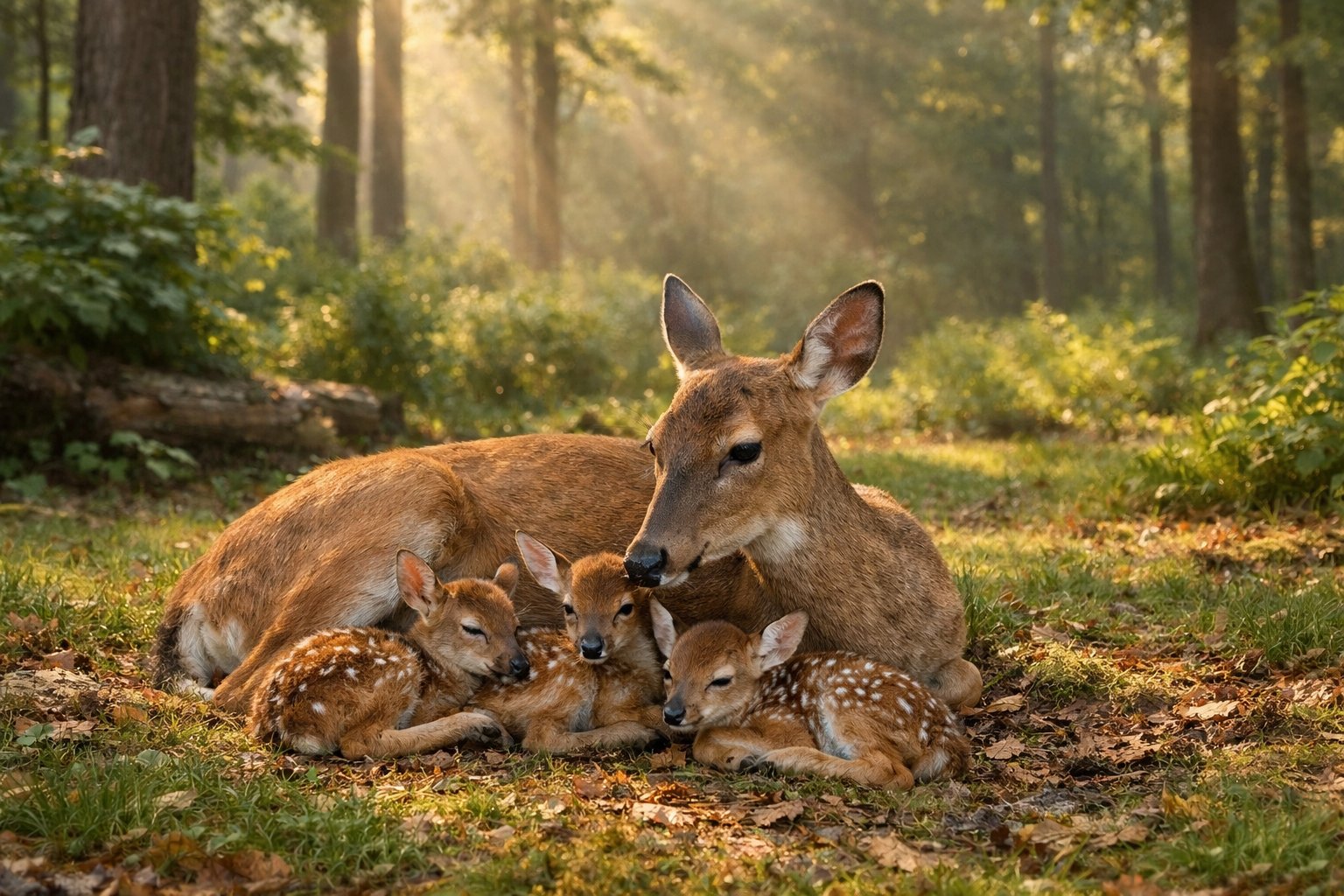
Most wild does give birth to one, two, or sometimes three fawns. The numbers shift with the doe’s age, health, and what she eats.
Typical Litter Size
Most deer have one or two fawns at a time. Yearling does usually have a single fawn because they’re still growing.
Mature does, especially between two and seven years old, tend to have twins. Twins show up most often in healthy white-tailed populations.
Birth weights usually land between 4 and 8 pounds. Newborn fawns hide in thick vegetation and count on their camo and almost no scent to stay safe.
You’ll probably see a single or a set of twins if you’re wandering through North American woods or even some suburbs.
Species Differences in Fawn Numbers
White-tailed deer often have twins more than mule deer do. White-tailed does can breed earlier and might raise twins when food is abundant.
Mule deer, which roam drier or mountain habitats, usually have single fawns or twins less often. Scarce resources make big litters tough.
Local nutrition and climate really shift litter sizes. In rich areas, does might have more fawns. In rougher places or after harsh winters, the numbers drop.
If you’re curious, local wildlife guides can give you the best numbers for your region or species.
Rare Cases: Triplets, Quadruplets, and Quintuplets
Triplets do show up, but not nearly as often as singles or twins. You’ll see triplets when a doe is super healthy and there’s plenty of food around.
Quadruplets and quintuplets? Those are wild outliers—almost never happen except in really unusual situations.
A big litter puts a lot of pressure on the mother. She has to stretch her milk and attention across more babies, so survival rates drop as litter size grows.
If you ever spot three or more fawns together, you’re probably looking at a very healthy doe or a spot with amazing food. Still, that’s a tiny slice of all deer births.
What Influences How Many Babies Deer Have?
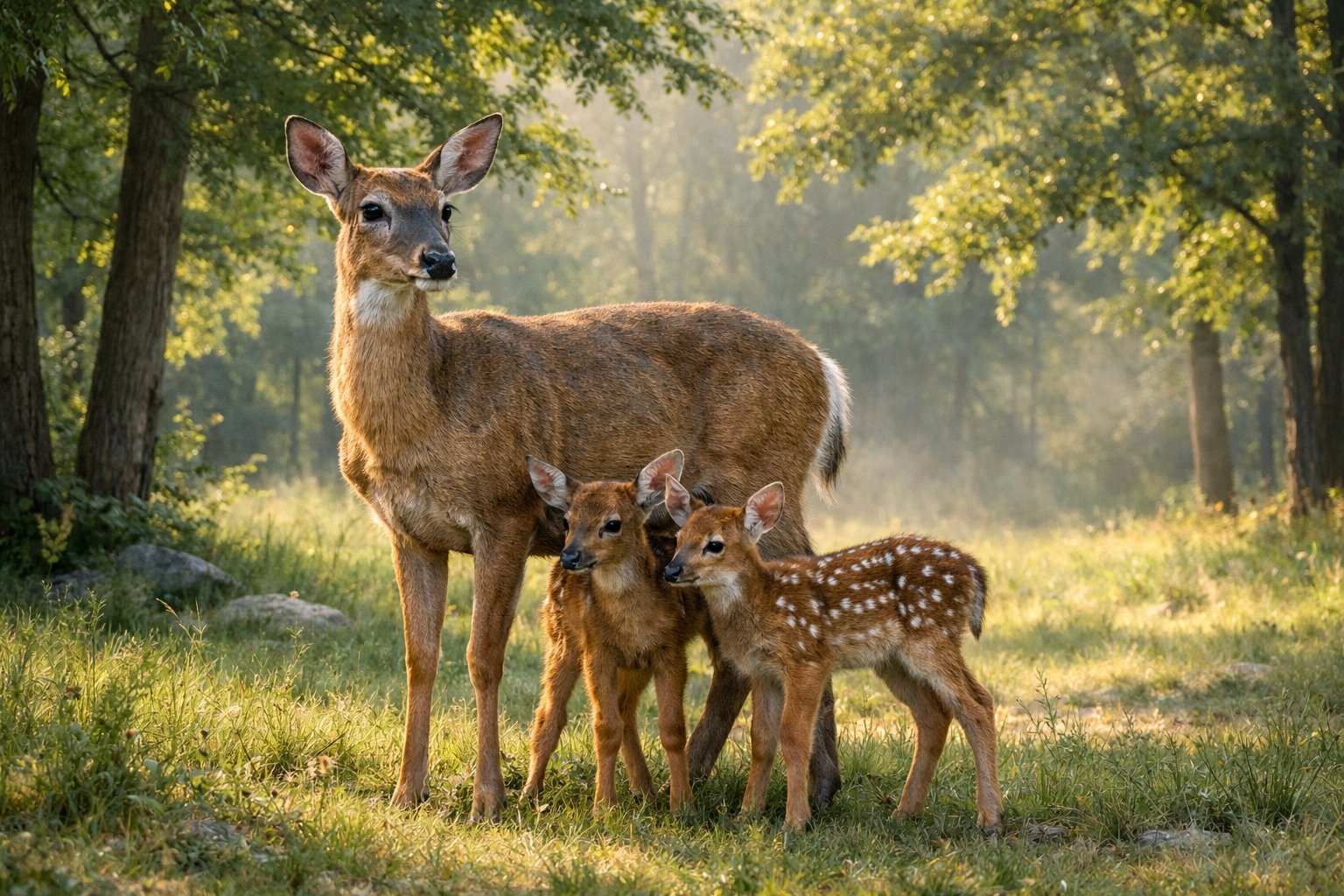
A few big things control fawn numbers: the doe’s age, her health, the food and cover she has, how many deer live nearby, and the quirks of her species. Each of these changes how many eggs she ovulates, whether embryos make it, and how many fawns she can actually raise.
Mother’s Age and Sexual Maturity
Young does usually have just one fawn. Their bodies keep growing even while they’re pregnant.
Yearlings often don’t reach full fertility or body weight, so they ovulate fewer eggs. Once a doe hits maturity (usually around two or three years old), her fertility increases and twins become more common.
Mature does in good shape can carry and nurse two or sometimes three fawns. When does get older, their fertility drops and they tend to have smaller litters.
The age structure of your local herd often matches what you see in fawn counts.
Nutritional Status and Habitat Quality
A doe’s nutrition really decides how many embryos she can support. Good forage in spring and summer helps her store up fat and nutrients for pregnancy.
If food is scarce, you’ll see more single fawns or even lost embryos.
Habitat quality matters, too. Areas with lots of browse and cover help does stay healthy and ready for twins.
You’ll notice higher twin rates where food is plentiful and competition is low. In poor habitat or during drought, expect smaller litters and fewer fawns making it.
Environmental and Population Factors
When lots of deer crowd into an area, competition for food ramps up. Each doe gets less nutrition, so she produces fewer fawns.
Predators and tough winters also cut down fawn numbers by raising mortality.
Seasonal timing matters a lot. Deer usually breed so fawns arrive when plants are at their best.
Local climate, how long the growing season lasts, and weird weather during pregnancy or fawning all change how many fawns survive and show up in the counts.
Species-Specific Reproductive Biology
Different deer species tend to have their own typical litter sizes. White-tailed deer usually have twins if the population’s healthy. Mule deer, on the other hand, often give birth to just one fawn, especially in dry regions.
Some species almost never have triplets. Others can show a bit more variation, depending on local conditions.
Reproductive biology matters a lot here. Gestation usually lasts around 200 to 210 days for many species.
The timing of the rut also sets the window for when fawns arrive. If you’re trying to predict fawn numbers in an area, you really need to know which species you’re dealing with.


